

National summits have their place — but what will it really take to achieve equality for Australian women?
- Written by: Lyn Craig, Professor of Sociology and Social Policy, The University of Melbourne
As political leaders, experts and advocates meet for the national women’s safety summit, women in Australia are over it.
They are sick of the ongoing unacceptable levels of workplace discrimination, sexual harassment, and domestic violence. They are sick of calling for better public safety and an end to the gender pay gap. They are sick of “knocking on the door” of opportunities (do men have to knock?).
They are also completely exhausted — and their mental and emotional health is suffering. This is especially so for those in lockdown shouldering the bulk of the extra domestic labour, care work and home schooling.
As the national summit talks about how to make workplaces, communities and homes safer for women, we also need to look at the bigger picture.
Australian women start with many advantages, but these don’t continue along their life trajectory. Our society does not set women up to be equal. And this is a problem if we want them to be valued, successful and safe.
How did we get here?
It’s about 50 years since the 1969 and 1972 equal pay cases in Australia. These accepted the principle of equal pay for equal work, then expanded it to cover “equal pay for work of equal value”, with the same rate for a job, irrespective of gender.
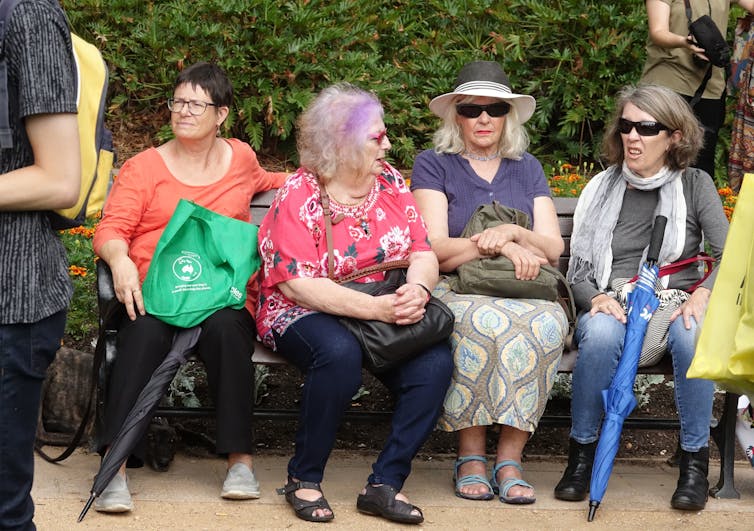 Australian women have officially had ‘equal pay’ for about 50 years.
Ben Rushton/AAP
Australian women have officially had ‘equal pay’ for about 50 years.
Ben Rushton/AAP
At about the same time, in 1974, the Whitlam government abolished university fees and young women joined young men in becoming the most highly educated generation in the nation’s history.
These two things — formal equality in education and labour market opportunity — were expected to be the route to gender equality and economic and social empowerment for women.
Educated, but not equal at work
Of course, there have since been very significant gains. The educational achievements of Australian girls and women are outstanding, equal to the best in the world. They have been outstripping men in tertiary educational attainment since the turn of the century.
In 1982, only 4.2% of Australian women held a bachelor degree or higher, compared to 7.5% of men. By 2020, over 39% of Australian women held a bachelor degree or higher compared to 32% of men.
Read more: 50 years after Australia's historic 'equal pay' decision, the legacy of 'women's work' remains
At the same time, they have made progress in the labour market, although here the picture is less rosy. Australian women’s labour force participation has gone from 45.5% in the early 1980s to 57.8% in 2020, still more than 10% lower than the male rate.
They are also much less likely to be in senior positions, they earn less, even on a full-time hour-for-hour basis. And they have much lower lifetime earnings because they are much more likely to have worked part-time.
It’s the home economy, stupid
This gap between individual education and workplace participation points to a major disconnect. It can only be understood by looking at the time and labour involved in domestic work and care, which is of central concern to women and families, but stubbornly peripheral to economic policy making.
It wasn’t always this way. The labour of social reproduction — raising children and family care — necessary to service and maintain the workforce used to be recognised in wages policy.
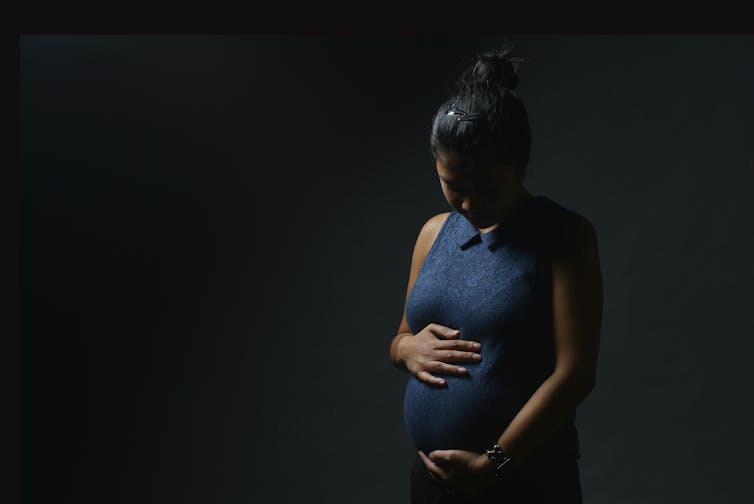 Today, the work involved in raising a family is seen as a private, personal matter.
Tracey Nearmy/AAP
Today, the work involved in raising a family is seen as a private, personal matter.
Tracey Nearmy/AAP
In 1907, the Harvester judgement fixed wages at the amount sufficient to support “a man, his wife and three children”. Yes, that’s right: five people could live on one wage. The judgement has been criticised as a pact between men, and of course it was not fair if women needed to or wanted to work. But it did mean the labour of family care was underwritten by employers.
Since the 1970s, it’s become an individual woman’s problem or at best, a private family problem. But the need for it hasn’t gone away. It still has to be done, now alongside work commitments, and so the costs and penalties are rising.
Time overload
Researchers call this experience “time overload”. It is currently invisible to workplaces and governments, which continues to enact policies that assume having a “level playing field” means treating everyone as if they were a man without care responsibilities working full-time over their working lives.
This means supposed “equality” at the policy level, but exhaustion, overwork and mental stress at the individual level. The consequences are also felt at the societal level. Fertility rates are falling and mental health issues are rising.
And yet, notwithstanding all the extra work, quality of life for most is not better (just look at how hard it is to buy and pay for a house).
The huge cost of care
A lot of the response to this has been to think the solution lies in men doing more of the caring labour. And of course, this would help. But it would only go part of the way. This is because the time and money costs of care imposed upon families are too high. Think about how aged care and childcare are now privatised and so expensive. People must work — and work hard — so they can pay high fees to replace their own labour.
There is also policy confusion at a macro level — we have apparently separate policy areas that, in combination, create perverse outcomes. For example, Australian state and federal governments spend A$114 billion a year on education and training, yet there is mass under-utilisation of women’s education.
Meanwhile, Australian tax and childcare policies actively encourage women’s part-time work, because when daycare costs for more than three days a week are factored in, most mothers incur effective marginal tax rates near 100% of their income.
Largely due to their part-time work and lower lifetime pay, more older women now live in poverty despite aged pension and superannuation subsidies costing the government more than $A40 billion a year each.
What does all this have to do with safety?
We know women need economic security and independence to be fully in control of their lives.
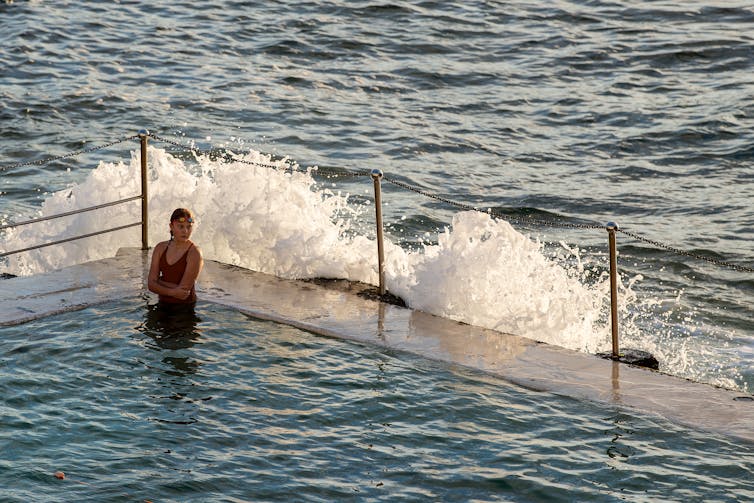 When woman are more equal, they are safer.
Bianca De Marchi/AAP
When woman are more equal, they are safer.
Bianca De Marchi/AAP
At a very basic level, can they afford to support themselves if they leave an abusive relationship? Can they afford somewhere adequate to live? Can they afford to pay for childcare while they work? Can they feed their children if they can’t work?
But there are other fundamental issues here. If the work women do — both at home and in the paid workplace — was more recognised and better shared, they would be more equal in society.
When they are more equal, they have more resources, they are more empowered, and they are safer.
So what do we do about it?
National summits and national plans have their place. But there are some policy measures government, businesses and workplaces need to adopt if we are truly serious about making Australia a safer, more equitable place for women.
These include:
reconsidering last week’s rejection of most of the recommendations in the Australian Human Rights Commission’s Respect@Work report. This is a landmark report to the federal government on workplace harassment and deserves much more urgent action.
making childcare free like schools are. Yes, this will be costly, but we need to think of it as a basic service, like school education, the health care system or even roads. It is essential infrastructure to support women working
a liveable universal old age pension, which would remove the penalty for lower or interrupted workforce participation for care. A superannuation system that requires continuous financial contributions when women often have no choice but to provide unpaid work and care is not adequate
truly flexible work practices — this is not just about allowing people to work part-time or plan their own schedules. It needs to go further and look at load reduction and shorter hours for the same income. Otherwise people will be doing the same amount of work, catching up at all hours and not getting paid for it
Seeing family care as a public good
We need to broaden the parameters of how this issue is regarded. The work involved with care and raising children is a collective public good that governments and employers benefit from and should help pay for.
Australia can’t go back to the Harvester judgement, but nor can it continue to ignore the unpaid labour of social reproduction and to free-ride on those who do it.
It’s not fair, it’s not sustainable, and it exacerbates women’s social and economic vulnerability. It jeopardises our safety. No wonder we are over it.
This piece was produced as part of Social Sciences Week, running 6-12 September. A full list of 70 events can be found here. Lyn Craig will appear in an online panel “A (policy) revolution: what will it take to achieve justice for women?” at 12pm on Tuesday September 7.
Authors: Lyn Craig, Professor of Sociology and Social Policy, The University of Melbourne


















