

Five things parents can do to improve their children's eating patterns
- Written by: Clare Collins, Professor in Nutrition and Dietetics, University of Newcastle
Eating habits develop in early childhood. Research shows eating patterns can continue into adolescence and then through to adulthood. In a new study, we compared what children aged two to three years ate with what their mothers ate.
We also looked at what mothers ate during pregnancy to see which time point was more important for influencing a child’s diet. While what mums ate in pregnancy was related to their toddler’s food intake, the relationship was stronger with what mum was eating while the children were toddlers.
We also found eating habits of fathers were related to what their primary school-aged children ate. Helping dads improve their lifestyle habits and be role models for their children was associated with a reduction in the intakes of total sugars, salt and energy-dense, nutrient-poor (aka junk) foods and higher intakes of nutrient-dense (healthy) foods.
Read more: Health Check: how to get kids to eat healthy food
When the dads ate better, the children ate better. This was particularly the case for fruit intake, non-meat sources of protein and the frequency of eating meals that contained vegetables.
A key to developing healthy eating habits is to be a healthy eating role model. This way you show how to eat healthily, without force-feeding. This is described as the “parents provide, children decide” principle. By having scheduled meals and snacks, when a child is not very hungry at one meal and so does not eat much, they will be hungry and eat more at the next meal or snack.
Food for growing brains
The foods and drinks children eat provide them with the nutrients needed for growth and brain development. Better dietary patterns are associated with better school performance, especially among children who regularly eat breakfast, have lower intakes of junk foods and whose eating patterns are of a higher nutritional quality.
Our Australian study in over 4,000 children aged 8-15 years compared eating behaviours with National Assessment Program – Literacy and Numeracy (NAPLAN) scores. It found more frequent consumption of vegetables with the evening meal was associated with higher test scores for spelling and writing. It also found more frequent consumption of sugar-sweetened beverages was associated with lower test scores in reading, writing, grammar, punctuation and numeracy.
We surveyed over 100 Australian parents and found most had tried to improve the healthiness of the foods their children ate. Parents did this by trying to increase vegetable and fruit intakes, or by reducing foods they thought contained sugar.
Many parents were worried about their children’s eating habits. They told us they wanted more support in how to talk about food in positive and encouraging ways. They also wanted to know more about how to help their children develop and maintain a healthy lifestyle.
Read more: We asked five experts: should I let my kids drink juice?
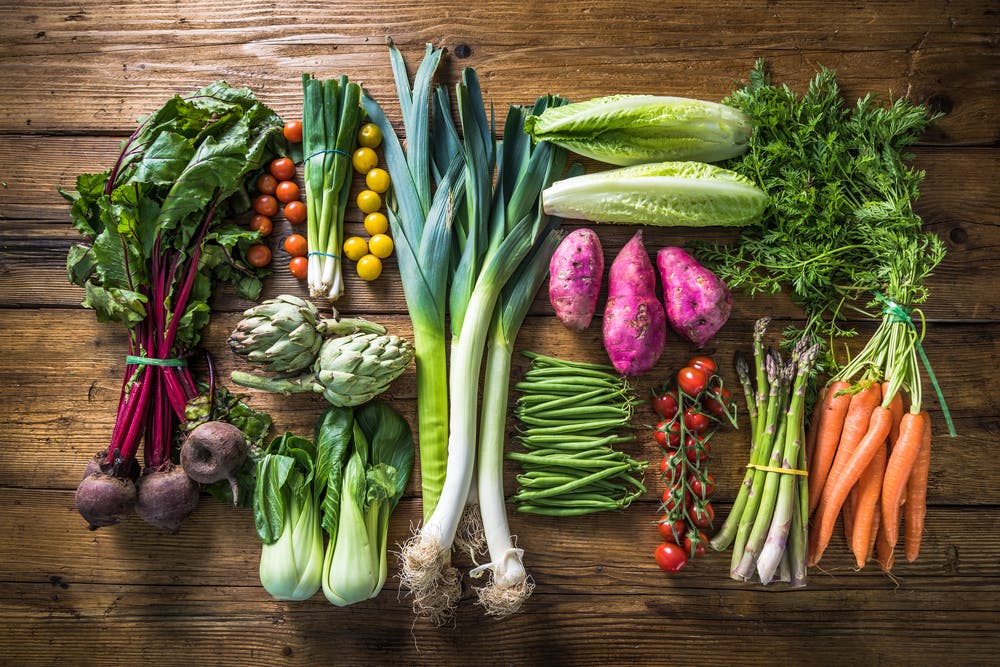 Research has found kids eat more veggies if you’re at the table with them.
from www.shutterstock.com
Research has found kids eat more veggies if you’re at the table with them.
from www.shutterstock.com
What can parents do?
1. Increase variety of healthy foods
Boosting your child’s variety of food and drink helps maximise their nutrient intake. Take the free Healthy Eating Quiz and use the feedback to boost the score for everyone in your family.
2. Introduce ‘new’ vegetables and fruit
A child might start with saying “yucky” when introduced to a new food. This is a normal reaction to something new or unfamiliar. It’s frustrating as a parent - but it’s normal.
Try pairing new foods with all-time favourites. In an experiment, researchers offered children (aged 10-12 years) two kinds of chips (one familiar, one new). Some of these children were also offered a familiar “dip” to go with it, while others were offered an unfamiliar “dip”. Those offered the familiar dip were more likely to try tasting the new food. Try this at home.
Make some oven wedges by splitting potatoes and sweet potatoes into chunks. Line a baking dish with baking paper, spray with oil, toss in the wedges and spray again. Cook in a hot oven and turn frequently till soft inside. Serve with a low salt/low sugar tomato sauce.
Read more: Hate vegetables? You might have super-taster genes!
3. Be a healthy eating role model
Monkey see, monkey do. Everyone wins when you eat the foods you want to see your children eating.
4. Have set meal and snack times and eat as a family at a table
It’s important parents and caregivers share meals with children and adolescents at a table during mealtimes whenever possible. This provides an opportunity for parents to talk with their children about a range of things, including nutrition.
Eating family meals enhances child and adolescent health and wellbeing. Children who share family meals three or more times per week are more likely to be in the healthy weight range, and to have healthier dietary and eating patterns.
In adolescence, having parents or caregivers present at evening meals is associated with higher intake of fruit, vegetables and dairy foods.
5. Ask for some help
It can be hard to ask for help, or even to know where to go to get it. Australian data shows even among families where a child has excess weight or obesity and has attended a health service, very few families get advice or a referral to other health professionals for assistance with weight management.
If they do get referred they can end up on with a long waiting list or need to take time off work to attend appointments.
Read more: Curious Kids: why do some people find some foods yummy but others find the same foods yucky?
Want to know more? We’re testing the impact of a free web-based program delivered by our team of dietitians from the University of Newcastle. We want to recruit parents with children aged 4-11 years from around Australia who are concerned about their child’s eating habits.
Authors: Clare Collins, Professor in Nutrition and Dietetics, University of Newcastle


















