Modern Australian
Men's Weekly

.

The Therapeutic Goods Administration has the power to stop misleading advertising. So why can't it stop Craig Kelly's texts?

  • Written by Christopher Rudge, Postdoctoral Research Fellow, University of Tasmania
The Therapeutic Goods Administration has the power to stop misleading advertising. So why can't it stop Craig Kelly's texts?

Earlier this month, many Australians received a text message prompting them to visit the “Australian Government’s COVID-19 Vaccines Adverse Events Report.”

It encouraged recipients to “click link uaptga.info” and informed them the message was “Authorised by Craig Kelly”, a former Liberal MP who has recently joined Clive Palmer’s United Australia Party as its leader.

Was it legal? Probably, yes. But there’s still a problem. The tricky text The text was strange and tricky. It presented a link that formed an unlikely portmanteau of acronyms. The letters “uap” (the United Australia Party) were oddly conjoined with the acronym “tga”, which usually stands for the Therapeutic Goods Administration — the Commonwealth government’s regulator of medicines and other health treatments. What’s more, the domain extension – “.info” – suggested the link might provide an information source. Though unsolicited, the sending of the text was probably lawful. “Electronic messages” authorised by political parties are usually exempt from the Spam Act or may otherwise be protected as political communication. Read more: Craig Kelly's move to Palmer's United Australia Party shows the need for urgent electoral law reform By tapping the link, users were redirected to the United Australia Party’s media website. There, visitors encountered several image files. These were screen grabs of five pages extracted from a 73-page document generated using the TGA’s Database of Adverse Event Notifications, or DAEN. To be clear, this “report” had not been authored by any scientist or staff member at the TGA. It was a user-generated “dump” of notification data. Not unlike a printout of the first few pages of a Google search result, the images provided some of the search results of the regulator’s adverse event notifications database. ‘Report’ or ‘data’? The problem is these screen grabs captured some (but not all) of the TGA’s data relating to certain adverse events. The data recorded what had been notified to the TGA – as opposed to what had been reviewed or confirmed by the regulator – about patients who had received a COVID-19 vaccine. These notifications may have come from health practitioners, members of the public, GPs, nurses, and others. It also included unreviewed notification data about Australians’ deaths. Because the web page was composed of images grabbed from the TGA’s database, it also featured the TGA logo at the top. But incongruously, at the bottom of the page, there was a campaign video featuring Kelly and the UAP.
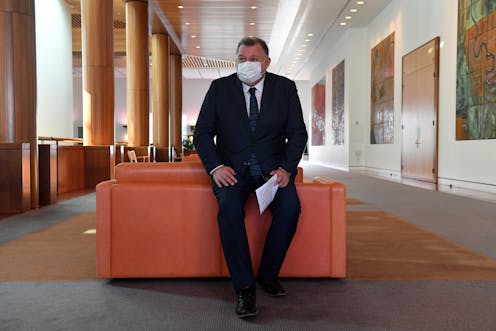
The TGA’s legislative powers may need to be expanded to cover communications that are not strictly advertisements. AAP/Dave Hunt

The text’s potential effects

Out of context, unexplained, and incomplete, the screen grabs are apt to mislead even a diligent reader of the material. But with millions receiving the text completely unprepared, it’s fair to assume that some, through no fault of their own, would draw false conclusions about it.

After all, there’s little to frame these data. Almost nothing indicates they are the unreviewed tally of notifications. And no disclaimer clarifies that the materials are silent on the all-important medical concept of causality.

Otherwise known as aetiology, this is the scientific study of how these events were caused. Such disclaimers, which actually do appear on the DAEN portal, had been mostly left off the screen grabs.

Even the footnotes that would usually help explain the meaning of each column’s contents had been excised from the screen grabs.

Read more: How political parties legally harvest your data and use it to bombard you with election spam

The regulator’s response

The TGA responded to this appropriation of its database materials in two ways.

It first made a statement confirming its lawyers had written to Kelly and his party. But that statement confirmed that only copyright infringement allegations had been raised by the regulator, together with a demand Kelly stop sharing “incomplete extracts of DAEN reports” that “could be seriously misleading”.

Less significantly, the regulator temporarily pulled the DAEN’s PDF-generation capability.

Why can’t the TGA do more?

So why doesn’t the TGA have a clear legal pathway, other than perhaps under copyright law, to stop misinformation being communicated?

In short, it’s because the texts probably do not constitute advertising.

In 2018, the TGA’s powers to control communications about medicines were increased considerably. Several reforms clarified and expanded the regulator’s authority to take civil and criminal action against individuals unlawfully advertising therapeutic goods.

The powerful new laws were quickly used to stop unlawful advertising, with one case resulting in a $10 million fine.

In 2020, a review of the reforms found them to be largely effective and fit for purpose, with some tweaks. Some COVID-related recommendations were made, including that the TGA should consider “responding to non-compliant advertising with sanctions and penalties in a timely manner”. However, the review, perhaps unsurprisingly, did not indicate that the scope or meaning of “advertising” should be widened.

The problem is that none of these reforms has equipped the TGA with powers to deal with communications that are not advertisements. While the statutory definition of advertisements is capacious, the critical requirement is that the material is “intended, whether directly or indirectly, to promote the use or supply of the [therapeutic] goods”. And despite a comprehensive regime of legislation for any such promotional advertisement, complete with a separate advertising code, the regime is really set up to control commercial activity that could threaten health consumers’ safety. It’s arguable the law has not contemplated a situation in which political materials might indirectly deprecate or “demote” a therapeutic good in a way that may threaten health consumers’ safety. Restricted and prohibited representations Then again, the TGA has some other powers. It may take civil or criminal action against any person who publishes what the legislation calls a “restricted” or “prohibited” representation. A restricted representation involves a promotion that refers to a disease, condition, ailment or defect that is classified as serious, such as COVID-19. The use of this power has seen the TGA fine Pete Evans’s company almost $80,000 to date for promoting, among other products, the so-called BioCharger device for the “Wuhan Coronavirus”. “Prohibited representations” generally relate to specific products, and prevent manufacturers making prohibited claims about them. This would include, for example, naming something a disinfectant or antiseptic when it is not. But, again, the problem with both restricted and prohibited representations is they are actionable only when they appear in commercial advertisements or on product labels. Moreover, the TGA’s advertising code sets out a number of important principles relating to advertising, including that it must be truthful, balanced and not misleading or likely to mislead, including in its claims, presentations, representations and comparisons. Again, these requirements apply only to “approved advertisements”. The party line Before the TGA released its statement, Clive Palmer, now chairman of the UAP, justified the widespread publication of the TGA materials. Palmer said he welcomed the “legal threats” from the TGA and claimed the “report” showed “COVID-19 vaccine treatment has been responsible for the deaths of 483 Australians and over 46,000 adverse reactions”. In a later press conference, Palmer rationalised the distribution of this incomplete data as “nothing more than circulating a government report”. He also expressed an intention to subpoena and examine TGA and Health Department officials in any future litigation. The regulator’s explanation Before these statements, TGA head John Skeritt had already made clear in a radio interview that these data were to be regarded with great caution. As he noted, the regulator had only found that nine Australians had died in circumstances where there was an aetiological (or cause-and-effect) association with a vaccine. Given this clarification, the United Australia Party’s stated wish to investigate the health department and the TGA rings strange. But it follows other actions taken by Clive Palmer though his foundation in 2020 relating to therapeutic goods. In April and May 2020, the Palmer Foundation imported some 32.9 million “doses” of hydroxychloroquine — some time before vaccines had been designed — as a gift to the Australian government’s National Medical Stockpile. The donation was announced in newspaper advertisements across the country. By May 2020, some 7 million tablets had been tested and analysed in a TGA-certified facility and entered into the government’s strategic reserve. But hydroxychloroquine had never been approved for the treatment of COVID-19 in Australia. And by the time the donated shipment reached the health department, hydroxychloroquine had already been restricted to five specialties of medical practitioner. Read more: The difference between government advertising and political advertising Therapeutic goods and modern politics COVID-19 has thrown up new challenges for therapeutic goods regulation. And it would seem that when dubious claims about medicine are made by politicians in the political – as opposed to the commercial – context, neither the therapeutic goods law nor the Australian consumer law is likely to provide a clear way of stopping them. Of course, the implied freedom of political communication, first recognised by the High Court of Australia in 1992, will usually be expected to give a strong protection to politicians who share relevant information with their would-be electors or (re-electors). Still, in recent years, the intensifying state of unchecked political speech has led to a push from politicians and legal experts alike for federal truth in political advertising laws. Although some will express doubt about the practicability of these proposed reforms, it may be that, until some such reform is realised, we must take our scientific data from politicians with a healthy pinch of salt. Authors: Christopher Rudge, Postdoctoral Research Fellow, University of Tasmania

Read more https://theconversation.com/the-therapeutic-goods-administration-has-the-power-to-stop-misleading-advertising-so-why-cant-it-stop-craig-kellys-texts-168083

Someone Trips at Your Fundraiser. Now What? Understanding Public Liability for NFPs

Three months of planning. Volunteers giving up their weekends. Sponsorships chased, catering sorted, tables decorated. And then, about an hour into ...

Stainless Steel Tube: A Complete Specification Guide for Engineers, Project Managers, and Industrial Buyers

Few materials in the industrial and manufacturing world are as universally relied upon — or as frequently misspecified — as stainless steel tube...

How to Choose the Right Barber Shears Scissors for Professional Results

Since a barber is only as good as their tool, choosing the right barber shear scissor must not be taken lightly. Most barbers end up buying the first ...

Why Commercial Construction Companies Play A Critical Role In Modern Urban Development

Urban development requires highly organised planning, engineering expertise, and professional construction teams capable of delivering complex build...

Essential Features for Comfortable Family Caravan Trips

Choosing the right van for family travel requires careful consideration of how the space will be used on a daily basis. Families have specific needs...

Chatswood Tutor: Helping Students Achieve Academic Success With Personalised Learning

Education plays a crucial role in shaping a student’s future, and many students benefit from additional academic support outside the classroom. A pr...

How External Consulting Can Guide Enterprise IT Strategy and Procurement

Internal IT teams carry deep operational knowledge, but that familiarity can create blind spots in strategic decisions. An external IT consultant br...

Why Sports Nutrition Australia Is Important for Performance and Recovery

Athletes and fitness enthusiasts place significant demands on their bodies during training and competition. Maintaining energy levels, supporting mu...

How Body Contouring Bundoora Helps Improve Shape And Confidence

Modern aesthetic treatments have made it possible to refine body shape without the need for invasive surgery. One of the most popular non-surgical o...

Why Plantation Shutters Are a Stylish and Practical Choice for Modern Homes

Window coverings play a major role in the comfort, privacy, and overall design of a home. Homeowners often look for solutions that provide both visu...

Why a Retractable Hose Reel Is Essential for Efficient Water Management

Managing hoses efficiently is important for both residential and commercial environments. Whether watering gardens, cleaning outdoor areas, or maint...

Best Ways to Trade In Your Old Tech for Cash in Australia

Upgrading your mobile is exciting, but many Australians are left wondering what to do with the device they no longer use. Instead of leaving it in a...

Why Doctors in Bundoora Play an Important Role in Community Health

Access to quality healthcare is essential for maintaining a healthy lifestyle and managing medical conditions effectively. Visiting experienced doctor...

Backyard Aesthetics Decoded: Mediterranean, Coastal, Retro, Rustic, and Beyond

Backyard design has come a long way from a patch of lawn, a barbecue in the corner, and a few chairs chosen purely for practicality. Today, outdoor ...

What Stops a Home From Feeling Flat-Pack Generic

There is nothing wrong with convenience. Flat-pack furniture, fast styling decisions, and online checkouts have made it easier than ever to furnish ...

5 Best Dental Clinics in Beecroft, NSW

The best dental clinics in Beecroft, NSW are Beecroft Smiles Dental Surgery, Beecroft Elegant Dental Clinic, McConnell Dental, Dentistry for Life, a...

Executive Recruitment: Finding Leadership Talent That Drives Organisational Success

Hiring the right leadership team can significantly influence the direction and performance of any organisation. Strong executives bring strategic thin...

Understanding the Importance of Abrasive Blasting in Industrial Surface Preparation

Surface preparation is an essential step in many industrial processes. Whether preparing metal structures, removing old coatings, or cleaning equipmen...


















