

Between the lines, Morrison's plan has coal on the way out, with the future bright
- Written by: John Quiggin, Professor, School of Economics, The University of Queensland
The most striking feature of Prime Minister Scott Morrison’s long-term emissions reduction plan outlined on Tuesday is not the long-telegraphed commitment to net-zero emissions by 2050, or the promise of a A$20 billion clean energy program (around 0.2% of national income annually).
It is the announcement of a technology target which is entirely outside the government’s control: solar photovoltaic electricity at a cost of A$15 a megawatt-hour ($/MWh).
That price translates to 1.5 cents per kilowatt hour (c/kWh), a tiny fraction of the 20 to 30 (c/kWh) currently being paid by Australian households. Most of the price households pay consists of charges for transmission, distribution and retail services.
The Australian government cannot deliver (or even significantly obstruct) this target, any more than Australia, acting alone, can much effect the global climate.
But it’s easy to see Mr Morrison is on safe ground in setting ultra-cheap solar photovoltaic electricity as his goal.
That’s because the world is almost there.
Long-term solar power supply contracts in many countries are being settled at prices of less than A$0.02 c/kWh and prices are continuing to fall.
Reductions in the cost of solar modules, inverters and the like are being driven by a massive global industry, with an annual turnover of more than $A200 billion a year, and correspondingly huge research and development budgets.
The programs announced today might help to accelerate progress a little, but they are part of a massive global effort.
Equally critical, and less subject to government control, is the global decline in long-term real interest rates which are now zero or negative, even over terms of 30 years, more than the expected life of a solar plant.
A zero real interest rate, combined with near-zero operating costs means a solar plant only needs to generate enough electricity over its lifetime to pay for its initial installation cost.
Solar electricity now costs very little
Utility-scale solar can now be installed at a cost of less than $A1/watt or $A1,000/kWh.
In favourable locations, such as those in most parts of Australia, solar cells can deliver the 2,000 hours of full power per year, over a lifetime of 25 years. That’s 50,000 kWh, implying a cost of A$0.02 c/kWh.
We can expect to see such prices appearing in contracts very soon, as the ultra-low cost of capital is factored into calculations of returns. Technological progress will get us the rest of the way to Morrison’s target.
This remains about as true even when we take account of the need for energy storage, to ensure electricity generated at the midday supply peak can be shifted to meet the demand peak in the early evening and to meet the much lower night-time need (sometimes called “baseload”). The costs of batteries are declining in the same way as solar cells.
What are the implications for the Australian coal industry? It’s already clear new coal-fired power is uneconomic in competition with solar and wind power, and most countries have stopped commissioning new generators.
The exceptions, including those in China, reflect the desire of provincial governments to keep capital investment going, rather than a calculation of costs and benefits.
But as the price of solar falls, even the existing paid-for plants will become uneconomic, unless the price of coal falls drastically.
Brutal arithmetic
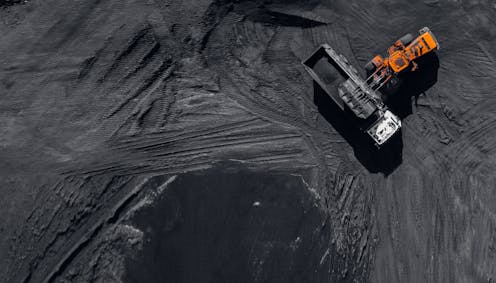
The arithmetic is brutal. One tonne of high-grade thermal coal is sufficient to generate 2-3 MWh of electricity.
In a market where the price is set by competition from solar at A$15/MWh, that would yield revenue A$30-45/tonne, out of which has to come the costs of maintaining and operating an ageing coal-power plant, as well as the cost of mining and shipping the coal.
At the moment thermal coal costs in excess of US$180 per tonne.
Add to that the fact China is in the process of introducing a carbon price, and it’s clear the achievement of Morrison’s solar electricity price target will spell the end of thermal coal. A similar analysis applies to gas.
“Green” hydrogen, produced by cheap electrolysis, could do the same for coking coal, as well as undercutting “blue” hydrogen produced from gas.
That won’t happen immediately. In the very short term in places such as China, growth in electricity demand is outpacing installations of solar and wind, pushing coal prices high.
And carbon-free steel is some way off.
When the global demand for coal does declines, it will be higher-cost and lower-quality producers such as those in Indonesia that will feel it before Australia’s.
But the idea Australia will still be exporting significant quantities of coal in 2040 — let alone 2050 — is a fantasy.
The broader story delivered by Morrison (and the right one) is a story of optimism.
Coal on way out, future bright
Instead of the alarmist scenarios of $100 roasts and economic catastrophe still being pushed by opponents of action, we are at a point where we can safely predict we will have more than enough ultra-cheap, pollution-free electricity to power homes, vehicles and most kinds of industry.
All that’s needed is the courage to embrace it.
It will require more than we have seen from our leaders so far.
We need to accelerate the transition away from coal-fired electricity and internal combustion vehicles, starting immediately.
The internal politics of the LNP might have stopped Morrison from announcing a serious target for emissions reductions by 2030, but there is no reason we couldn’t reduce emissions by 50% or more, while setting a course for a more prosperous and sustainable future.
Authors: John Quiggin, Professor, School of Economics, The University of Queensland


















