Fossil find reveals giant prehistoric 'thunder birds' were riddled with bone disease
- Written by Phoebe McInerney, PhD Candidate in Avian Palaeontology, Vertebrate Palaeontology Group, Flinders University
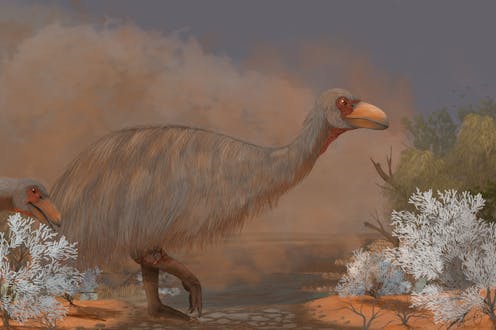
Until around 45,000 years ago, Australia was home to Genyornis newtoni, a fearsomely huge bird weighing roughly 230kg – almost six times as much as an emu – and standing 2 metres tall.
This giant, from a unique group of Australian flightless birds called the dromornithids or “thunder birds”, was among the largest birds that have ever lived. And then, along with many of Australia’s other “megafaunal” species, it disappeared, for reasons that still remain debated.
Read more: New research reveals the origin of Australia’s extinct flightless giants, the mihirung birds
Fossils of Genyornis are mainly found at the famous South Australian fossil site of Lake Callabonna, which was first studied in 1893. This exceptional site preserves hundreds of megafaunal fossils, in the same location and in many cases the same exact body position in which they died after becoming stuck in the muddy lake bed.
New research, published in the journal Papers in Palaeontology, shows that getting stuck in the mud was not the birds’ only concern. Bone infections also seem to have been common in this population – highlighting the challenges these birds were facing as their species began to die out.
The sickness
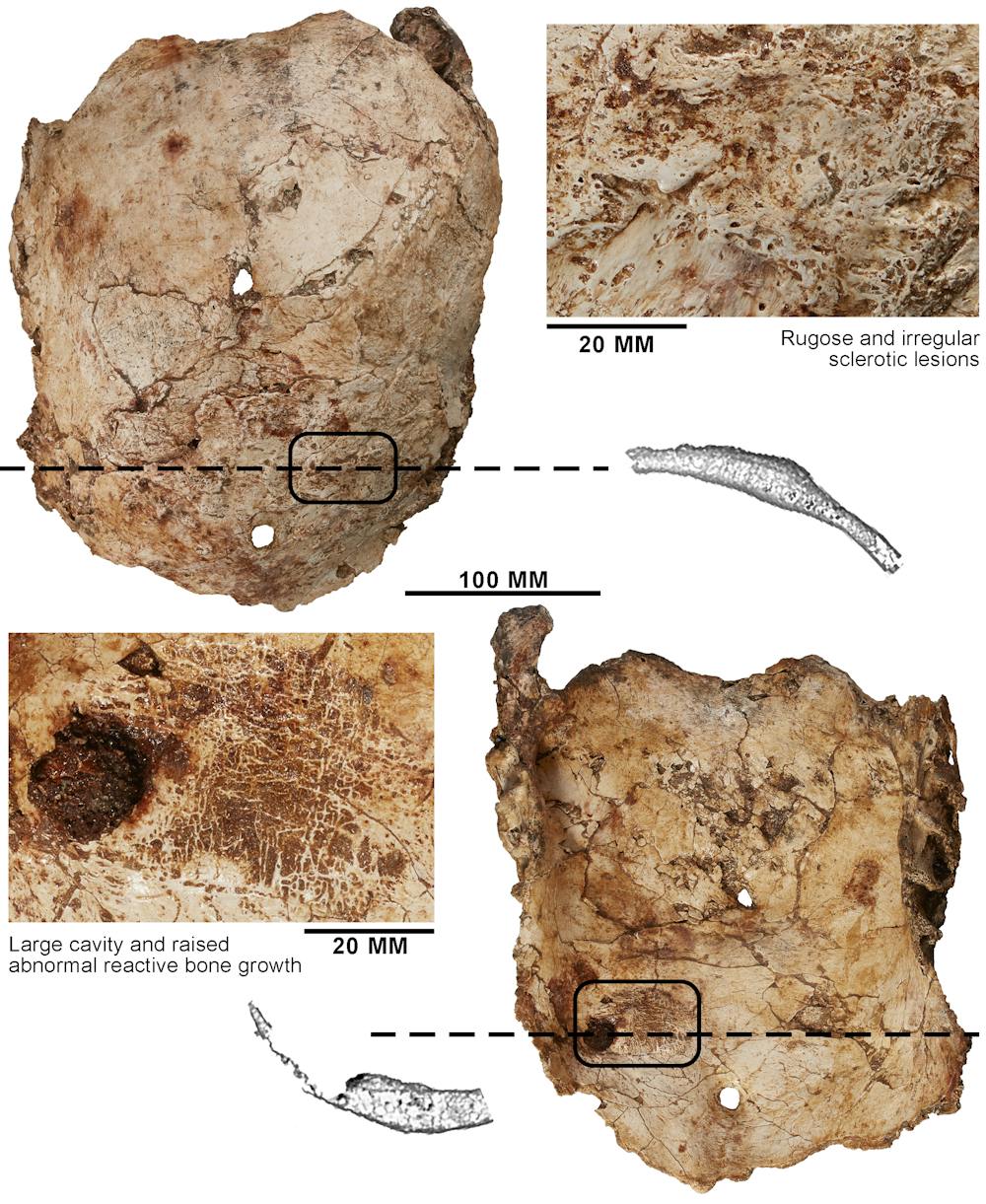
As we worked on the fossils in the Flinders University’s palaeontology lab, we noticed several of the bones just didn’t look quite right. They showed unusual distortions, cavities, and a “frothy” surface texture – all clear signs of abnormal bone infections.
We next looked inside the affected bones with the help of CT scans, which confirmed they had suffered abnormal development, distortion and destruction of their internal structure. Investigation into the type of illness that could cause such pathologies led to their diagnosis as osteomyelitis.
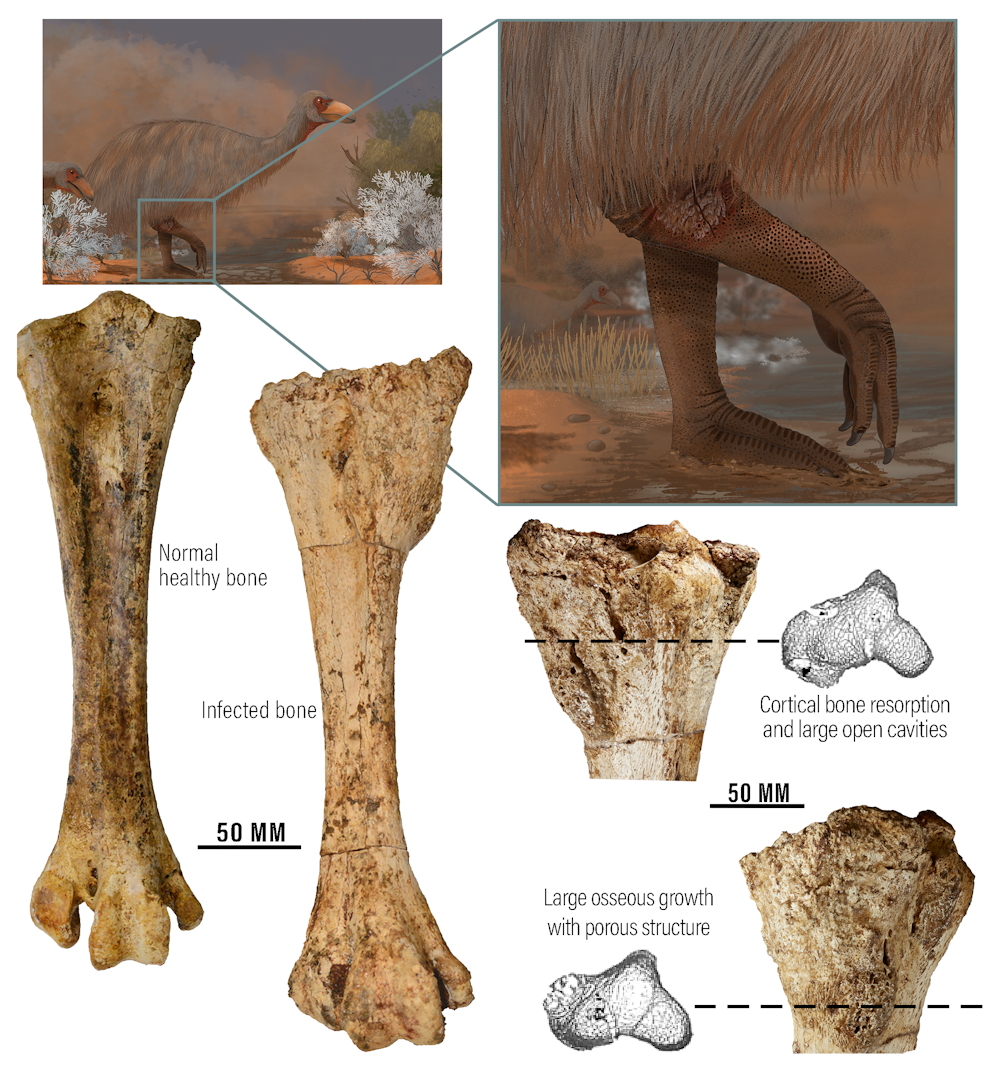 Infection on the leg of Genyornis newtoni and a life reconstruction of the injured bird.
Credit: PL McInerney
Infection on the leg of Genyornis newtoni and a life reconstruction of the injured bird.
Credit: PL McInerney
Osteomyelitis is a chronic bacterial infection of bone tissue, which can be caused either by trauma that lets microbes directly enter bone tissue, or via transmission from infected soft tissues nearby. It can cause serious damage.
Of the 34 partial skeletons of Genyornis, four showed signs of bone infections. But the real number is likely higher, because we couldn’t assess all bones from all 34 individuals.
With the chest, leg and foot regions afflicted, individuals would have suffered pain and restricted mobility. As a result, finding enough water and food around the muddy lake beds of Lake Callabonna would have become an arduous task.
Read more: A case of mistaken identity for Australia's extinct big bird
Disease and drought
These birds seem to have suffered an unusually high rate of bone disease, compared with today’s birds. This suggests the disease was not random, but instead was associated with a particular environmental cause – but what?
One way to help answer this question is to date the fossils accurately, and then to compare their plight with what we know was happening to the environment at Lake Callabonna at the time.
Calculating the age of these intriguing fossils is not necessarily straightforward because, like many of Australia’s extinct megafauna, they are too old for the classic radiocarbon dating method to work.
So we used an alternative dating technique called single-grain optically stimulated luminescence, which reveals when sand grains in the surrounding lake sediments were deposited. This provides a useful estimate of when the birds became mired in the mud.
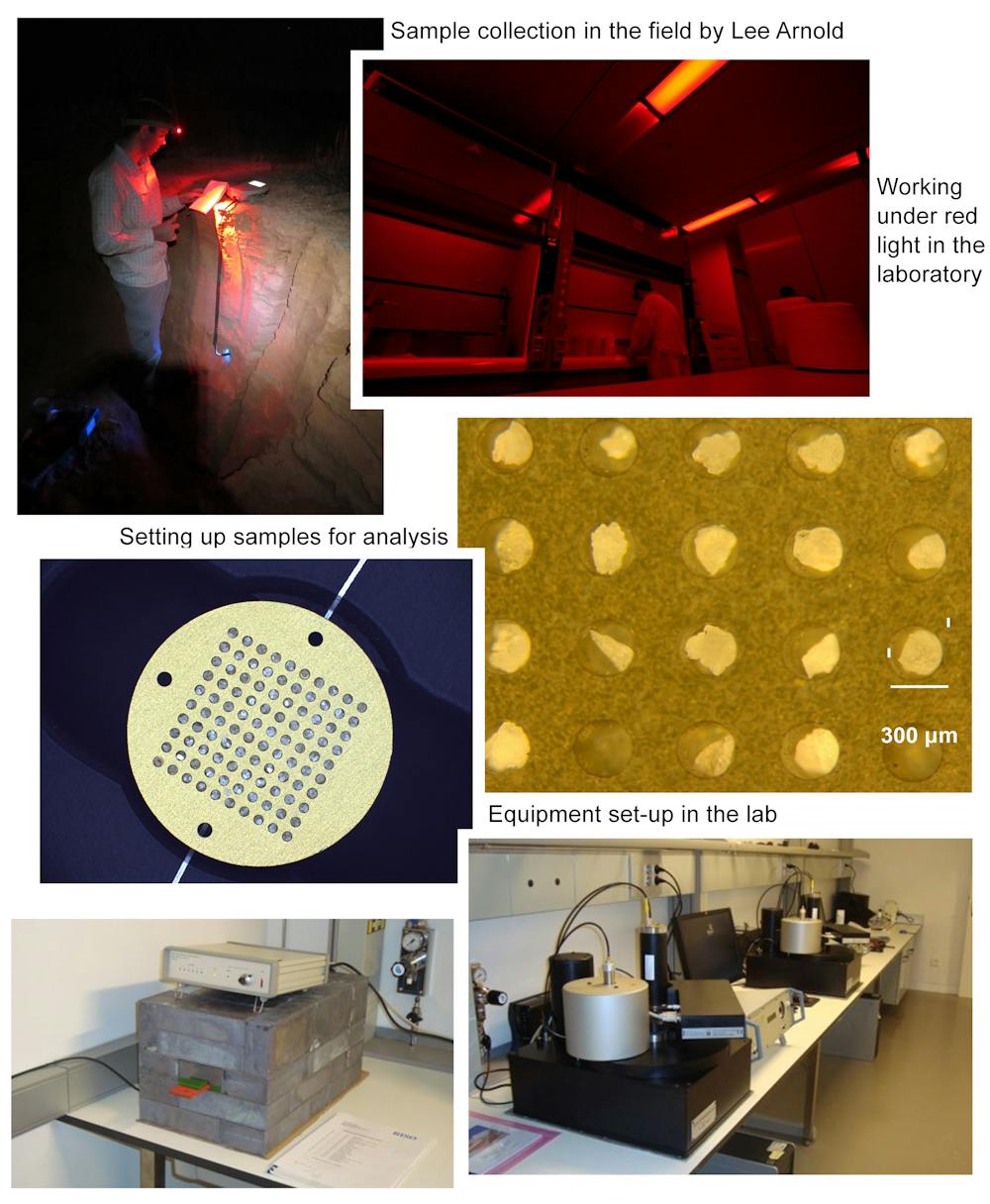 The dating of the Lake Callabonna sediments.
Photos supplied by Lee Arnold
The dating of the Lake Callabonna sediments.
Photos supplied by Lee Arnold
As this dating technique applies to sediments rather than bones, it can also be used to reveal the lake history. In particular, it can distinguish between times when the lake was full of water and was accumulating mud on the lake floor, and times when it was much drier and was accumulating wind-blown sands.
Our study revealed that the beleaguered Genyornis population met its demise getting stuck in sediments laid down between 54,200 and 50,400 years ago. Sediments dated from Lake Callabonna and nearby lake systems reveal that a protracted drought phase began around 50,000-46,000 years ago. After this time, the permanent and extensive water body was transformed into the dry lake bed seen today.
This suggests the birds’ fate was sealed once the lake began to dry up. The population became trapped in the freshly exposed lake floor muds as they searched for ever-diminishing water supplies.
A role in their extinction?
The rare preservation of Genyornis fossils at Lake Callabonna offers an extraordinary opportunity to investigate the impact of environmental change on this now-extinct population.
When resources are limited, as they would have been during these severe droughts, birds can initiate a stress response that helps them survive until the next time of plenty. But in the long term, this stress response directs resources away from the immune system, ultimately increasing the birds’ susceptibility to infection and disease.
Thus, it is perhaps no surprise the Genyornis bones bear the hallmarks of severe disease.
There is no conclusive evidence that Genyornis survived for long beyond this time. The drying-out of the lakes they called home may have ultimately sealed their extinction fate.
Authors: Phoebe McInerney, PhD Candidate in Avian Palaeontology, Vertebrate Palaeontology Group, Flinders University