Israel is rolling out fourth doses of COVID vaccines. Should Australia do the same?
- Written by Vasso Apostolopoulos, Professor of Immunology and Associate Provost, Research Partnerships, Victoria University
While Australia’s booster program of COVID vaccines is just getting going, governments overseas are evaluating the need for a fourth dose program.
Earlier this year, Israel began offering a fourth dose of the Pfizer mRNA vaccine to people who are immunocompromised, older people, and front line health workers. Israeli medical experts have since suggested fourth doses for everyone over 18. A number of other countries are deploying or considering a fourth dose program. Meanwhile, the UK have ruled it out for the time being.
In Australia, a fourth dose for significantly immunocompromised people – such as those with certain cancers – was approved by ATAGI in early January and is being evaluated for other high-risk populations by the government.
While there is evidence a fourth dose would help protect our most vulnerable, it may not be the answer for the broader Australian community.
Does a fourth dose work?
Preliminary data from Israel suggests a fourth dose for people over 60 offers up to two times more protection against infection, and three times more against severe disease compared to those who have received a third dose at least fourth months prior.
Evidence is not yet available to show the safety of a fourth dose. But given the decrease in adverse events from the third dose, compared to the second, it is likely the extra vaccine will be equally as well – or better – tolerated.

Read more: What we know now about COVID immunity after infection – including Omicron and Delta variants
A booster for high risk populations
Given a fourth dose looks likely to provide extra protection and be safe, there is certainly a place for the extra vaccination – particularly for those at greatest risk of exposure and severe illness.
In immunocompromised people, the original two doses do not provide enough protection for many. Administering a third dose helped 50% of people who didn’t respond to the first two doses generate an immune response – but this still leaves a large number of people unprotected.
This scenario is partially mirrored in older adults, who have both worse outcomes if they get COVID, and smaller, shorter immune responses to vaccination.
This has sadly been made clear by the lives lost to COVID in Australian aged care facilities. Given these groups make up a disproportionate number of both COVID fatalities and cases, the argument for a fourth dose for older Australians is clear.
But what about the rest of the population?
The question of whether to vaccinate the bulk of healthy Australians is a more complex one. While some will frame the issue around the risk of vaccine side-effects, this is not the central concern.
Adding a universal widely distributed fourth dose will save lives and prevent burden on the medical system – but this needs to be weighed against practicality and cost.
In healthy people, three doses of a COVID vaccine gives good protection against symptomatic infection and severe illness. This is consistent against all variants of COVID, including the now prevalent Omicron.
The benefit of an additional dose for healthy Australians, may be outweighed by the cost of acquiring and administering an additional 20 million or more doses.
As the Omicron variant has highlighted, we might be better advised to improve access to vaccines in poorer parts of the world, where widespread transmission can seed new variants that can then spread back to wealthier nations like Australia.
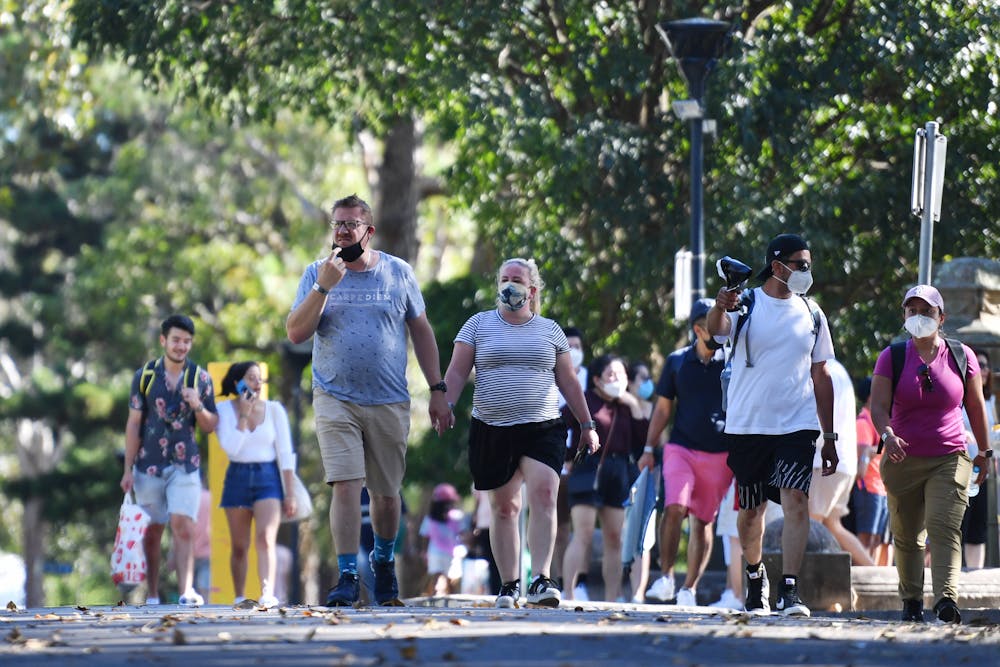 Rather than future COVID boosters for the broader population, we may be better to focus on global vaccine coverage.
AAP Image/Dean Lewins
Rather than future COVID boosters for the broader population, we may be better to focus on global vaccine coverage.
AAP Image/Dean Lewins
Another issue facing immunologists, is the diminishing return on investment of the current vaccines in the face of new variants. Omicron has mutated to a point where it has significant differences from the coronavirus of 2019 (on which the current vaccines are derived). This means the current vaccines are less effective and provide a smaller increase in protection against Omicron infection, though still signficant protection against severe illness.
Rather than further doses of the same formulations, variant-specific vaccines currently in development could offer more tailored protection.
While some voices deride the need for a fourth, fifth or even 20th dose, this is the reality we have faced for years in preventative medicine. New flu vaccines are engineered each year to counter the rapid mutation of viruses. Thankfully, the invention of the mRNA vaccine platform means we can do this faster, more effectively, and more safely than ever before. So, no matter the specific variant, severity or transmission of coronaviruses, we will continue to be able to protect our community.
A future unknown
The way forward all hinges on future information not yet known. We still can’t say with confidence how long immunity from a third dose will last, particularly in the face of new variants. If another variant arises that is more dangerous, or widespread, then maybe the cost/benefit ratio of additional vaccine doses will change for Australians.
However, it is already clear a fourth dose in vulnerable groups will provide worthwhile benefits and protect the most vulnerable members of society – even if we don’t need more widespread vaccination. But we should remain alert and informed. If the battleground changes, those who can must all be prepared to roll up their sleeves and do what is necessary as a community.
Authors: Vasso Apostolopoulos, Professor of Immunology and Associate Provost, Research Partnerships, Victoria University