

Kava may be coming to a supermarket or cafe near you. But what is it? Is it safe?
- Written by Julia Butt, Lecturer, Clinical Psychologist, Edith Cowan University
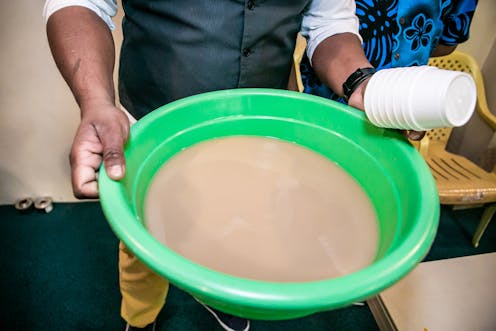
You might be hearing more about kava over coming months, the psychoactive drink better known in the Pacific, but becoming more widely available in Australia.
How it’s imported and regulated has changed. So you might be able to buy it in the supermarket, health-food shop or go to a kava bar to drink it with your friends.
You might be curious to try it and not sure it’s safe. Here’s what you need to know about kava in Australia.
What is kava?
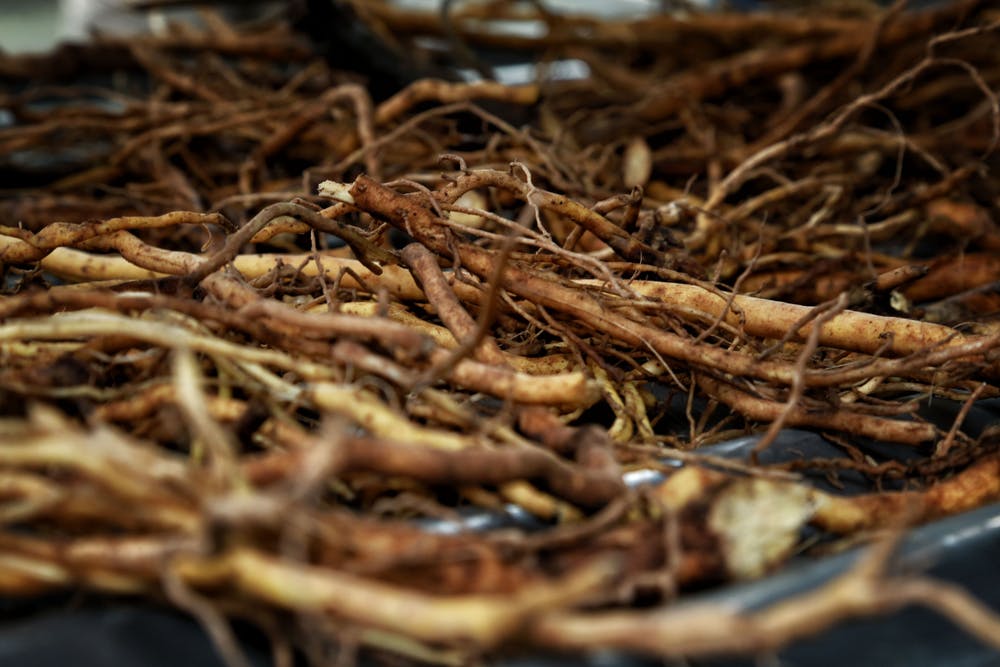
Kava is made from the root of the kava plant (Piper methysticum). This economically significant crop has been grown and consumed for more than 3,000 years across the Pacific.
Traditionally, the root is ground, then soaked in water to make a drink. It is mainly used by men in countries including Fiji, Tonga, Samoa and Vanuatu for ceremonial, recreational and medicinal purposes.
Traditional drinking practices, which usually involve drinking kava with others, moderate kava consumption. Although heavier recreational drinking occurs and can cause harm.
Read more: Australia's discussion of kava imports reflects lack of cultural understanding
Kava is not commonly used in Australia. However, it is used by some Pacific communities, for instance, by some Fijian, Tongan and Samoan Australians.
Kava is also used in a small number of Aboriginal communities in Arnhem Land, in the Northern Territory. Kava was introduced to these communities as an alternative to alcohol in the 1980s. Its use peaked in the 1990s and early 2000s.
In Australia, kava is usually available as a powder, which is then made into a drink.
What does it do? Is it safe?
Drinking kava can lead to effects including feeling sociable and at peace. People also report having reduced anxiety and an overall positive mood, while remaining clear-headed.
Increasing levels of intoxication can lead to feelings such as numbness, sedation, a sense of muscle weakness and fatigue.
The World Health Organization considers the risk of kava toxicity “very low”. However, kava use is not harmless.
High levels of kava use causes a scaly skin rash, weightloss, changes in liver enzymes and overall feelings of ill-health.
Heavy kava use is also associated with a number of social harms. These harms are not specific to kava, but the harmful use of any drug.
This includes the impact of time spent accessing, using and recovering from kava use. This impacts someone’s capacity to fulfil family, cultural and workplace roles. There are also financial impacts from missed work, and buying kava.
When people in Arnhem Land used kava heavily, this led to significant community-wide harms. These included a decline in community and cultural activities, and less participation in employment.
What’s changed?
Kava has a complicated regulatory history in Australia, with many changes in recent years, including:
from December 2019 the federal government launched a two-stage “kava pilot”, aiming to boost trade with Pacific nations and making it easier for Pacific Australians to access kava for cultural reasons. Incoming passengers were allowed to bring in 4 kilograms per person 18 years or older (up from 2 kilograms per person).
from December 2021 the second stage of the pilot allowed kava to be commercially imported as a food product, with an import permit. Products need to carry labels saying “Use in moderation” and “May cause drowsiness”; these warnings must also be displayed where kava is sold. These changes bring Australia more in line with other nations with significant Pacific communities (such as the United States and New Zealand).
Despite these changes at the federal level, it remains illegal to bring kava food products into the Northern Territory.
The therapeutic use of kava extract – for anxiety, insomnia, and a range of other conditions – is not covered by the recent legislative changes.
What will these changes mean?
Under the latest changes, kava will be more widely available in Australia, from places including health-food shops, supermarkets, pharmacies, as well as online.
Kava bars are also starting to emerge, including a pop-up bar in Brisbane.
We don’t know if kava will have a broader appeal outside Pacific communities in Australia, and what the positive and negative implications of greater availability may be.
Not everyone’s happy
Previous regulatory changes related to kava did not involve consultation with affected communities, including Pacific communities in Australia, or adequate consultation with Aboriginal businesses, health organisations and communities.
For instance, the initial banning of kava imports to the Northern Territory did nothing to address the social determinants of health and underlying factors related to heavy kava use in some Arnhem Land communities.
Similarly, regulatory changes from 2019 did not occur with adequate Aboriginal community consultation. Community leaders have raised concerns of an increase in kava-related harms, including increased black-market activity in the Northern Territory.
What needs to happen next?
The federal government says the latest changes for Australia will be monitored and evaluated by the National Drug and Alcohol Research Centre working with the Indigenous owned organisation Ninti One.
This will look at the health, social, cultural and economic effects of increased kava availability. The final report is due in mid-2023 and we don’t know if the results will be publicly reported.
For the evaluation to be of value to all communities impacted by kava, we need genuine collaboration with these communities. This needs to consider the diversity of opinion in both Pacific communities in Australia and Aboriginal communities using kava.
Further research on the benefits and harms associated with kava, including identifying safe levels of consumption, is also needed.
Finally, we need surveillance of known risks. This includes driving under the influence of kava, and black-market activity related to kava entering the Northern Territory.
Authors: Julia Butt, Lecturer, Clinical Psychologist, Edith Cowan University

















