

UN committee rules anti-lesbian sex laws breach human rights in landmark decision
- Written by Paula Gerber, Professor of Human Rights Law, Monash University
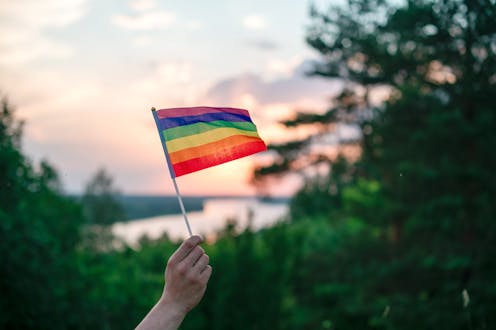
On Wednesday, a United Nations committee became the first international law body to recognise that criminalising female same-sex sexual activity is a fundamental breach of human rights.
The landmark decision means all countries that criminalise women having sex with other women should immediately repeal these laws.
Which countries criminalise homosexuality?
Seventy-one countries still criminalise homosexual conduct. Many of these are our neighbours – ten in Asia and seven in the Pacific.
Many people assume these laws only apply to men having sex with men, but that’s not the case. Sexual conduct between women is prohibited in the criminal codes of 34 of these 71 countries.
Countries with sharia law such as Afghanistan, Nigeria and Saudi Arabia also essentially criminalise lesbian sex. So there are 43 countries where it’s a crime for women to engage in same-sex sexual activity – almost a quarter of all countries in the world.
The majority of the countries that criminalise same-sex sexual activity are members of the Commonwealth, whose anti-homosexuality laws were introduced by the British Empire.
However, Britain only ever criminalised male homosexual activity, and the expansion of these laws to explicitly include female sexual activity is a relatively recent phenomenon. Countries that have done so include: Trinidad and Tobago (1986), Solomon Islands (1990), Sri Lanka (1995), Malaysia (1998) and Nigeria (2014).
In the past 35 years, ten jurisdictions that previously only criminalised same-sex male sexual intimacy changed their laws to include, for the first time, new criminal sanctions of lesbians and bisexual women.
The laws criminalising same-sex activity between women aren’t just arcane laws that are never enforced. In Malaysia just over three years ago, two women were caned six times for attempting to have sex.
And late last year, a lesbian activist in Iran was arrested while trying to flee to Turkey to seek asylum. Before this, she was detained for 21 days by the Iraqi Kurdistan police following an interview she did with BBC Persian about the situation of the LGBTQ+ community in Iraqi Kurdistan.
The case
The case of Flamer-Caldera v Sri Lanka was brought by a lesbian activist to the UN Committee on the Elimination of Discrimination Against Women (CEDAW).
She argued that Sri Lanka’s criminal laws violated her right to live her life free from discrimination based on her sexual orientation.
The CEDAW committee agreed.
It found the effect of Sri Lanka’s criminal code was that lesbian and bisexual women lived with the constant risk of arrest and detention. And the laws facilitate a culture where discrimination, harassment and violence against lesbians and bisexual women can flourish.
Law is a tool that governments use to communicate to society what is acceptable and unacceptable behaviour. When the Sri Lankan government declared any sexual intimacy between consenting women is a crime, it signalled to Sri Lankans that vilification, targeting and harassment of lesbians and bisexual women is acceptable, because they are criminals.
The laws not only criminalise same-sex sexual conduct. They also perpetuate homophobia, stigmatise the LGBTQ+ community and sanction gender-based violence against lesbians and bisexual women.
This decision sends a clear message to all governments who think it’s OK to persecute, harass and discriminate against lesbians and bisexual women – you are wrong.
Read more: Australia has finally achieved marriage equality, but there's a lot more to be done on LGBTI rights
What now?
Sri Lanka now has six months to provide a written response to the CEDAW Committee setting out the action it has taken, or will take, to give effect to the committee’s decision.
Repealing the specific provision in the criminal law will not be enough. A much more holistic and nuanced response is required. In particular, the government will need to:
develop campaigns to counter prejudice and stereotypes directed at the LGBTQ+ community
enact anti-discrimination laws prohibiting discrimination on the basis of sexual orientation, gender identity and intersex status
embed human rights education in schools, promoting equality and respect for all regardless of their sexual orientation or gender identity
provide training for police, judges and other law enforcement officials to increase their understanding of, and respect for, the human rights of LGBTQ+ people. This will also enable women to report homophobic crimes to the police without fear of retribution and with the knowledge the perpetrators will be prosecuted
ensure there are adequate civil and criminal remedies for members of the LGBTQ+ community who are subjected to discrimination and gender-based violence.
Read more: It's time to talk about gay reparations and how they can rectify past persecutions of LGBTQ people
The decision in Flamer-Caldera v Sri Lanka represents a watershed moment in international human rights law and will reverberate around the world.
It’s now beyond dispute that criminalising consensual adult same-sex sexual conduct violates a woman’s right to privacy, dignity and non-discrimination.
All governments have a duty to protect all women, including lesbians and bisexual women, from discrimination, gender-based violence and other harm.
Any country that criminalises the sexual conduct of lesbians and bisexual women, regardless of whether they enforce the laws, is guilty of violating international law.
Authors: Paula Gerber, Professor of Human Rights Law, Monash University

















