

Does toxic masculinity explain why men kill women? Perhaps not as much as we thought
- Written by: Samara McPhedran, Honorary Associate Professor, The University of Queensland
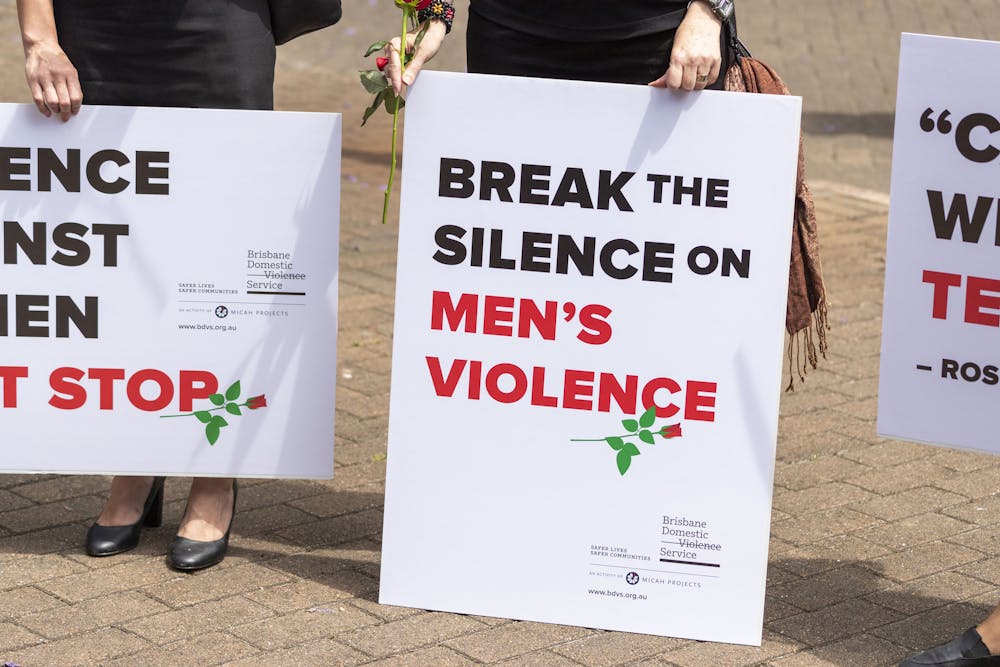
Men killing their female partners has gone from something that occurred behind closed doors with little public discussion, to the focus of national headlines and high-level policy attention.
Even though shocking and high profile murders rightly prompt calls for law and policy reform, it is a different thing entirely to develop measures that actually work. The risk is that complex problems will be oversimplified.
How much of men killing women can we understand through a purely gendered lens? In other words, how much does looking at this problem through a lens of patriarchal control and toxic masculinity actually explain the problem?
The answer may be: less than we thought.
A distinctly different kind of man
When it comes to understanding why men kill their partners, there are two distinct schools of thought.
One is that offenders share many similarities with men who are violent in other settings (for example, towards people they do not know).
The other is that men who kill intimate partners are distinctly different from other killers, particularly in their attitudes and beliefs about the place of women in society and men’s rights over women.
The latter view has come to dominate policy-making.
Concepts like toxic masculinity, patriarchal power and control, and men’s entitlement, have found their way out of feminist theory and into mainstream dialogue.
However, when one viewpoint becomes all encompassing, the result tends to be loss of nuance, lack of perspective, and limited effect in the real world.
Comparing three groups of homicide offenders
We looked at this question using data from the Australian Homicide Project. This is a unique dataset that contains in-depth interviews with over 300 convicted homicide offenders in Australia.
Our study compared three groups:
men who commit intimate partner femicide (such as men who kill their female partners or female ex-partners)
men who kill female non-intimates (such as men who kill a woman with whom they’ve never had romantic relationship) and
men who kill other men.
We found very few differences between the three groups when it came to their backgrounds.
A considerable proportion in each group had not completed high school, and were under financial stress and/or unemployed in the year before the homicide.
Experiencing physical abuse and neglect during childhood was commonly reported. So was witnessing parental violence, and having insecure relationships with their parents (particularly their fathers).
There were some differences. Men who killed other men were much more likely to have had problems with alcohol and/or drugs in the year before the homicide. They also had far more extensive criminal histories.
All three groups had much higher levels of past criminal offending than the general population. Assault (not specifically against intimate partners) was especially common.
Interestingly, the intimate partner femicide group and the men who kill other men group did not differ significantly in their levels of reported past violence towards an intimate partner.
Attitudes toward women
When it came to attitudes, there were far fewer differences than we expected to find.
The intimate partner femicide group were more likely to endorse using violence within intimate relationships, and to believe that there were no alternatives to violence.
However, the groups did not differ on sexual jealousy (for example, how upset they would be if their partner talked about an old lover).
Nor did they differ greatly on attitudes toward marital roles (for example, the belief that a man should help in the house, but housework and childcare should mainly be a woman’s job).
In terms of male entitlement, the intimate partner femicide group were more likely to endorse “behavioural control” (for example, “If I can’t have my partner, no one can”).
But the groups did not differ in their endorsement of “social control” (for example, “I insist on knowing where my partner is at all times”) and “information control” (for example, “I look through my partner’s drawers, handbag, or pockets”).
Coercive control has become a key focus for intimate partner femicide prevention efforts.
However, our findings suggest that some of the “subtler” behaviours that characterise coercive control – such as checking up on a partner’s whereabouts, insisting that they disclose where they are going, or monitoring their phone calls – may not be as specifically associated with intimate partner femicide as is often thought.
Instead, it may be that overt behavioural control is what we need to consider when we try to assess risk in relationships. This can include things such as expecting a partner to do what she is told, or expecting sex on demand.
Read more: People in abusive relationships face many barriers to leaving — pets should not be one
Capturing the nuance
Overall, our results warn that policies intended to prevent intimate partner femicide should not become narrowly focussed around gendered factors such as men’s attitudes to women and toxic masculinity.
These results show things like adverse experiences in childhood and financial stress may be common threads across various different “types” of homicide.
Many theories about homicide, and homicide prevention strategies, focus strongly on the relationship between the victim and offender, or the sex of the victim.
Our work, although based on a relatively small sample size, sounds a caution that such an approach can easily fail to capture the nuance and diversity within victim-offender relationships, as well as crucial similarities across different groups.
Ultimately, legal and policy responses to homicide need to be informed by multiple different perspectives and understandings of offending.
While the gendered perspective has a part to play, it is clear this approach cannot offer all of the answers.
Authors: Samara McPhedran, Honorary Associate Professor, The University of Queensland


















