

Google AI


Modern Australian

Faced with losing her partner, Chloe Hooper turned to stories to talk to her children about death

  • Written by: Jane Messer, Honorary Associate Professor in Creative Writing and Literature, Macquarie University
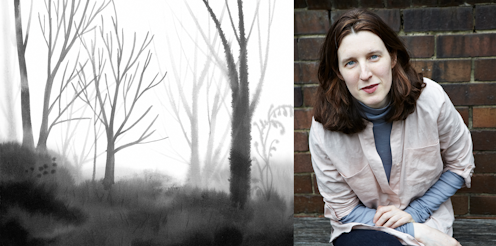
Faced with losing her partner, Chloe Hooper turned to stories to talk to her children about death

The fifth book from Chloe Hooper, an accomplished author of fiction and nonfiction, is in part a bedtime story told across many nights to her two sons, and in part a meditation on how stories – ancient and modern – might sustain or fail us during dark times.

In 2019 Hooper was thrust into a whorl of uncertainty about how and what to tell her children about their father’s very likely terminal leukaemia. Their father is Don Watson, historian, biographer, speech writer and essayist. Out of the blue, he’d been diagnosed with a rare and trenchant form of his disease.

What can you read to help you when your partner might soon be dead, leaving you alone to rear two little boys? Hooper is looking for the “right words”, “an incantation, a spell of hope for the future”. Ostensibly she is reading not for herself, but for her children. Her eloquent account of this difficult time in their lives is addressed to her oldest boy, Tobias, a vivacious child and avid reader who had recently started school when Don was diagnosed. In this bedtime story, she writes in the second person, to Tobias, but inevitably the reader is placed in the position of the boy; we readers are her “you”. Rather enchantingly, Hooper imagines them when they’re much older, pulling this memoir and meditation from a bookshelf, rediscovering their lives during what they will later barely remember, their father’s illness and recuperation. Living hopefully, with death nearby She imagines they might later be ready for this elegiacal, meditative exploration of living hopefully, with death nearby. “Even going to sleep,” she writes in one of the book’s many instances of expressing the deep connections between life, death and storytelling, “has the old plot line: separation, adventure, return. And each morning is a fresh quest. Sunlight finds its way through the gaps in the drawn curtains.” The narrative is structured by what she discovers in the books that she reads, the rhythms of family life, and the chronology of Don’s diagnosis, chemotherapy treatment and remarkable recovery. The children steadily grow older. She hands in another book to her publisher. Gabriel is no longer a baby, but a boy with words. A friend’s husband also has cancer, and the friend is shocked to hear that Hooper hasn’t talked to the children yet. Chloe Hooper the mother sometimes flounders, doesn’t know what to say, while Hooper the author writes with aplomb. Read more: Keating's Redfern speech is still worth fighting over She is an honest memoirist: imperfect, struggling, ready to share with the reader how terrifying motherhood can be. Early in the memoir, Hooper acknowledges that turning to stories that might speak to children about loss and death has been the “perfect way” for her to “avoid thinking about the future”. The first problem she faces as a mother is not what to say, but when to start speaking at all.
Illustration by Anna Walker, from Bedtime Stories.

Hooper turns to myths and legends, epics, the brothers Grimm and Hans Christian Anderson tales. She unearths obscure works such as James Janeway’s A Token for Children, being an Exact Account of the … Joyful Deaths of Several Young Children: “How dost thou spend thy time? Is it in play and idleness, and with wicked children?”

The words with which death, separation and loss have been communicated to children through the ages are key to Hooper’s quest. Were children spoken to differently at times of crisis? Was there something special about the words shared between a parent and a child when only a fire or the moon lit the night? She explores descent narratives, suggesting that humankind’s most reassuring bedtime tale might be that when “our heroes cross to the land of the dead” they “evade death themselves”.

And this uncertainty about whether their hero will cross the river safely is at the heart of Hooper’s terror: that her children will learn about death not through bedtime stories, but first-hand.

She turns to indigenous stories: Mayan, Japanese, Congolese, and Dreaming stories about the Seven Sisters. She reads contemporary narratives, in the much-loved and awarded children’s books that explore loss, illness, absence, separation and death. She reads author biographies, only to discover how many well-known writers for children were themselves orphans, or the child of one surviving parent. After a long time, she concludes that any genre of story will do as long as it resonates, and has “No grand tricks, no showing off.”

Stories of wonder, and catastrophes avoided

Much of the memoir is suffused with images of lamplit darkness: the interiors of the family’s Melbourne home, with the boys being read to at night. Every now and then, a turn of the page brings you to poetry, or short passages that express the filament of a moment, of hope. Hooper imagines other parents and children alone together in the dark, searching – like her – for words, reaching way back in time to before the earliest cuneiform or papyrus, hearing stories in which death, fear and loss are ever-present.

But more present than the past is Hooper with the children, and Don, when he is well enough, telling them his stories. Threaded through the pages are her sketches of Watson’s own childhood in the bush and on a farm, showing how his early life made a storyteller of him. There are also reassuringly ordinary milestones of their family life: the honeyeater that nests in a tree outside their kitchen, and the poignant and witty stories that Watson tells to his boys off-the-cuff at bedtime. Their mother reads to them, their father invents.

Illustration by Anna Walker, from Bedtime Stories.

At a certain point, Hooper asks Don to use his phone to record his stories, just in case. His stories, some of which she recounts, are about “small-scale acts of wonder”. Once the children know of his illness and the possibility of his death, he invents catastrophes avoided, such as the spider that escapes the home owner’s attempts to rid it from the house and discovers a glimpse of a “brilliant, star-filled sky”.

She realises that she and Don were each raised not to talk about death; “Recognising you’re repressed, however, doesn’t cure you of the affliction.” When Don and Hooper do tell Tobias about his father’s diagnosis, it’s a tense scene, with them sitting separately on the couch while he bounces a balloon.

When Tobias asks, “How do we die?”, Hooper at first deflects. The pragmatic questions continue: “When you die does all your skin disappear?” Ever the reader and writer, Hooper conversationally refers Tobias to a book they have read together about the life of forests and leaf-litter, telling the reader that it’s Henry David Thoreau who wrote that “Leaves teach us how to die.”

By the book’s end, she sees that when she’s best handled her children’s questions, an image or a phrase from one of the stories has been there to support her.

Read more: Friday essay: why grown-ups still need fairy tales

The honeyeater’s chicks survive with the help of the family, as does Don. The thoughts and discoveries Hooper shares with the reader are brilliant, perceptive, healing: “We must all assemble our own paper boats, from old designs or whatever scraps of love and hope are at hand.”

The memoir is illustrated with beautiful charcoal-wash sketches and evocations of forests, leaves, birds and skies. The images are a reminder of the child Alice’s wise words at the start of her Adventures in Wonderland; “what is the use of a book … without pictures or conversations?”

Authors: Jane Messer, Honorary Associate Professor in Creative Writing and Literature, Macquarie University


Read more https://theconversation.com/faced-with-losing-her-partner-chloe-hooper-turned-to-stories-to-talk-to-her-children-about-death-180326

What to Do When an Older Car Is No Longer Worth Keeping in Melbourne

Ever looked at another repair quote and wondered whether your old car is still worth the trouble? It is a common turning point for Melbourne motoris...

Your Baby's First Year: A Local Guide to Feeding, Sleep, and When to Get Extra Support

Ask ten parents in a Brisbane mothers' group how their baby is feeding or sleeping, and expect ten different answers.  Someone's baby sleeps throug...

Kitchen and Laundry Makeover Ideas That Don't Require a Full Renovation

Full kitchen renos are expensive — and most people don't actually need one.  They need the kitchen to stop looking like it's stuck in 2009, or they...

How Technology Is Reshaping the Modern Australian Commercial Kitchen

The commercial kitchen has always been shaped by technology. Refrigeration changed how ingredients could be stored, modern ventilation transformed k...

The Number on a Roller Blind Fabric That Nobody Explains

Somewhere in the fabric book, next to the colour name, there is a percentage. Three per cent. Five per cent. Ten per cent. Nobody explains it, most c...

What’s Trending in Men’s Jewellery This Father’s Day!

Finding a Father’s Day gift that feels personal, stylish and genuinely wearable is not always easy. While socks and novelty mugs have traditionally ...

Road Signs: Understanding Their Role in Clear and Effective Signage

Effective signage and display hardware can help businesses communicate information, promote products and organise customer or visitor movement. Road...

Bottle Label Printing: Key Factors to Consider Before Your Next Packaging Run

Effective packaging begins with understanding the product, bottle material, artwork and production requirements when planning bottle label printing. H...

Planning a Long-Distance Move With Interstate Movers Melbourne

Moving between states involves more planning than a typical local relocation. Along with packing and transporting household belongings, you need to...

Understanding the Role of an I/O Controller in Industrial Automation

Modern industrial systems depend on accurate communication between sensors, machines and control systems. An I/O controller can help manage this commu...

How the Right Mining Hose Supports Demanding Operations

Mining environments place considerable demands on equipment used for material transfer, water management and processing. Hoses operating in these co...

Simple Ideas for Making Social Gatherings More Memorable

We have all been to those parties where everyone just stands around the kitchen island, staring at their phones, waiting for someone else to make a mo...

Outdoor Wall Lights: Improving Exterior Lighting Around Your Home

Lighting can influence how a room looks, feels and functions, so the right fitting should be selected according to both appearance and practical req...

Commercial Office Cleaning: Combining Routine Office Cleaning With Melbourne Service

Keeping a workplace clean requires a service that can accommodate everyday tasks as well as the particular needs of the business. Professional comme...

Caravan Sales in Queensland: How to Find the Right Caravan for Sale QLD

Caravan ownership is about more than having somewhere to sleep while travelling. For many Queenslanders, it is one of the best ways to explore regio...

What Sir Walter Buffalo Turf Actually Costs in 2026 (And Why Quotes Vary So Much)

Two quotes landed on a Hills District homeowner's kitchen table last spring for the exact same 80-square-metre backyard. One said $12 a metre. The o...

Nearly 1,300 NSW Hospital Beds Are Occupied By People Who Are Ready To Go Home

1,276 people in NSW hospitals have been medically cleared for discharge but remain in hospital because they're still waiting for NDIS or aged care sup...

National Survey Launched to Measure Operational Impacts of Federal NDIS Policy Reforms

The effects of recent NDIS reforms are beginning to move beyond policy papers and into day to day service delivery. A new national survey is asking ...















