

Scorched dystopia or liveable planet? Here’s where the climate policies of our political hopefuls will take us
- Written by: Bill Hare, Adjunct Professor, Murdoch University
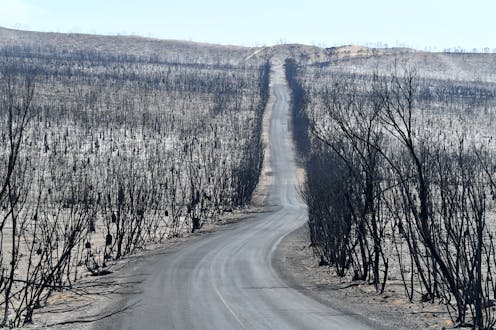
The federal election campaign takes place against a background of flooding on Australia’s east coast, where some residents remain in temporary accommodation a month after the disaster. It’s just the latest reminder Australia is set to become a poster child for climate change harms.
Australia has warmed about 1.4℃ since 1910. With it has come extreme heat, bushfires, floods, drought and now, a sixth huge bleaching event on the Great Barrier Reef.
Yet meaningful climate policy debate has largely been absent from this election campaign. So Climate Analytics, a research organisation I lead, has weighed up the policies of the Coalition, Labor, the Greens and the “teal” independents.
We analysed the global warming implications of each party’s or candidate’s target for 2030.
As the Intergovernmental Panel on Climate Change (IPCC) warns, this timeframe is crucial if the world is to stay below the Paris Agreement’s goal of limiting warming to 1.5℃ above pre-industrial levels. Dramatic action by 2030 is also vital to reaching net-zero emissions by 2050 or earlier.
Alarmingly, the Coalition’s climate policy is consistent with a very dangerous 3℃ of global warming. Labor’s policy is slightly better, but only policies by the Greens and the “teals” are consistent with keeping global warming at or below 1.5℃.
The Coalition
The Morrison government is pursing 26-28% emissions reduction by 2030, based on 2005 levels. If all other national governments took a similar level of action, Earth would reach at least 3℃ of warming, bordering on 4℃, our analysis shows.
That would mean the total destruction of all tropical reefs including Ningaloo and the Great Barrier Reef. And intense heatwaves over land that currently occur about once a decade could happen almost every other year.
At the United Nations climate conference in Glasgow last year, the Morrison government famously refused to increase its 2030 commitments. But the final pact from the meeting, which Australia signed, requires that by November this year, governments will strengthen their 2030 targets to align with the 1.5℃ goal.
Australia is under strong international pressure to meet this obligation, or face further global condemnation.
Labor
Labor’s target of a 43% emissions cut by 2030, from 2005 levels, is in line with 2℃ of global warming. That means it’s not consistent with the Paris Agreement.
Under 2℃ of warming, extreme heat events that currently happen once a decade could occur about every three to four years. And they would reach maximum temperatures about 1.7℃ hotter than heatwaves in recent decades.
Should Earth overshoot 1.5℃ warming and perhaps reach 2℃, some suggest this may be temporary and temperatures could be brought back down. This would require technologies that remove carbon dioxide from the atmosphere. But such technologies are uncertain and come with risks.
And the IPCC’s recent report warned even if 1.5℃ warming is exceeded temporarily, severe and potentially irreversible damage would result. The total loss of the Great Barrier Reef is just one example.
Under 2℃ of warming the most extreme heat events that occurred once in a decade in recent times could occur about every three to four years. The heatwaves would also reach a maximum temperature 1.7℃ hotter than those in recent decades.
‘Teal’ independents
The “teals” are a group of pro-climate independent candidates.
Most prominent is Warringah MP Zali Steggall, whose climate change bill proposes a 2030 target of 60% below 2005 levels. Most climate policies of the “teals” are generally in line with the Steggall bill.
The target is also supported by industry.
We find this target consistent with 1.5℃ of warming, and so compatible with the Paris Agreement. However, it’s at the upper end of the emission levels consistent with the 1.5℃ pathway.
Read more: Why teal independents are seeking Liberal voters and spooking Liberal MPs
The Greens
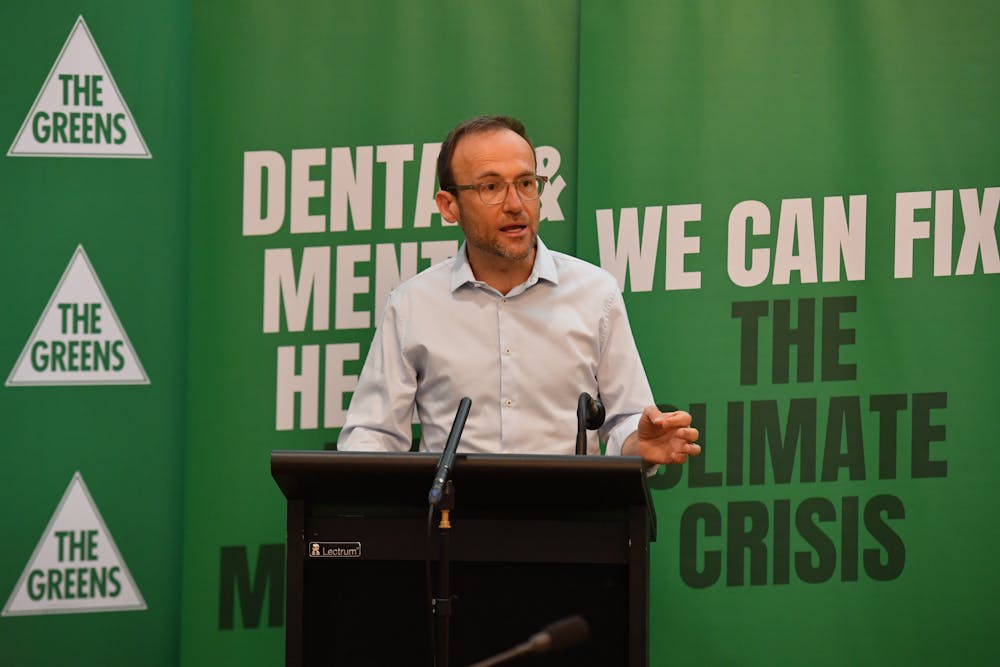
Of all the climate policies on the table this election, the Greens target of a 74% cut by 2030, based on 2005 levels, is most comfortably consistent with keeping warming below 1.5℃.
That level of warming would still cause damage to Earth’s natural systems and our way of life. But it would avert significant devastation – for example, allowing parts of the Ningaloo and Great Barrier reefs to survive.
Under 1.5℃ global warming, the most extreme heat events that presently occur once a decade could be limited to about every five to six years.
Read more: Polls show a jump in the Greens vote – but its real path to power lies in reconciling with Labor
The land sector problem
Our calculations above do not paint a rosy picture. But they are, in fact, optimistic.
That’s because they include emission reductions from the land and forestry sector through such activities as tree planting and maintaining native vegetation. These so-called carbon sinks were recently described by a key insider as a “fraud”.
If the land and forest sector is excluded from the analysis, the various emissions reduction targets fall considerably: to between 11% and 13% for the Coalition, 31% for Labor, 50% for the teals and 67% for the Greens.
What’s more, even warming limited to 1.5℃ will reduce the capacity of the land sector to remove and store carbon.
Over to you
The scientific consensus is clear. Greenhouse gas emissions must peak by 2025 at the latest and plummet thereafter, to limit global warming to 1.5℃.
Unless policies are substantially strengthened, Earth is set to hit 1.5℃ warming in the 2030s, and a future of at least 3℃ warming awaits.
The onus is on the next parliament to protect Australians from climate catastrophe. On May 21, Australian voters have a chance to send a clear message about the kind of world we want to leave for future generations.
Read more: Seriously ugly: here's how Australia will look if the world heats by 3°C this century
Authors: Bill Hare, Adjunct Professor, Murdoch University

















