

Meet the territorial females and matriarchs in Australia's backyard
- Written by: Isabelle Onley, PhD Candidate, University of Adelaide
Social structure is an important aspect of species’ biology. Having a pecking order and male or female territoriality can help species thrive.
For instance, this can prevent inbreeding, by ensuring males or females leave their family territory to reproduce. It can also help with passing important knowledge and resources down through family lines.
Many Australian species, such as the kangaroo, have a male-dominated social structure. However, recent research into lesser-known native animals has found it’s actually girls who run these worlds.
The houseproud greater stick-nest rat
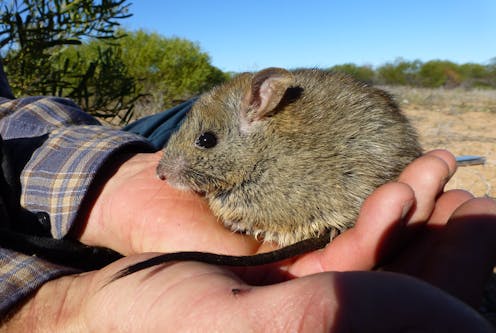
The greater stick-nest rat (Leporillus conditor) is a native rodent about the size of a guinea pig. It was once widespread across the southern half of mainland Australia. But by the 1930s, grazing, changes in land use and introduced predators reduced its range down to a single island off the coast of South Australia.
Now, thanks to some fantastic conservation efforts, it persists in multiple safe havens across the country.

This species builds nests out of sticks and dry grass, bonded together with special sticky urine. The nests can reach huge sizes and are surprisingly complex – with multiple burrows, chambers and even levels that keep the inhabitants safe from predators and extreme heat and cold.
The construction is so advanced that nests can last for thousands of years, when protected from the elements by caves or rock overhangs.
These stick nests are communal and used over many generations. For a long time, however, there was little understanding of how the nests are passed down. A study published last year by myself and my colleagues used trapping data and genetic samples taken over many years to investigate this.
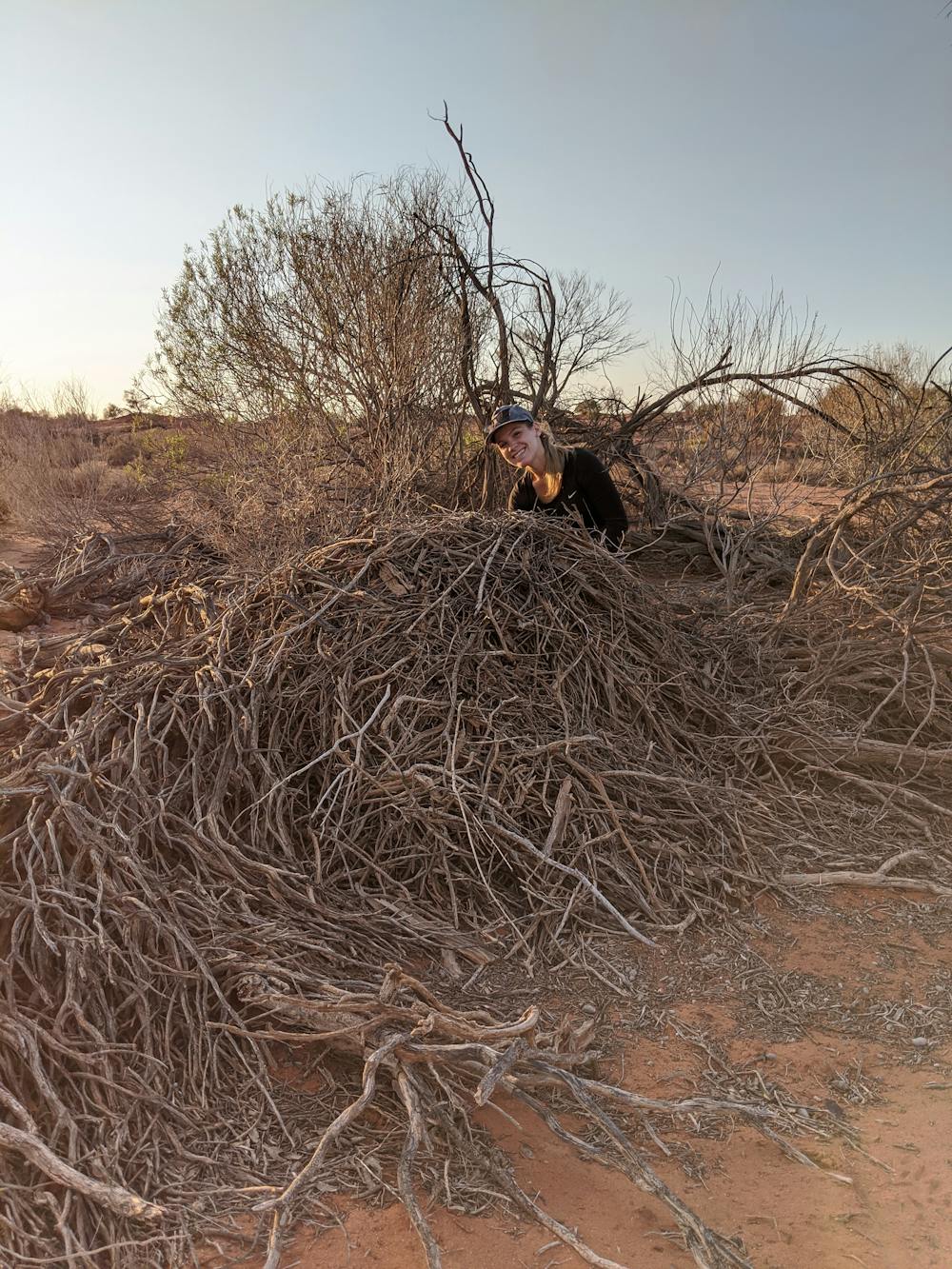 Greater stick-nest rat nests can grow to large sizes as they are passed down and maintained over many generations.
Georgina Neave/Arid Recovery, Author provided
Greater stick-nest rat nests can grow to large sizes as they are passed down and maintained over many generations.
Georgina Neave/Arid Recovery, Author provided
We found females were more closely related to each other over shorter distances, while males were not. Also, females that were caught in consecutive months and years were typically found in the same nest (or one next door), while males were not.
The evidence pointed to one thing: female greater stick-nest rats typically remain in, or near, the nest they were born in – while males leave and disperse across the landscape.
This strategy has two major benefits. First, it helps prevent inbreeding within populations.
Second, since the nests are a huge energy investment for a little rat, passing them down through the female line improves the likelihood of breeding success for future generations, by giving descendants protection from predators and extreme temperatures.
Researchers of greater stick-nest rats have also observed dominant behaviour in females and, occasionally, aggression towards males that come near their nest. Males have even been seen presenting flowers to a resident female, as if attempting courtship!
Read more: Fierce female moles have male-like hormones and genitals. We now know how this happens.
Female dominance in Australian species
The greater stick-nest rat isn’t the only Australian rodent with females that rule the roost.
The broad-toothed rat, a sub-alpine species found in south-eastern Australia, demonstrates female territoriality in the summer months while the males roam across larger home ranges. But when the cold winters set in, and snow covers the landscape, males and females can be found huddling together in shared nests.
Meanwhile, the ash grey mouse, a native rodent from the biodiversity hotspot of southwest Western Australia, forms groups of multiple females that share a burrow and raise their young together.
 Ash-grey mice face many threats including loss of habitat, competition and predation from introduced species.
Questa Game/Atlas of Living Australia, CC BY
Ash-grey mice face many threats including loss of habitat, competition and predation from introduced species.
Questa Game/Atlas of Living Australia, CC BY
Female social dominance can also be found in marsupials, such as the thumb-sized honey possum, which is also native to southwest Western Australia. Females of this species are larger than males and are sexually promiscuous. They mate with multiple males to produce tiny babies, no bigger than a grain of rice.
The brush-tailed phascogale, another small marsupial species, has females which settle and occupy territories that are sometimes surrendered in part to their daughters when they reach adulthood.
The males, meanwhile, move more freely over large home ranges that overlap with other individuals. A key factor in the marking of brush-tailed phascogale territories is believed to be a kind of scent marking, by way of faeces left in prominent positions around the home range boundaries and nesting sites.
Other native species exhibit similarly variable and complex social structures. But with so many of our fauna threatened, endangered or difficult to find and study in the wild, we have much to learn about how they interact.
The science of sociality
While the complexities of these social hierarchies are fascinating, they’re often hard to determine. Previously, such knowledge could only be gained through long-term studies in the field or in captivity. This is difficult when the species is shy, or tiny like the honey possum.
Thankfully, advances in genetic and animal tracking technology are providing experts deeper insight into the dynamics of these species, with much less cost and effort. With tracking devices becoming more lightweight, powerful and durable, researchers can now remotely monitor the movement and dispersal of species across their home ranges.
In addition, DNA from tissue, skin or hair samples can be sequenced to provide high-quality data to inform on how individuals in an area are related. This can show us how family groupings coexist.
Yet even with these improvements, there is still much we don’t know about the secret lives of Australia’s animals. With the combined pressures of habitat loss, feral predators and climate change, researchers are racing against the clock to better understand our wildlife and hopefully preserve it.
Wildlife reserves such as the Arid Recovery Reserve, where our study on greater stick-nest rats was conducted, combine research with hands-on management to inform conservation efforts – and are taking steps to safeguard our precious native species’ place in the future.
Read more: What Australian birds can teach us about choosing a partner and making it last
Authors: Isabelle Onley, PhD Candidate, University of Adelaide


















