

Lismore faced monster floods all but alone. We must get better at climate adaptation, and fast
- Written by: Johanna Nalau, Research Fellow, Climate Adaptation, Griffith University
Australia is no stranger to disasters like droughts, floods, bushfires and heatwaves. The problem is, they’re going to get worse. And then worse again. As the global temperature ratchets up, these disasters will grow in size, frequency and intensity. We will have to get much better at adapting, and do this even as we phase out fossil fuels to stop climate change getting worse.
Climate adaptation is about working with our new reality, rather than clinging to the way things were done in the past. We must accept our climate and environment has already changed, with more major upheavals on the way. If we don’t, we’ll be caught napping by “unprecedented” events which just keep on coming.
While local and state governments have led the way on climate adaptation to date, we have much more to do, as the worrying lack of preparation for the floods that devastated Lismore makes clear.
Do both: climate adaptation and emissions reduction
Many people believe climate adaptation is a red herring, diverting resources and attention away from emissions.
This is simply not true. We must do both. The world has already warmed 1.2℃ since the industrial age began, and is heating up by just under 0.2℃ per decade. There is also a lag time between fossil fuels burned today and the extra warming this causes.
Read more: 4 ways we can change our behaviour to adapt to the climate crisis
Climate change is already here, and will only intensify. We must urgently slash emissions while also helping our communities be ready. The good news is adaptation often helps lower emissions, and vice versa.
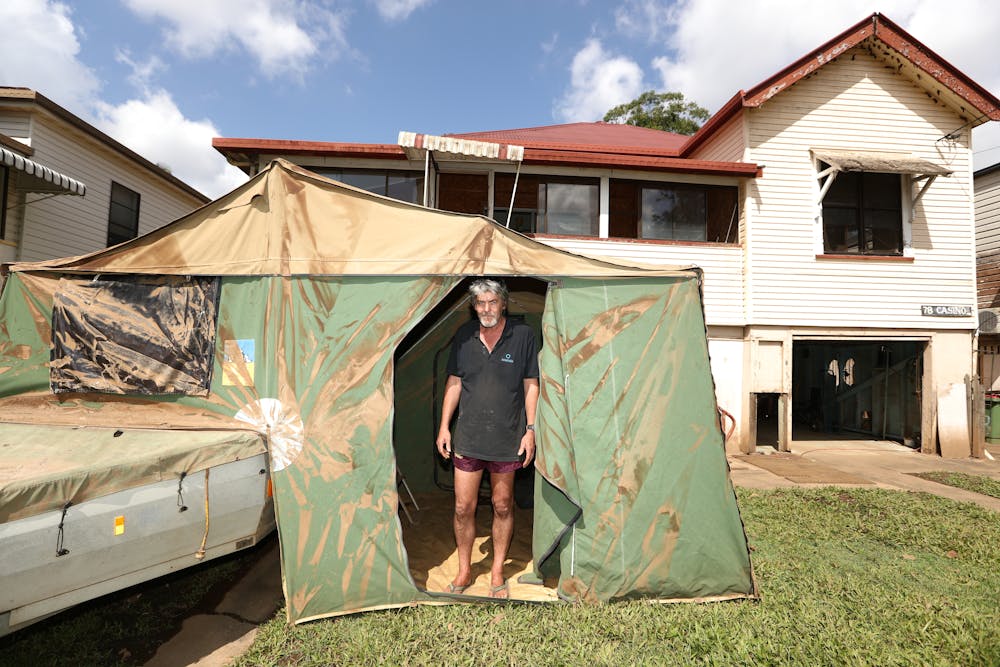
It can be hard to picture what climate adaptation looks like. So take the hard-hit town of Lismore as an example. Official warnings did not reach this Northern Rivers community. When these monster floods hit, these communities were largely left to save themselves. If it hadn’t been for neighbours undertaking rooftop rescues, the death toll would likely have been much higher. In the aftermath, many residents have been living in tents and caravans while struggling to find affordable housing.
To be ready for the next floods, Lismore would benefit from:
- rebuild using flood-resistant designs and materials
- coordinating community preparations
- exploring land-swap or changing land-use planning for high-risk areas
- better coordination between government agencies
- better warnings delivered sooner.
As soon as you consider the problem, it becomes clear there is no silver bullet. We need to plan ahead of time, rather than try to scramble to respond to disasters as they grow in size and frequency. Preparing and planning saves lives and cuts costs.
Drawing on local community strength is vital, as the Northern Rivers has shown Australia. But it is not enough by itself. Movements like Resilient Byron and Resilient Lismore show how locally led adaptation can assist communities. They could do more, with directed long-term investments and support.
 Better climate adaptation would help councils understand which coastal areas are most at risk, such as the major beach erosion at Collaroy in Sydney seen in 2020.
James Gourley/AAP
Better climate adaptation would help councils understand which coastal areas are most at risk, such as the major beach erosion at Collaroy in Sydney seen in 2020.
James Gourley/AAP
What have we done so far?
The knowledge we already have about surviving in the world’s most arid inhabited continent is a start. First Nations communities have a sophisticated understanding of caring for country, while Australian farmers are among the best climate-risk managers globally, after a rocky start.
To date, most government-led climate adaptation happens at local and state levels. Highly innovative approaches have come from local governments, such as a council-led land-swap to get people permanently out of flood plains in the Lockyer Valley. Victoria’s state government has a climate adaptation program to help the natural resources sector prepare for possible futures, while Queensland has a strategy for local governments to find the greatest risks to coastal areas and plan for adaptation.
While these are welcome, we must do much more at a national level. In this area, we seem to be going backwards. In 2007 the federal government invested heavily in climate adaptation, but these initiatives were progressively dismantled after the 2013 election. Today, disaster spending is focused on recovery rather than preparation. While that might be politically rewarding, it is extraordinarily expensive.
Read more: 'I simply haven’t got it in me to do it again': imagining a new heart for flood-stricken Lismore
On a national scale, our current climate adaptation strategy lacks clear targets and timelines. Not only that, it does not connect the dots between the levels of adaptation required and different scenarios for cutting emissions. We hope the new framework being produced by the National Reconstruction and Recovery Agency will better incorporate adaptation.
What does well-adapted look like?
Our political parties differ substantially on climate adaptation efforts. Liberal and National Party policies barely mention climate adaptation. Labor has disaster preparation policies, such as up to A$200 million per year on disaster prevention and recovery, while the Greens are most ambitious with plans to both slash emissions and boost adaptation through initiatives such as making housing better able to cope with floods and cyclones.
Climate adaptation pays dividends – regardless of who takes government. Active climate adaptation would save Australia A$380 billion in gross domestic product over the next 30 years.
We cannot let climate adaptation be the plaything of day-to-day politics. To have any chance of success, we need a robust bipartisan strategy. We should look to countries such as the UK which has laws requiring a national climate risk assessment every five years as well as a program coordinating and reporting adaptation actions across the country.
There is support for these measures in Australia, with 72% of us in favour of introducing national climate risk assessments giving our state and local governments access to up to date information on flood projections, neighbourhoods most vulnerable to heatwaves and expected levels of sea level rise. Crucially, this would let us pick out the best ways we could adapt.
Australia also needs a national climate adaptation hub, a one-stop shop offering advice to all levels of government, communities, non-governmental organisations and the private sector on the adaptation strategies available and ways to scale up the best approaches.
We must act now to make the best of the future coming towards us. We know a great deal about what we’ve set in motion by heating up our planet. Now we must prepare for what this brings. And we have to do it together.
Authors: Johanna Nalau, Research Fellow, Climate Adaptation, Griffith University


















