

For the love of Thor! Why it's so hard for Marvel to get its female superheroes right
- Written by: Angelique Nairn, Senior Lecturer in Communication Studies, Auckland University of Technology
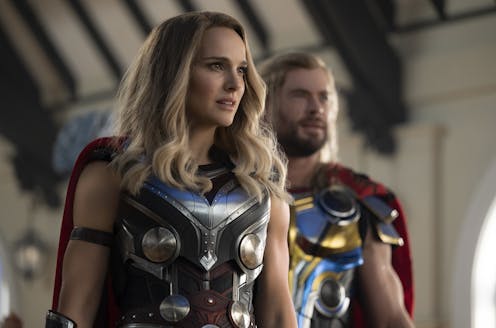
When it was first revealed that Natalie Portman was to become the “female Thor” in Marvel’s latest superhero instalment, Thor: Love and Thunder, fans were quick to condemn the decision on social media.
Portman was lambasted as not “swole” enough, too petite, and generally not what people imagined the character to be. Ten months of intensive workouts and a high-protein diet later, and Portman is being applauded for arms that “could actually throw giant hammers at baddies’ heads”.
Yet that early reaction to Portman’s casting attests to how the representation of female superheroes can be difficult for movie-makers when the established audience is often perceived to be young, white, cisgender and male.
It seemingly doesn’t matter that the number of women consuming superhero content has increased. Offering feminist depictions of characters that could challenge the defining masculinity of the genre remains a problem.
What does this mean for Portman and the female superheroes who have come before (and will follow) her? The answer seems to be that the makers of superhero movies inevitably subvert some gender stereotypes while maintaining others.
In short, they offer token female representation so as not to ostracise audiences. So while she might now be more muscular, Portman is still subordinated to Chris Hemsworth’s Thor by highlighting that she is first and foremost his love interest.
Too few female superheroes
Granted, the Marvel Cinematic Universe (MCU) franchise has at least attempted to cast female leads and to advocate for women’s issues. For example, Black Widow’s standalone film was in part intended to contribute to the dialogue around the #Timesup and #MeToo movements.
And the latest Thor offering explores the value of female friendships, with co-star Tessa Thompson attesting to her character Valkyrie being “happy to have found a new sister”.
There’s no doubt female viewers can identify with these powerful women and their stories and as a result form positive attitudes to the superhero genre in general. But that means more superhero films need to be made with the female viewer in mind.
Read more: The witch treatment: What Dr. Strange's Wanda tells us about representations of female anger
Such offerings are few and far between, however. Let’s not forget it took Marvel ten years to give Black Widow her own film after her original introduction to the franchise (in 2010’s Iron Man 2).
In many ways, Marvel’s films continue to depict women as auxiliaries – damsels in distress, love interests, or subordinate in some way to their male counterparts. In fact, actress Scarlett Johansson criticised the earlier “hyper-sexualisation” of her Black Widow character.
Similarly, Scarlet Witch, one of the most powerful of the Avengers characters, is often defined by the male relationships in her life. In the recent Dr Strange: The Multiverse of Madness, she typifies many unfavourable female tropes, including the “hysterical woman” and “monstrous mother”.
The hyper-sexualised stereotype
Treating even powerful female characters as subordinate or dependent might reassure male fans that superheroines aren’t a threat to the masculine undertones of the genre, but it does a disservice to the female audience.
Asked to assess superhero graphic novels and films, most women in one study said they disliked and avoided the DC Comics character of Catwoman because she was presented as manipulative and emotional.
Read more: Captain Marvel: why female superheroes are not just for International Women's Day
Other research has found that exposure to messages of powerlessness can lead girls to feel demoralised and dissatisfied with their own identities, and the overly sexualised depiction of female superheroes can result in lower body esteem in women.
On the other hand, some also rebel against the stereotypes. The Hawkeye Initiative, for example, parodies the male gaze within the comic book genre by depicting men in the same absurd costumes and poses normally reserved for female characters.
Male backlash and box office risk
The real issue, though, is whether women should even have to challenge such depictions. If more films and comics were made by women for women, perhaps there would be fewer tokenistic portrayals to begin with.
Marvel has rejected criticism of its female characters, with its president saying the studio has always “gone for the powerful woman versus the damsel in distress” and pointing to the recent release of female-led superhero films and TV programs such as She-Hulk and Ms Marvel.
Read more: Superman's not the first hero to be portrayed as bisexual, but he'll bring hope to LGBTQ+ fans
Trouble is, it’s hard to keep everyone happy. Marvel has felt the backlash from die-hard male fans to a supposed feminist agenda underpinning the studio’s direction. 2019’s Captain Marvel, for example, was touted as bringing feminism to the Marvel universe, but poor reviews and audience ratings were attributed in part to perceived political correctness and a narrative based on female agency.
Researchers such as Stephanie Orme have contended that the dominance of men in the superhero genre leaves many female fans feeling alienated and unable to change the gender stereotypes, precisely because they’re not seen as the target audience.
It seems that without more and better film and comic female superheroes telling women’s stories, these male-centric genres will continue to alienate female audiences – and to fall short of their creative and commercial potential.
Authors: Angelique Nairn, Senior Lecturer in Communication Studies, Auckland University of Technology


















