

Australians are installing rooftop solar like never before. Who is burdened with taking care of it at home?
- Written by: Kathryn Lucas-Healey, Research Fellow, Battery Storage and Grid Integration Program, Australian National University
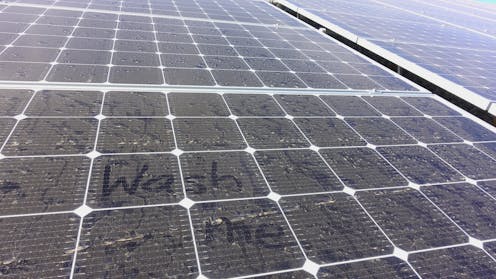
Rooftop solar panels and small batteries are driving Australia’s rapid shift towards renewable energy. Some 30% of detached homes on Australia’s national grid have these systems installed. By 2050, this proportion could reach 65%.
This means responsibility for maintaining our power supply is shifting from skilled, well-paid power station engineers to householders. Essentially, care for our energy system is becoming housework.
Our new research has found rooftop solar maintenance, as with other forms of housework, has the potential to become an equity issue. And the burden of this unrecognised work is set to worsen as the energy transition accelerates.
If our energy system relies on invisible care, we should acknowledge who the burden is falling on and whether we’re creating new inequalities.
Rooftop solar maintenance as housework
The things we do to maintain our worlds – be it ourselves, others, the environment or everything else — can collectively be thought of as care. Historically, the burden of care has largely fallen on women and marginalised communities. When society does not value their care work, inequality is exacerbated.
Housework is a form of care, and it tends to be invisible, unpaid and performed only by those who notice it needs doing. In many cases, this means women. What does it mean in the case of household energy technologies?
When a householder decides to install technologies such as rooftop solar, they must determine what size and type of system will meet their needs and to research products and installers.
Once the system is installed, they then need to check it’s performing as intended and recognise when maintenance is required. When something goes wrong, they need to follow up with the relevant organisation to resolve it.
We cannot yet declare exactly who the burden of rooftop solar and battery care is falling to – more research is needed on this. But our recent study found the changing nature of household energy has the potential to reproduce existing forms of inequality across gender, cultural groups and generations.

What we found
We held interviews and focus groups with 55 Australian householders from metropolitan and rural areas who purchased energy technologies, as well as 18 people from installer businesses and community energy groups.
We found they envisage a more caring energy system - one that prioritises making sure everyone can pay their bills and facilitates sharing, rather than one that rewards individuals with the most resources and know-how.
We described the different types of care driving the energy transition, and found examples of community groups and businesses going above and beyond to provide support.
For example, some installers we spoke with took time to help householders understand what type and size system best suited them. Others performed work for free to help someone out, such as one installer who told us:
We get customers right now because the company that installed it won’t come out and help them. That’s actually something we do promote as well, is that if you’re not our customer, we’ll help you. A lot of that is volunteer work.
But according to other research participants, some installers are only interested in making the sale, leaving neglected paperwork, missing components, or systems that just don’t work. Sometimes the householder is unaware their system is not working as intended.
One woman, a disability pensioner, had been sold an expensive solar and battery system that didn’t work. As she sought electricians to fix it, she lamented they were:
so male-dominated that they don’t want you looking over their shoulder […] they’re not willing to explain things either.
This example highlighted difficulties in establishing rapport between installers and householders of different genders, ages or cultural backgrounds, a finding shared by other researchers.
Read more: 'Smart home' gadgets promise to cut power bills but many lie idle – or can even boost energy use
Research from 2017 found technologies can be misused or ignored when optimistic assumptions are made about their user-friendliness. Other research from the United Kingdom showed developers of home technology rarely involve users in the design process, and tend to design for an idealised masculine consumer.
These different dynamics compound to the point where our energy system is designed to benefit those who understand its complexity and are able to take advantage.
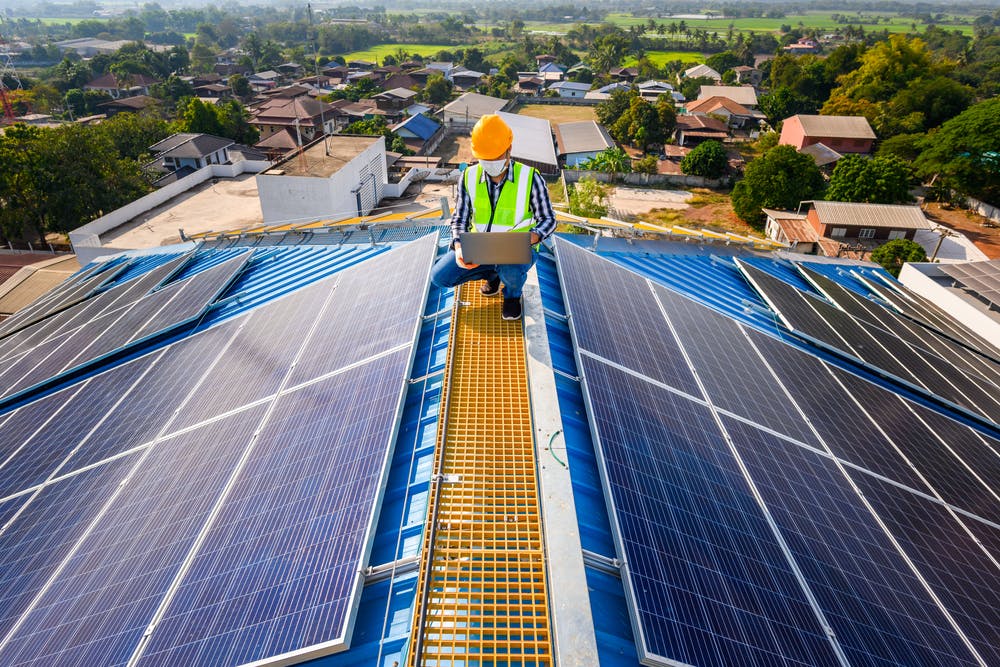 Responsibility for maintaining household power supply is shifting from engineers to householders.
Shutterstock
Responsibility for maintaining household power supply is shifting from engineers to householders.
Shutterstock
A caring vision for our energy future
We also found our research participants wanted their caring visions for the future better represented in government policies.
For many, installing energy technology was about doing the right thing for the planet, rather than to lower their power bills or become self-sufficient in energy. But they told us how ideas based in care aren’t often taken seriously by industry and government.
Government incentive schemes that help people afford solar and batteries are important and effective. But they also give rise to opportunistic sales tactics and pitfalls for householders.
Read more: What's a grid, anyway? Making sense of the complex beast that is Australia's electricity network
Incentive programs need to place high expectations on installers and expel operators with bad track records. More assertive regulation is needed that goes beyond simple consumer protections and puts less of an onus on householders to navigate their way alone. Governments can also support community groups that help in this task.
Policies should also accommodate caring, community-focused householders who aren’t just installing rooftop solar to benefit themselves. It might include allowing free or low-cost energy sharing at the local scale to help out neighbours and avoid spilling excess solar to the wider grid.
If we don’t recognise and act on creating a caring energy system, we could be left with one that’s partially built, unfair and rewards a race to the bottom.
Authors: Kathryn Lucas-Healey, Research Fellow, Battery Storage and Grid Integration Program, Australian National University


















