

State of the Environment report shows our growing cities are under pressure – but we’re seeing positive signs too
- Written by: Gabriela Quintana Vigiola, Senior Lecturer in Planning, University of Technology Sydney
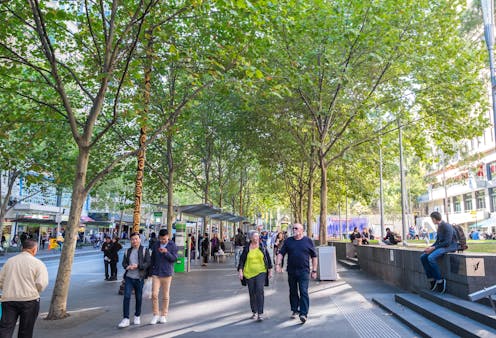
Urban areas are often thought of as concrete jungles, but they encompass much more than that. Nature, people and built structures are interconnected. Together they comprise the urban environment of the cities and towns in which we live.
In the past five years, Australian cities have continued to grow. In fact, the State of the Environment Report released this week revealed most of our major cities have grown faster than many developed cities overseas.
This growth has increased demand for resources such as water and energy. It has increased other impacts, too, including urban heat, congestion, pollution and waste.
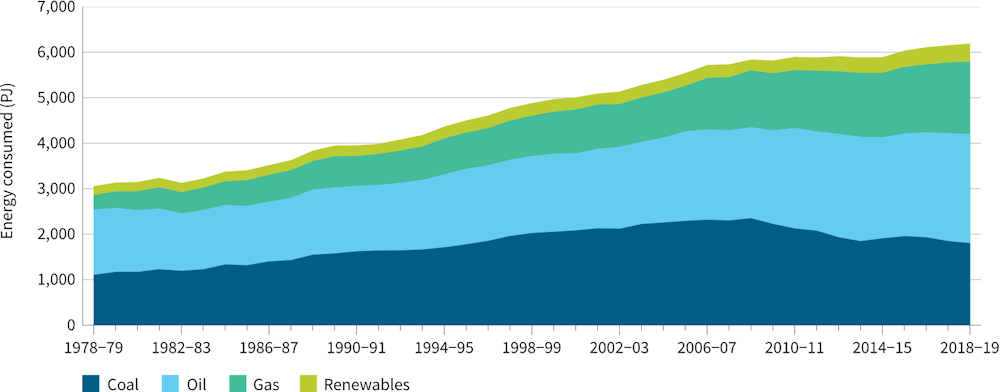
 Source: Urban chapter, Australia State of the Environment 2021 report/Commonwealth of Australia. Data: ABS 2021, CC BY
Unfortunately, at the same time the public sector has greatly reduced its role in housing. Based on ABS data, we calculated that the government now develops only 1% of all new dwellings in Australia.
Residential building and house sizes have slightly increased while lot sizes have shrunk. This means there is less open space. And these smaller backyards and setbacks between buildings are now often paved.
Source: Urban chapter, Australia State of the Environment 2021 report/Commonwealth of Australia. Data: ABS 2021, CC BY
Unfortunately, at the same time the public sector has greatly reduced its role in housing. Based on ABS data, we calculated that the government now develops only 1% of all new dwellings in Australia.
Residential building and house sizes have slightly increased while lot sizes have shrunk. This means there is less open space. And these smaller backyards and setbacks between buildings are now often paved.
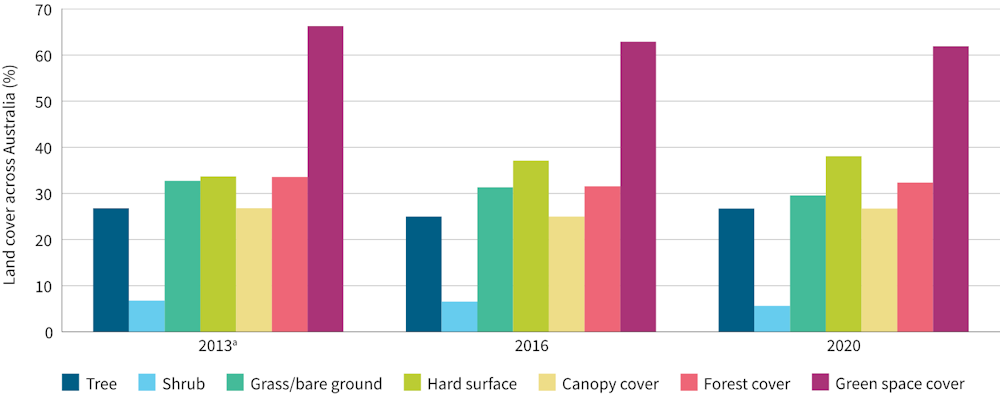 Source: Urban chapter, Australia State of the Environment 2021 report/Commonwealth of Australia. Data: Hurley et al, 2020, CC BY
These developments are often found in the urban outskirts of expanding cities. Increased travel distances and limited access to jobs, education, food and services are reducing the liveability of these cities.
These pressures are even worse in smaller and more isolated areas. For example, in the report we note:
“Indigenous communities in smaller urban centres are often far from amenities such as shopping, health care, cultural business, education and social services. In 2014-2015, 75% of Indigenous Australians reported that they could not easily get to the places they needed.”
These areas also have more insecure access to resources such as digital infrastructure, energy and water. On top of this, they have suffered from shocks such as extreme bushfires, floods and mice plagues.
So, the overall liveability of smaller urban areas with fewer than 10,000 people has been assessed as poor. The liveability of larger cities, on the other hand, has remained good over the past five years.
However, we need to beware of generalisations. Differences in liveability between inner and outer areas of the bigger cities are noticeable.
Inner-city areas have higher levels of liveability based on factors such as walkability, access to green spaces and services. The urban fringes tend to have poorer access to services and longer commute times. Higher socio-economic areas tend to benefit from better tree canopy cover and digital access.
Smaller urban areas have some advantages – mainly shorter commute times – but are disadvantaged by fewer services and job opportunities.
What are we doing about the challenges we face?
Population growth and its effects on resource consumption, waste generation, travel and pollution continue to pressure the urban environment. However, our biggest challenge is climate change.
Sea-level rises, more extreme events such as bushfires, drought, extreme rainfall and flooding, and higher urban temperatures are expected to have significant impacts on cities’ biodiversity and people.
Many state and local governments are taking a hands-on approach to some of these challenges and pressures. Through urban planning policies, they are managing urban sprawl and protecting public green areas.
Governments have also been investing in more integrated infrastructure – for example, better co-ordinating the development and use of roads, public transport, cyclepaths and walkways – better waste management and reducing disaster risk.
Commonwealth City Deals, the Resilient Cities Framework applied in Sydney and Melbourne, and the National Waste Policy Action Plan are just a few of the approaches being adopted in Australia.
Source: Urban chapter, Australia State of the Environment 2021 report/Commonwealth of Australia. Data: Hurley et al, 2020, CC BY
These developments are often found in the urban outskirts of expanding cities. Increased travel distances and limited access to jobs, education, food and services are reducing the liveability of these cities.
These pressures are even worse in smaller and more isolated areas. For example, in the report we note:
“Indigenous communities in smaller urban centres are often far from amenities such as shopping, health care, cultural business, education and social services. In 2014-2015, 75% of Indigenous Australians reported that they could not easily get to the places they needed.”
These areas also have more insecure access to resources such as digital infrastructure, energy and water. On top of this, they have suffered from shocks such as extreme bushfires, floods and mice plagues.
So, the overall liveability of smaller urban areas with fewer than 10,000 people has been assessed as poor. The liveability of larger cities, on the other hand, has remained good over the past five years.
However, we need to beware of generalisations. Differences in liveability between inner and outer areas of the bigger cities are noticeable.
Inner-city areas have higher levels of liveability based on factors such as walkability, access to green spaces and services. The urban fringes tend to have poorer access to services and longer commute times. Higher socio-economic areas tend to benefit from better tree canopy cover and digital access.
Smaller urban areas have some advantages – mainly shorter commute times – but are disadvantaged by fewer services and job opportunities.
What are we doing about the challenges we face?
Population growth and its effects on resource consumption, waste generation, travel and pollution continue to pressure the urban environment. However, our biggest challenge is climate change.
Sea-level rises, more extreme events such as bushfires, drought, extreme rainfall and flooding, and higher urban temperatures are expected to have significant impacts on cities’ biodiversity and people.
Many state and local governments are taking a hands-on approach to some of these challenges and pressures. Through urban planning policies, they are managing urban sprawl and protecting public green areas.
Governments have also been investing in more integrated infrastructure – for example, better co-ordinating the development and use of roads, public transport, cyclepaths and walkways – better waste management and reducing disaster risk.
Commonwealth City Deals, the Resilient Cities Framework applied in Sydney and Melbourne, and the National Waste Policy Action Plan are just a few of the approaches being adopted in Australia.
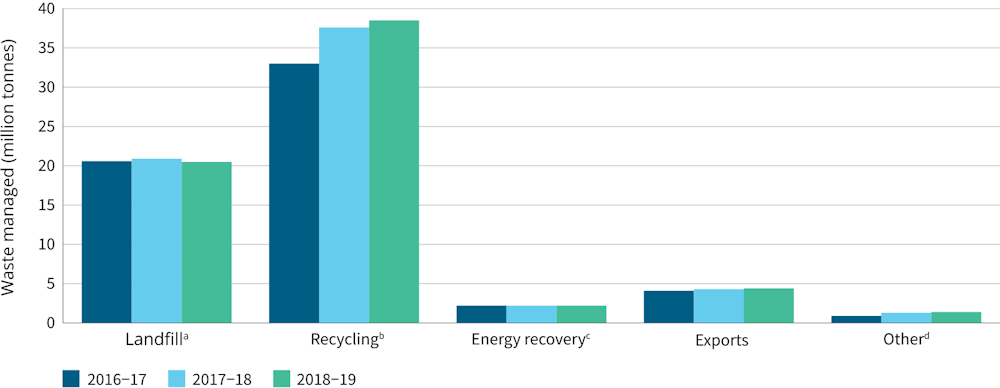 Source: Urban chapter, Australia State of the Environment 2021 report/Commonwealth of Australia. Data: ABS 2020, CC BY
We are on the right path with great initiatives all over Australia working to achieve more sustainable and resilient urban environments. However, they are in the early stages.
We do need more inter-agency and public-private collaboration. We need more community education, too. Policies can also be better implemented and followed up to continue improving management of the pressures on urban areas, which in turn will improve the well-being of people and the environment.
I would like to acknowledge Sarah Hill and Zena Cumpston, the co-authors of the State of the Environment Urban chapter. The joint work we did in the writing of the chapter informed this article.
Authors: Gabriela Quintana Vigiola, Senior Lecturer in Planning, University of Technology Sydney
Source: Urban chapter, Australia State of the Environment 2021 report/Commonwealth of Australia. Data: ABS 2020, CC BY
We are on the right path with great initiatives all over Australia working to achieve more sustainable and resilient urban environments. However, they are in the early stages.
We do need more inter-agency and public-private collaboration. We need more community education, too. Policies can also be better implemented and followed up to continue improving management of the pressures on urban areas, which in turn will improve the well-being of people and the environment.
I would like to acknowledge Sarah Hill and Zena Cumpston, the co-authors of the State of the Environment Urban chapter. The joint work we did in the writing of the chapter informed this article.
Authors: Gabriela Quintana Vigiola, Senior Lecturer in Planning, University of Technology Sydney 

















