

AEMO's 'cohesive' energy plan falls short because it omits two key economic facts
- Written by: Martina Linnenluecke, Professor of Environmental Finance; Director of the Centre for Corporate Sustainability and Environmental Finance, Macquarie University
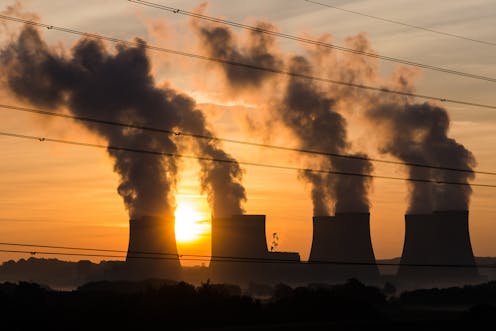
The Integrated System Plan, unveiled this week by the Australian Energy Market Operator (AEMO), has been billed as a cohesive energy plan for Australia. In reality, it falls seriously short.
Australia needs to accelerate its energy transition and give businesses and investors the support they need to seize economic opportunities from clean energy.
Instead, AEMO’s analysis calls to exploit the economic life of high-polluting infrastructure such as the Eraring and Bayswater coal-fired power stations.
In seeking to prolong coal-fired power for as long as feasible in the name of cheap energy, AEMO’s supposedly comprehensive plan overlooks two crucial facts: first, there is serious money to be made from clean energy; and second, coal is not as cheap as it sounds when we factor in the indirect social costs.
Read more: AEMO's new electricity plan is neither a death knell nor a shot in the arm for coal
AEMO’s report confirms that the electricity sector is in the midst of an unprecedented transformation. As existing generation infrastructure grows older, we are witnessing a shift to renewables, battery storage and lower demand growth.
On top of that, Australia needs to consider how to meet its internationally agreed climate targets.
Disappointingly, the AEMO report shows no understanding of how to successfully retire unsustainable infrastructure early and move rapidly to adopt cleaner technology. Quite the contrary, in fact.
It is promising to see that the report assumes that the ageing Liddell power plant will be retired by 2023, after surprisingly strong political pressure by the Turnbull government on operator AGL to prolong its life until at least 2027.
Yet AEMO’s overall plan is still to retain existing coal-fired stations for as long as they can be economically relied on. AEMO assumes a strong role for coal up to 2030 and beyond, and forecasts that many large power stations (Vales Point, Gladstone, Yallourn, Eraring, Bayswater) will retire between 2030 and 2040.
Coal power is not the solution to guarantee power supply in this country. We need to look at more viable, cleaner transition energy options.
First, Australia should consider a rapid implementation of less-polluting “transition technologies”, such as gas. In overseas markets such as the United States and Europe, natural gas has played a major role in the ongoing energy transition.
When energy company AGL released its plan to retire Liddell early, it proposed a transition to gas, alongside a mix of renewables, battery storage and demand response. AGL’s plan shows that transition technologies are economically feasible in Australia, just as they are overseas.
Second, the Australian government and bodies such as AEMO need to recognise the changes in underlying market forces that are driving investments in clean technology. Whereas clean technology development has previously been heavily reliant on federal government funding, analysis by my research centre shows that strong market forces are now driving the clean-tech revolution.
According to our estimate, the total global wealth creation through the development of clean technology patents will range from US$10.16 trillion to US$15.49 trillion (A$13.69 trillion to A$20.87 trillion) by 2050. Included in this estimate are patents in areas such as bio-fuels, fuel cells, hydro energy, wind energy, solar energy, and geothermal energy. This is 13% to 20% of total global GDP in 2017.
During that time we predict that investment growth in green technologies will be between US$2.93 trillion and US$3.71 trillion (A$3.95 trillion to A$5 trillion), or 3.7% to 4.7% of world 2017 GDP.
Australia should not miss out on this enormous potential by clinging on to old technologies.
Third, the AEMO report does not factor in the huge costs of fossil fuels to the community. My research, carried out with colleagues at Macquarie and Vanderbilt universities, shows that society fails to charge fossil fuel firms for the damage that their activities cause in terms of environmental pollution.
This failure to pay the significant external social costs means that coal power is effectively getting a huge subsidy. In our research paper we describe this as “legal looting” of public funds by the fossil fuel industry.
Using Australia’s erstwhile carbon price as an example, if emitters worldwide had been charged the Australian carbon price (A$24.15) for emissions from coal, oil, gas and flaring, they would have had to pay a total of A$12.67 billion over the period 1995-2013.
This amount is a low estimate given that some other countries have much higher taxes in place.
Sweden, for example, introduced a carbon tax in 1991. It began at a rate equivalent to A$38.50 per tonne of carbon dioxide emitted and has since increased to the equivalent of A$177 in 2018. If all global emitters were required to pay this price, they would have been liable for A$91.94 billion over the period 1995-2013.
Clearly, the fossil fuel industry would would be far less lucrative if it were made to pay its debt to society in full.
Read more: The Carmichael mine lease shows that decisions on coal need a much wider perspective
The example of Europe’s energy supply deregulation during the 1980s and ’90s shows that a transition to renewable energy is not at odds with a secure and reliable electricity generation system.
Any use of coal-fired plants in Australia must only be short-term, and at a drastically reduced level.
Gas-fired stations serve as a less-polluting interim measure for Australia’s transition to renewable energy. They can fill the electricity gap between consumption and renewable electricity to avoid any outages. Of course it has to be acknowledged that changing gas prices can be a factor in price rises, and cheaper gas supplies would need to be secured in order to make this transition work smoothly.
Authors: Martina Linnenluecke, Professor of Environmental Finance; Director of the Centre for Corporate Sustainability and Environmental Finance, Macquarie University


















