

Google AI


Modern Australian

CSIRO report identifies 7 ‘global megatrends’ shaping the 21st century

  • Written by: Stefan Hajkowicz, Senior Principal Scientist, Strategy and Foresight, Data61
CSIRO report identifies 7 ‘global megatrends’ shaping the 21st century

Around 3.7 million Australians have been unintentionally caught in an ocean rip. For the unprepared it can be a harrowing experience – but for experienced surfers, rips are a handy way to ride through the whitewash and out to the break.

We’re not surfers, but we work at Australia’s national science agency in “strategic foresight”, which you can think of as the study of the currents taking the world into the future. These currents are a bit like ocean rips: they present risks for those who don’t understand them, but opportunities for societies, organisations and people who are prepared.

We call the biggest currents “megatrends”, and in a new report we examine the megatrends that will shape the next 20 years.

From learning to live in a changing climate and shrinking our ecological footprint to navigating geopolitical earthquakes and the rise of artificial intelligence, these seven megatrends will transform many aspects of our lives over the coming decades.

Our future world

In 2012, CSIRO published a report called Our Future World, which delivered an evidence-based view of future megatrends to allow Australia to take early action in response.

The new report gives an update on where we’re at and where we’re going. It captures the impacts of the pandemic, among other trends and drivers.

Many of the issues we saw as possible or plausible in 2012 are now a lived reality.

Read more: What are the future megatrends all Australians need to know about?

Australia, like many other countries, is grappling with flooding, bushfires and extreme heat associated with climate change. Pandemics and infectious diseases, which were a footnote in our earlier writings, have had inescapable impacts in recent times.

The COVID-19 pandemic has driven home the huge potential global impacts of infectious disease. Joel Carrett/AAP

And the global economic restructuring we spoke of 10 years ago, mainly as an opportunity, has an increasingly important geopolitical dimension. These trends will have key implications for countries like Australia seeking to maintain peace and stability.

So, what does the future have in store?

What are the new megatrends?

The first and perhaps most concerning megatrend we identified is “adapting to climate change”. Weather-related hazards are becoming more frequent and more severe, and many communities, industries and societies are not prepared for what lies ahead.

Heatwaves in Australia could be more than 85% more frequent and last up to a month if global temperatures rise between 1.5°C and 3°C. Building resilience to extreme weather events will be critical over the coming decade.

Read more: The world endured 2 extra heatwave days per decade since 1950 – but the worst is yet to come

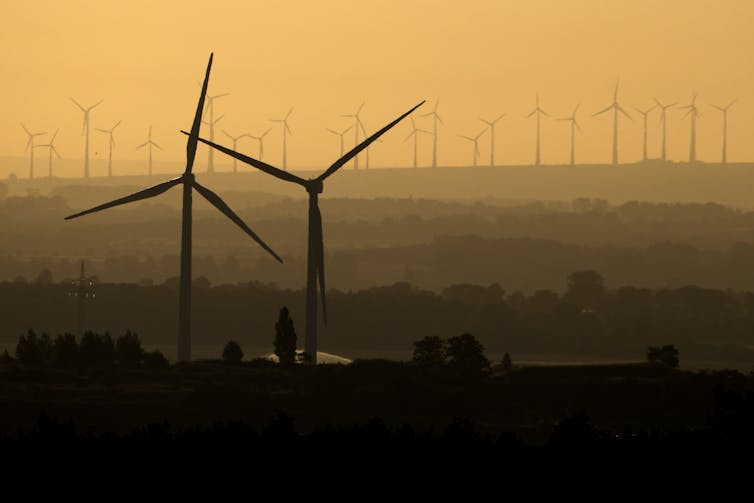
The second megatrend is what we call “leaner, cleaner and greener”: innovative solutions to meet demand for the world’s finite food, water, mineral and energy resources.

Innovation to use less resources will be an urgent priority in the coming decades. Matthias Schrader/AP

Renewable energy and low-emissions technologies, synthetic biology, alternative proteins and advanced recycling all allow us to operate within much tighter envelopes. Recent estimates suggest Australia is on track to generate half its electricity from renewables by 2025.

Health at risk in a changing world

The third megatrend is “the escalating health imperative”: ageing populations, high rates of chronic illness, and a pandemic-driven surge in mental health issues are driving an unsustainable growth in healthcare spending. This spending is expected to grow faster than GDP in most OECD countries over the coming decade.

Infectious disease risks associated with pandemics, outbreaks and antimicrobial drug resistance will elevate into the future. There is an urgent need for innovation in the healthcare sector to find ways to do more with less.

Read more: Remote village to metropolis: how globalisation spreads infectious diseases

The fourth megatrend is “geopolitical shifts”: disrupted patterns of global trade, geopolitical tensions and growing investment in defence.

While the global economy shrunk by 3.2% in 2020, global military spend reached an all-time high of A$2.9 trillion. This expenditure coincides with growing geopolitical tensions in the Asia-Pacific region.

Global military spending is at an all-time high. Eugene Hoshiko/AP

At the same time, we have seen increased co-operation between democratic countries, including the recent expansion of the North Atlantic Treaty Organization to include Finland and Sweden.

The digital and the human

The fifth megatrend is “diving into digital”. While the digital economy has been growing rapidly for some time, the pandemic fuelled a boom in teleworking, telehealth, online retail, education and entertainment.

Around 40% of Australians now work remotely on a regular basis. The digital workforce is expected to increase by 79% from 2020 to 2025.

Read more: So this is how it feels when the robots come for your job: what GitHub's Copilot 'AI assistant' means for coders

The sixth megatrend we identified is “increasingly autonomous”. As the capabilities of artificial intelligence (AI) have surged, it has found applications across practically all industry sectors.

AI research is taking a growing share of global research and development spending and peer-reviewed research publications. These developments are opening up opportunities to boost productivity and address some of humanity’s greatest challenges.
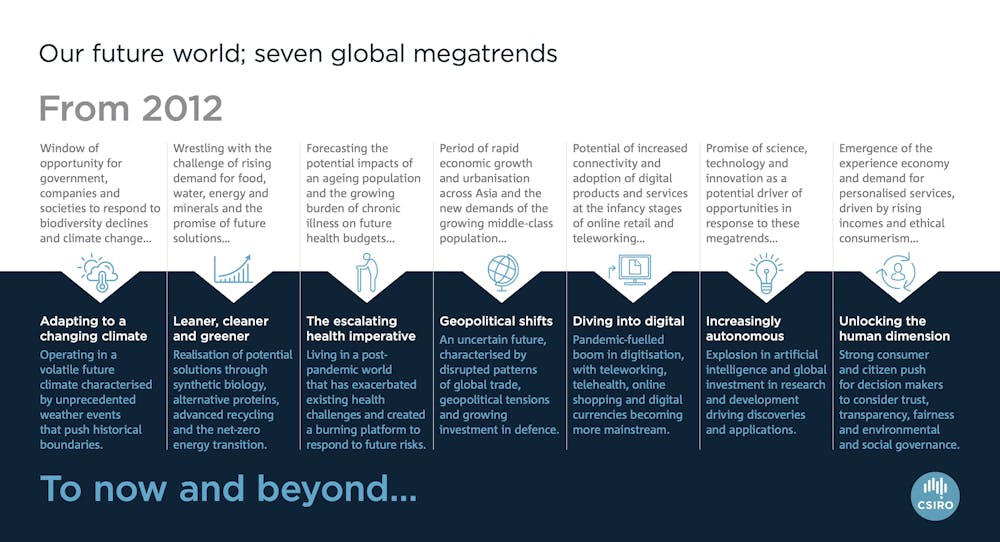
CSIRO, Author provided The final megatrend is “unlocking the human dimension”. Issues relating to trust, transparency and environmental and social governance are of particular importance. While Australia saw a temporary boost in public trust in institutions in 2021, this trust bubble was short-lived. Societal trust in Australia dropped below the global average yet again in 2022. The innovation imperative Our study of the current state of global megatrends presents a sobering view of the future and the challenges ahead of us. But this knowledge also equips us with the power to shape this future, by understanding the ocean rips we want to ride or survive. As we look to the future of this work at CSIRO, we will focus on working with industry, government and academia to tackle Australia’s greatest challenges. Using these megatrends, we can focus our science and technology on the big things that matter the most and create real value for all Australians. Authors: Stefan Hajkowicz, Senior Principal Scientist, Strategy and Foresight, Data61

Read more https://theconversation.com/like-ocean-rips-csiro-report-identifies-7-global-megatrends-shaping-the-21st-century-187433

Pool and Deck Design: How to Plan the Perfect Outdoor Living Space for Your Sydney Home

For many Australians, the backyard is where life happens. Summer barbecues, weekend swims and long evenings outdoors are all part of the lifestyle, ...

Is Solar Pool Heating Worth It? What Sydney Homeowners Should Know

There's nothing quite like a backyard pool on a hot Sydney day. But once autumn rolls in, many pools sit unused for months because the water is simp...

Planning a Luxury House Move: A Week-by-Week Timeline for Prestige Sydney Homes

Selling or buying a prestige home is a major milestone. Whether it's a waterfront residence in Birchgrove, a grand Federation home in Haberfield or ...

Downsizing or Upgrading Your Caravan? Here's How to Sell It Without the Hassle

Selling a caravan can feel like a major task, especially when you are unsure about its value, paperwork, or how to find a buyer. Whether you are dow...

The Best Overseas Adventure Holidays for Australians Who Love the Outdoors

Australia offers no shortage of incredible outdoor experiences, but sometimes the best way to satisfy your sense of adventure is to head overseas. A...

Cape Town Wine Shuttle: Winelands Tasting & Tours

Embark on an unforgettable journey through the picturesque Cape Winelands, where world-class wines and breathtaking scenery await. Our Cape Town Win...

Why Giant Rats Tail Grass Keeps Coming Back After Spraying

Giant Rats Tail Grass (GRT) is one of the most frustrating pasture weeds for farmers and lifestyle property owners. You spray an infested area, see th...

When Custom Cardboard Boxes Make Sense for Your Business

Custom cardboard boxes can be useful when a standard carton does not fit a product, packing method or presentation requirement particularly well. A ...

Virtual Livestock Fencing and GPS Tracking: Improving Visibility Across Cattle Properties

What Virtual Livestock Fencing Means for Modern Cattle Management Managing cattle across extensive properties requires more than knowing where anim...

Sydney Pawnbrokers Explained: How Hocking Your Car Actually Works

Sometimes you need cash, and you need it soon. If you own a car, you may already have a way to get it. That's what people mean when they say they've...

Moving Interstate from the Gold Coast to Brisbane (or Back)? What Removalists Wish You Knew First

Have you talked to anyone who’s done the move? They say the same thing: the drive up the M1 is the easy part. It's everything around it that catches...

Why the Spring School Holidays Are a Great Time to Visit Coffs Harbour

The spring school holidays are a good time to spend a few days on the Coffs Coast. The weather is starting to warm up, there is plenty to do outdoor...

What to Do When an Older Car Is No Longer Worth Keeping in Melbourne

Ever looked at another repair quote and wondered whether your old car is still worth the trouble? It is a common turning point for Melbourne motoris...

Your Baby's First Year: A Local Guide to Feeding, Sleep, and When to Get Extra Support

Ask ten parents in a Brisbane mothers' group how their baby is feeding or sleeping, and expect ten different answers.  Someone's baby sleeps throug...

Kitchen and Laundry Makeover Ideas That Don't Require a Full Renovation

Full kitchen renos are expensive — and most people don't actually need one.  They need the kitchen to stop looking like it's stuck in 2009, or they...

How Technology Is Reshaping the Modern Australian Commercial Kitchen

The commercial kitchen has always been shaped by technology. Refrigeration changed how ingredients could be stored, modern ventilation transformed k...

The Number on a Roller Blind Fabric That Nobody Explains

Somewhere in the fabric book, next to the colour name, there is a percentage. Three per cent. Five per cent. Ten per cent. Nobody explains it, most c...

What’s Trending in Men’s Jewellery This Father’s Day!

Finding a Father’s Day gift that feels personal, stylish and genuinely wearable is not always easy. While socks and novelty mugs have traditionally ...















