

a short history of neckties in the Australian parliament and at work
- Written by: Lorinda Cramer, Postdoctoral Research Associate, Australian Catholic University
The question of what counts as professional dress for Australia’s politicians loomed large again this week.
New Greens MP Max Chandler-Mather rose to speak in question time. He wore a neat navy suit and a crisp cotton shirt, intending to pose a question about social housing.
But his shirt was unbuttoned at the neck, and a real problem – as Nationals MP Pat Conaghan saw it – was the fact that Chandler-Mather wore no tie.
“I suppose I shouldn’t be surprised the Coalition care more about ties than people waiting years for social housing,” Chandler-Mather wrote on Twitter.
The member for Griffith’s apparent affront to professional dress is the latest in a string of debates around what those leading the country wear.
But what exactly should our politicians wear, does it really matter, and is it time to accept “the tie is dead”?
Dressed for Australian politics
Speaker Milton Dick let Max Chandler-Mather’s tie-free ensemble pass.
Although Australia’s male MPs generally wear ties in the chamber, the House of Representatives Practice (the definitive guide to procedure and practice) says dress “is a matter for the individual judgement of each Member”.
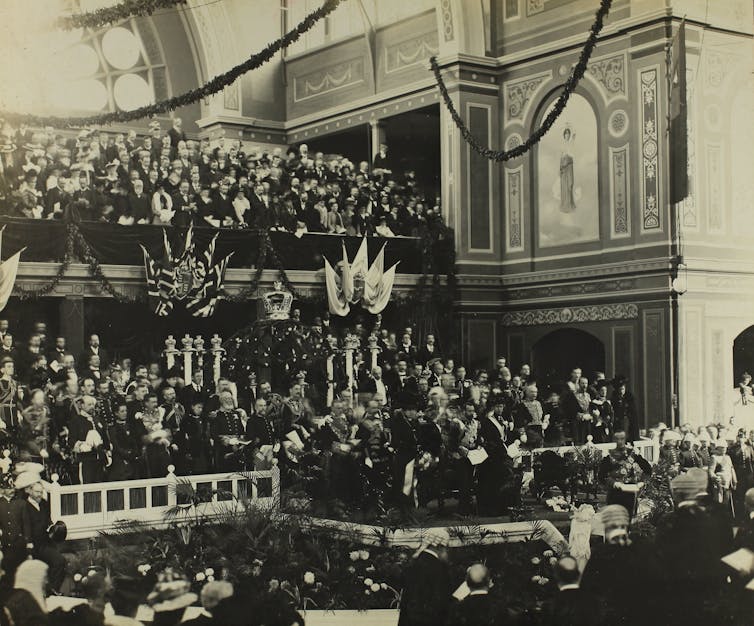
The opening of the first Commonwealth Parliament in 1901 was a lavish affair. As the Argus reported it, men decked themselves out in their finest formal wear, in “sombre shades” of mourning for Queen Victoria, “softened by splashes of purple here and there”. The scarlet uniforms of governors and officers provided a “touch of brightness”.

In 1977, safari suits – expressly made to be worn without a tie – were ruled as acceptable to wear in the chamber.
And few could forget the pink shorts famously worn by South Australian Premier Don Dunstan in 1972. Dunstan sparked a media frenzy when he turned up at Adelaide’s Parliament House, the bold bright colouring of his shorts set off with a fitted white t-shirt and long white socks worn to his knees.
Five years earlier, Dunstan’s casual clothing had been photographed for the Bulletin as a “summertime example” for employees in government departments, with the article predicting the tie was “slowly but reluctantly on the way out”.
When the Bulletin named Australia’s best- and worst-dressed men in 1976, flamboyant federal politician Al Grassby received the worst-dressed title. Dunstan topped the best-dressed list.
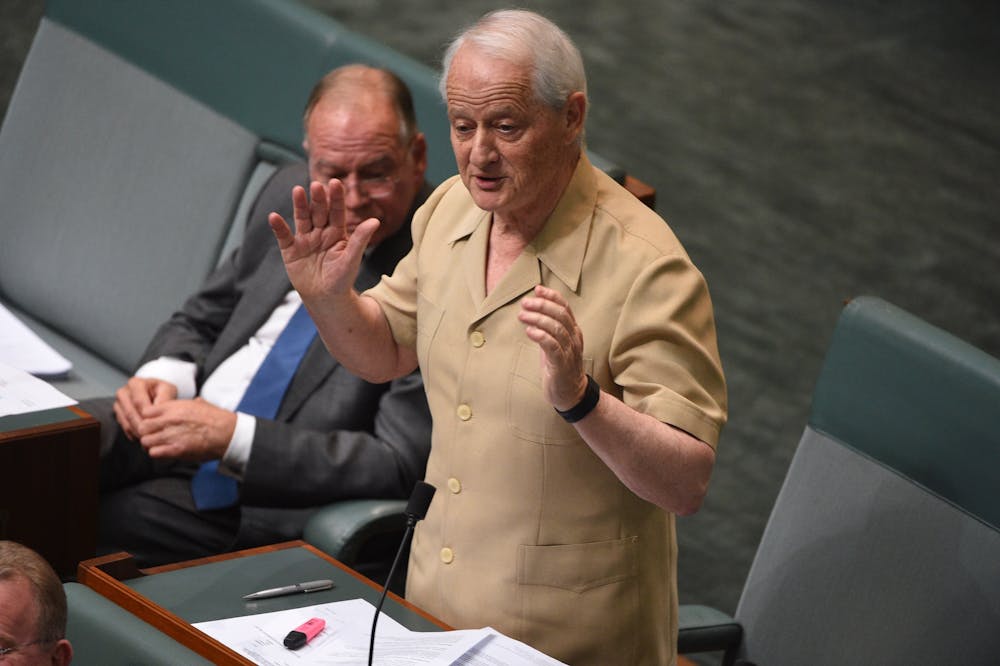 Safari suits were deemed acceptable parliamentary dress in the 1970s. Liberal Member for Berowra Philip Ruddock donned one for charity in 2015.
AAP Image/Mick Tsikas
Safari suits were deemed acceptable parliamentary dress in the 1970s. Liberal Member for Berowra Philip Ruddock donned one for charity in 2015.
AAP Image/Mick Tsikas
Known for wearing bold, unconventional suits against the grey uniformity of his colleagues, the Bulletin likened Grassby to “something out of Guys and Dolls”. Others appreciated his irrepressible style: his purple suit, worn while being sworn in to parliament, or his loud patterned ties.
From 1983, federal MPs have been encouraged to dress with “neatness, cleanliness and decency”, as former Speaker Harry Jenkins put it.
Read more: Dressed for success – as workers return to the office, men might finally shed their suits and ties
Loosening the (global) ties
Last year, Māori MP Rawiri Waititi was ejected from the debating chamber of the New Zealand Parliament for refusing to wear a tie.
Evocatively describing it as a “colonial noose”, Waititi insisted the hei tiki greenstone pendant he wore at his neck represented a necktie for him, while tying him to his people, culture and Māori rights.
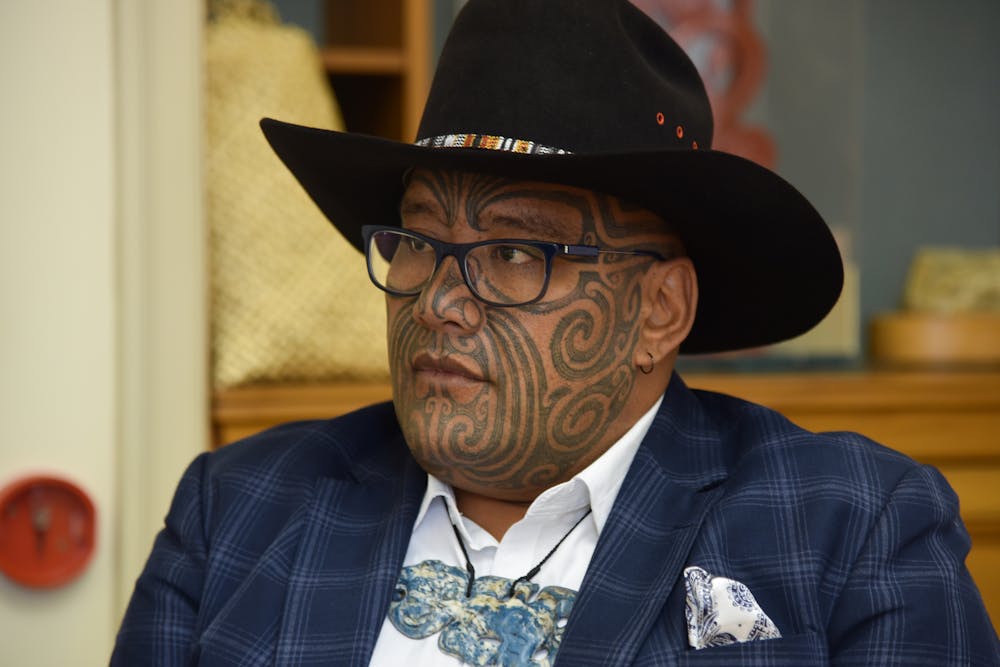 Rawiri Waititi said his pendant connected him to his people, culture and Māori rights.
AAP Image/Ben McKay
Rawiri Waititi said his pendant connected him to his people, culture and Māori rights.
AAP Image/Ben McKay
Fierce debate followed. Were ties shorthand for masculinity, status or oppression? Ties were subsequently removed from “appropriate business attire” in the New Zealand Parliament.
Last week, Spanish Prime Minister Pedro Sanchez fronted the media without neckwear. He encouraged his ministers and other workers to ditch their ties to save energy running air-conditioning in the searing summer heat.
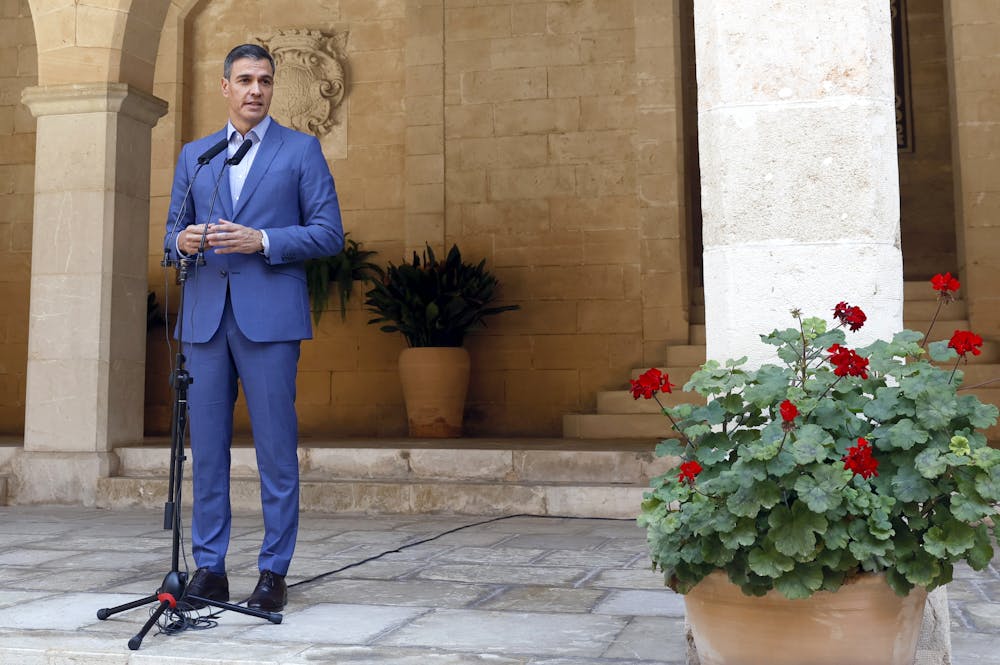 Spanish Prime Minister Pedro Sanchez is encouraging citizens to go open-collar to beat the heat.
EPA/BALLESTEROS
Spanish Prime Minister Pedro Sanchez is encouraging citizens to go open-collar to beat the heat.
EPA/BALLESTEROS
Read more: The politics of the necktie — 'colonial noose', masculine marker or silk status symbol?
Staying smart with easing dress standards
“This is not a barbeque,” Conaghan insisted to justify his objection this week.
Conaghan’s comment, likely unintentionally, echoed one made in the press 100 years ago.
In 1922, Fred Wright wrote to the editor of Sydney’s Daily Telegraph. He worried about what constituted smart, professional work attire when some suggested it was time for standards to ease.
Wright outlined the challenges faced by young men who were expected to “look respectable” by their employers, but who knew going without collars and ties was considered unbusinesslike.
“A young man cannot come to work dressed as if he were going to a picnic,” Wright explained.
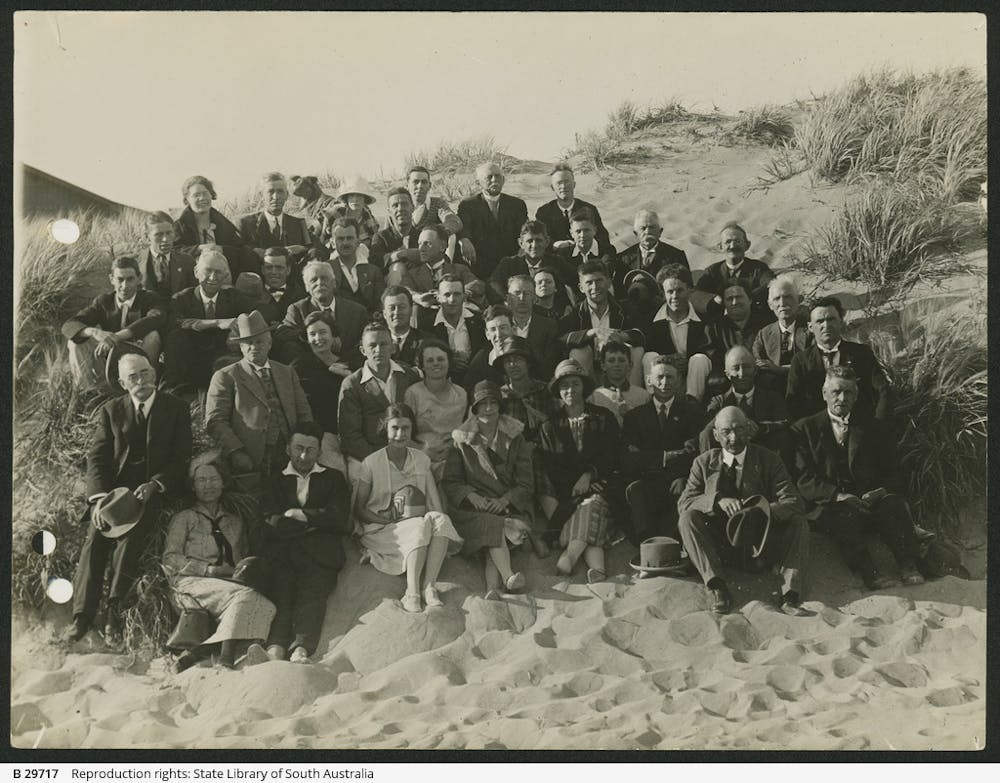 A young man should not dress for work as casually as he does for a picnic – like these picnickers in 1928.
State Library of South Australia
A young man should not dress for work as casually as he does for a picnic – like these picnickers in 1928.
State Library of South Australia
Fewer men donned suits and ties for the office in years to follow, reflecting these shifting standards. This had to do with the Australian climate as much as the availability of new items of dress. Sportswear and separates looked smart, menswear experts assured, although some still held up the suit and tie as the pinnacle of power and professionalism.
Despite Conaghan’s objections, Australian men have been going tie-less while still looking professional for decades. And most politicians are alert to clothing’s rich potential to communicate a range of other messages: through a high-vis vest and hard hat, or a North Face jacket.
Should we hold our politicians to high sartorial standards – or just let them get on with the job?
Authors: Lorinda Cramer, Postdoctoral Research Associate, Australian Catholic University


















