

Sydney cockatoos are still opening kerb-side bins, despite our best efforts to stop them
- Written by John Martin, Animal Ecology Lab, Western Sydney University
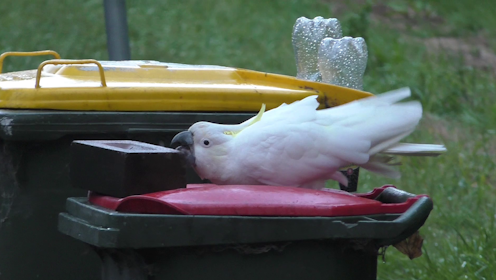
Bloody hell! That cockatoo just opened my bin, and it’s eating my leftover pizza. We can’t have that, I’ll put a rock on the lid to stop it opening the bin. Problem solved…?
And so began an arms race in the suburbs of southern Sydney: humans trying to deter sulphur-crested cockatoos from opening kerb-side bins, and cockatoos overcoming their deterrents to feast on our food waste.
The ability to open kerb-side bins is unique to cockatoos of southern Sydney, but this behaviour appears to be spreading. Last year, we published research revealing that this behaviour is a stunning display of “social learning”, as birds learn the bin-opening technique by observing its neighbour.
This had global significance – it meant we can add parrots to the list of animals capable of foraging culture, which also includes chimpanzees, humpback whales and New Caledonian crows.
Our new research, published today, documents 50 bin-protection methods. It provides another example of a global issue of human-wildlife conflict – indeed, it is rare to document a behavioural change of a species in response to the actions of another.
Cockatoos in southern Sydney have learned to open kerb-side bins.Cockatoos make a mess
While cockatoos opening bins is fascinating, it can also create a mess. The birds search through the rubbish to find food, occasionally throwing out items in the way. Needless to say, coming home to find your rubbish spread on the ground in front of your house is not appreciated.
Some people are also concerned that the food being eaten isn’t healthy for the cockies, such as pizza, bread or chicken.
This arms race is a unique story, as we show it not only involves social learning by cockatoos, but also by humans in response.
Through our community survey, participants reported how and when they protected their bins from cockatoos, that they changed their bin protection in response to the cockies solving a method, and that they learnt new protection methods from their neighbours.
Our research shows people have escalated their methods to deter cockatoos from opening bins over time, as cockies overcame their efforts. These appear to prevent or hamper cockatoos from opening the bin lid (at least for now), while allowing it to be emptied when the bin is inverted by the garbage truck.
From rubber snakes to custom locks
Our research made observations about the many innovative ways to stop cockatoos opening bins, but we plan to assess the success of different methods in more detail in the future.
We’ll start with the quick and easy method of placing a brick, wood, metal or bottle filled with water on top of the bin lid, making it too heavy for a cockatoo to lift. If the object is heavy enough, then it should work.
If it isn’t, a cockatoo can push it off, open the lid and have a feed, as the video below shows.
A sulphur-crested cockatoo pushing a brick off a bin lid, opening it and then searching for food.A more sophisticated solution is to bolt wood, metal or brick to the lid, or strapping the bottles to the top or underside of the lid. This method permanently makes the lid too heavy and appears to be an effective deterrent.
Another popular method is preventing the bin lid from flipping open via rope, bungee cord, metal spring, or a stick placed through the handle or hinge. These methods had only varying success.
Attaching a custom designed lock was also popular and, if working properly, appears to deter cockies. These locks allow the bin to open when tipped upside down by the garbage truck.
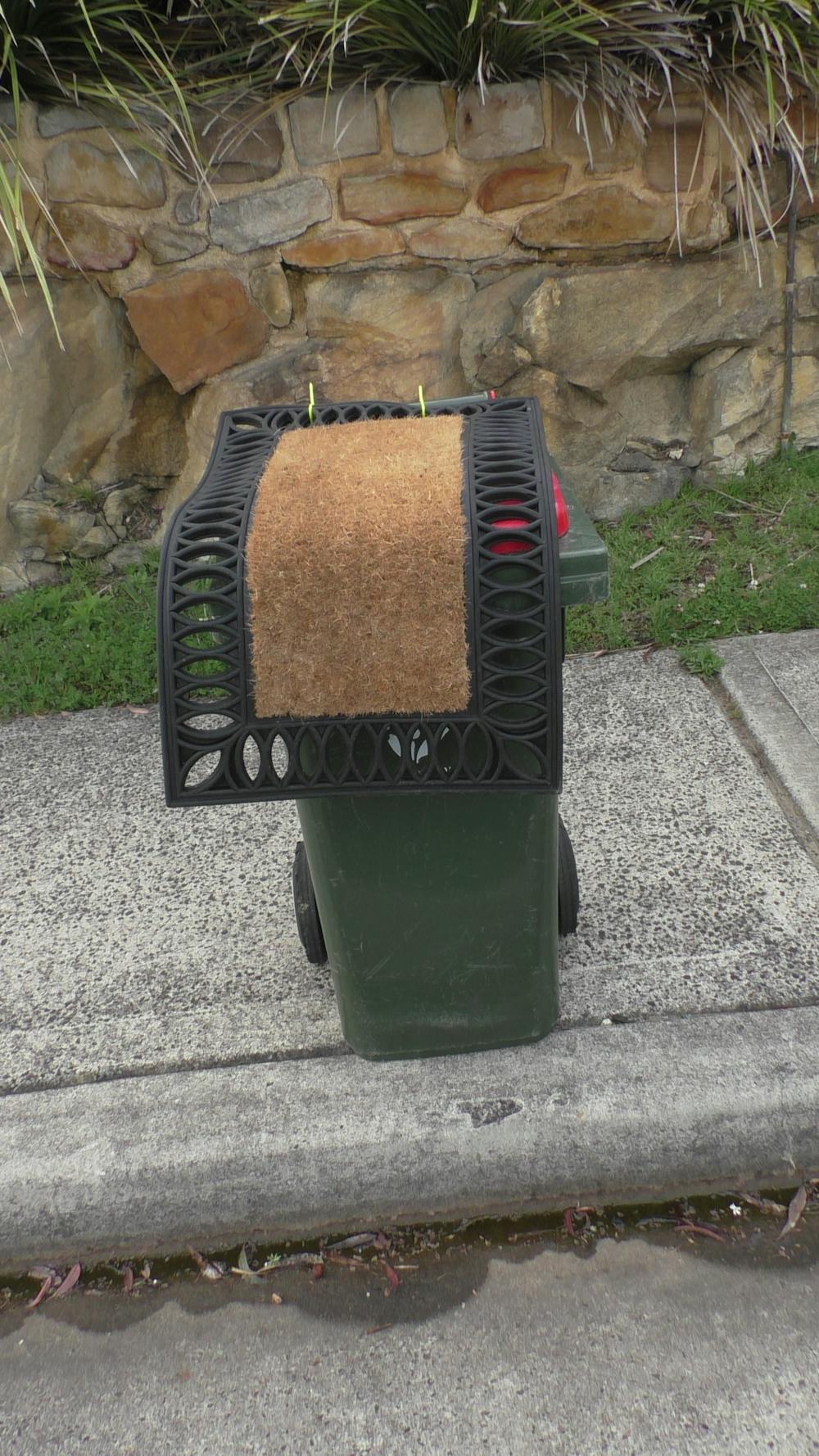
Some people placed metal or plastic spikes around the rim to prevent the birds landing, or they installed barriers to stop a bird getting their beak under the bin lid. These methods appeared to work.
Methods with poor outcomes include modifying the bin lid to deter the birds from landing or walking by making them uncomfortable, such as with netting. And aiming to scare the birds away by attaching a rubber snake is an interesting method but not a popular one, so perhaps it isn’t effective.
Still, the race continues, both in the suburbs where we’ve studied this novel behaviour and in new suburbs as this fast-food foraging behaviour spreads to neighbouring suburbs and, with time, beyond.
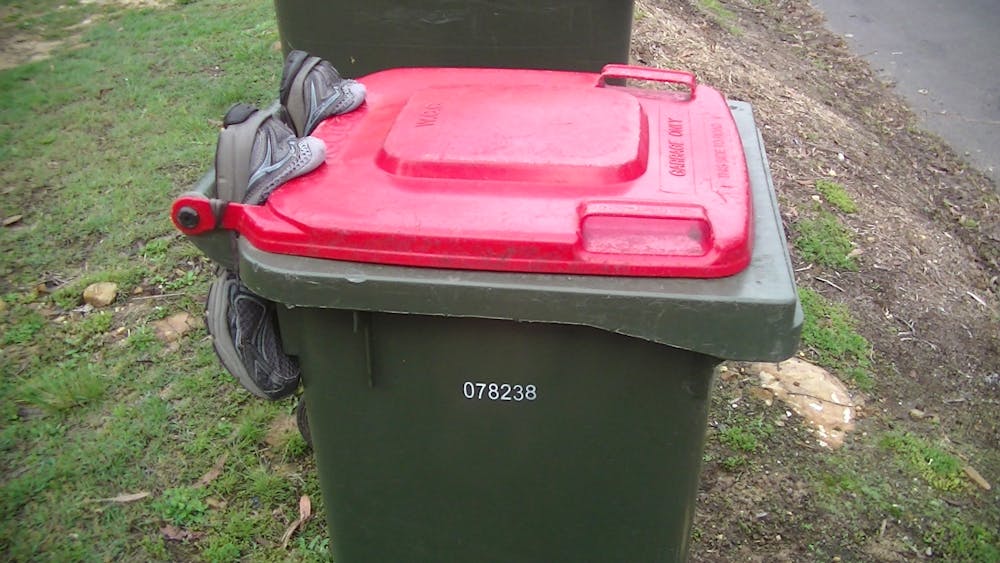 One household used shoes to keep the bin lid shut.
Barbara Klump, Author provided
One household used shoes to keep the bin lid shut.
Barbara Klump, Author provided
An example of human-wildlife conflict
We categorise cockatoo bin-opening as a “human-wildlife conflict”. Such conflicts are common, from possums in a household roof, to the official bin-chicken (the Australian white ibis) scavenging a free feed, to flying-foxes roosting in urban areas or foraging in orchards.
Conflicts can result from noise, smell, poo, damage to crops, gardens, or buildings, or threatening people, stock or pets.
Globally, human-wildlife conflict is common and diverse – think lions eating cattle, monkeys stealing tourists’ cameras, pigeons pooing and nesting in cities, seals sleeping on boats, sharks biting people, ducks eating crops, and snakes sharing homes.
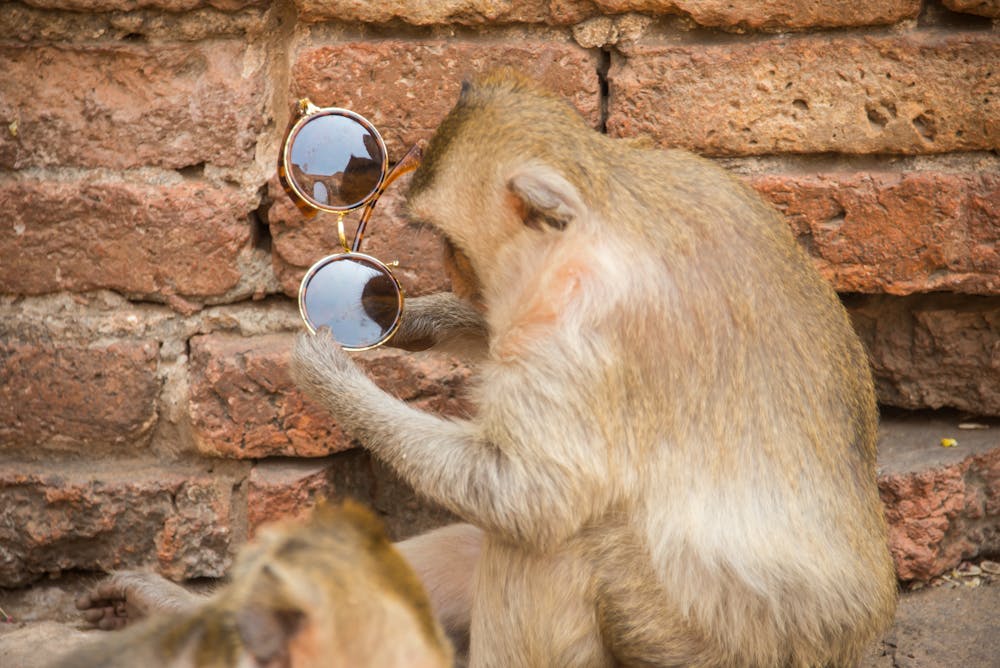 A monkey thief.
Shutterstock
A monkey thief.
Shutterstock
Our attempts to deal with such conflicts can have tragic results for wildlife. One extreme example is shark nets, which kills sharks yet don’t prevent them from accessing the beach. They also kill or entangle non-target – and sometimes threatened – species, such as turtles, dolphins, grey-nurse sharks and whales.
We should learn to live alongside wildlife instead, especially as “conflict species” may be under threat, such as the grey-headed flying-foxes (an important pollinator) or great white sharks (an important predator).
In many instances of human-wildlife conflict, public education goes a long way to reducing conflict. Understanding wildlife behaviour and appreciating the fascinating features of native species often favourably shifts community attitudes – we can grow to love them, not fight them.
So whether it’s finding new and harmless ways to protect your bin from hungry cockatoos, or having shark-smart behaviour, there are positive actions we can take if we are informed.
To help our ongoing research, please take the 2022 Bin-Opening Survey and report if you “have” or “have not” seen cockatoos opening bins.
The authors gratefully thank the contributions of the survey participants and research volunteers; we acknowledge our co-authors of this research: Barbara, Lucy, Damien, and Richard.
Authors: John Martin, Animal Ecology Lab, Western Sydney University

















