

10 simple ways to make Australia's climate game truly next-level
- Written by: Wesley Morgan, Research Fellow, Griffith Asia Institute, Griffith University
Australia last week moved to tackle the climate crisis when federal parliament passed Labor’s climate bill. But the new law is just the first step. Over the next eight years to 2030, we must get on a steep trajectory of emissions reductions.
The law set a national target to cut emissions by 43% this decade, based on 2005 levels. While this brings Australia closer to the international consensus, we should be aiming to go much further, much faster.
When Prime Minister Anthony Albanese informed the United Nations of Australia’s new target, he wrote of his government’s aspiration for “even greater emission reductions in the coming decade”. But how will Australia go beyond a 43% cut to emissions? And what policies should the government implement and fund first?
A roadmap released today by the Climate Council charts the way forward. It sets out key goals Australia should be chasing this decade, and ten climate policy “game-changers” to help get us there.
100% renewables by 2030
Australia’s energy grid is responsible for 33% of our national emissions. Today, 59% of our electricity comes from coal-fired power plants.
Renewables are not just a clean form of energy – they are also the cheapest form of new energy. Our analysis suggests Australia should aim to achieve 100% renewables by 2030.
We must also increase overall power generation by around 40% this decade to make steep inroads into electrifying other sectors of the economy.
Here’s how to do it:
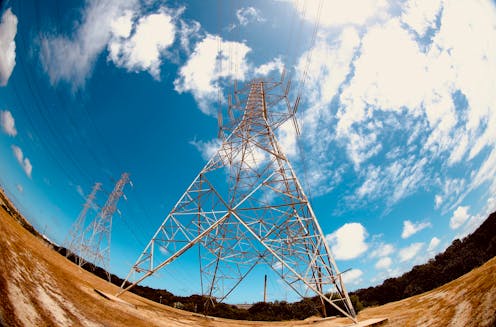
1. Enable transmission infrastructure: the federal government has promised A$20 billion for transmission infrastructure. This is crucial. To connect renewables to the grid, we need new transmission lines, and lots of them. The total length of transmission will need to be about 24 times what it is now.
2. Boost storage: to support grid security, we’ll need lots of electricity storage – think grid-scale batteries and pumped-hydro. To encourage greater investment the federal government should set a mandatory Renewable Energy Storage target, with specific goals for additional storage each year to 2030.
3. Upskill Australians: a new energy system will need skilled workers. The federal government must help workers upskill for clean trades through new investment in TAFE courses and electrical apprenticeships.
4. Establish a National Energy Transition Authority: this new organisation should set closure dates and develop transition plans for all coal-fired power stations by 2024, and support communities through the process.
Clean up transport
Australia’s transport sector is responsible for 19% of national greenhouse gas emissions. By the end of this decade, transport emissions should be halved. Almost all new cars in Australia will need to be zero-emissions vehicles, and we’ll need major improvements in public and active transport infrastructure and use.
How do we get there?
5. Fuel efficiency: the federal government should implement mandatory fuel efficiency standards. Already common across the developed world, these standards encourage auto companies to supply more low and zero-emissions vehicles to the market.
The standards can be made more stringent over time, ensuring an orderly shift to zero-emissions vehicles. Without them, Australia risks becoming a dumping ground for polluting older-model cars – while the rest of the world charges ahead.
6. Ditch dirty diesel: Governments – both state and federal – need to invest in cleaner and more convenient public transport. A key first step is replacing diesel buses with a renewable electric fleet.
Read more: Australia is failing on electric vehicles. California shows it's possible to pick up the pace
Net-zero buildings
Some 20% of Australia’s emissions are created by the building sector. (It should be noted, this figure includes electricity consumed in buildings, which is also counted as emissions from the energy sector). To reach our climate goals we’ll need to change the way our homes, businesses and other buildings are constructed and run.
This should be done by:
7. Tightening building rules: The National Construction Code must be tightened so all new homes are net-zero emissions – through energy efficient design, rooftop solar and all-electric appliances.
By 2025 gas connections should be banned for new homes, and new gas appliances should be banned for established homes. This would ensure the move to cheaper and cleaner forms of heating and cooking.
Households will also need government support to refit their homes with electric appliances, through incentive programs and concessional finance. As Australians switch energy-efficient renewables-powered homes, they’ll save on bills.
Read more: Will 7-star housing really cost more? It depends, but you can keep costs down in a few simple ways
Overhaul industry
Australia’s industrial sector creates 34% of our national emissions – and that’s excluding electricity use. These emissions must be halved, by increasing energy efficiency, electrifying processes where possible, switching fuels and phasing out fossil fuel extraction.
At the same time, we must seize new economic opportunities for industry in a future low-carbon world.
Reaching this goal will require:
8. Proper rules for big polluters: The federal government must reform what’s known as the “safeguard mechanism” to ensure big polluters do their fair share to cut emissions. This includes government incentives to drive the steepest emissions reduction possible.
Redirect public spending
Public spending must be aligned with the net-zero goal. That means:
9. No more handouts: federal and state governments spent an estimated $11.6 billion on subsidies for the fossil fuel industry last financial year, up $1.3 billion on the previous year. These handouts, such as fuel tax credits, must stop.
10. Create a climate and energy investment plan: the federal government should introduce climate budget statements outlining how taxpayer investment is aligned with the goal of rapidly reducing emissions.
Time to get started
Australia has already warmed by around 1.4℃ since pre-industrial times. We’re suffering significant losses from accelerating climate change, and worse is on the way.
The passing of the climate bill into law has set the floor for action. Now, we must immediately build our cleaner future – because waiting until the 2030s will be much too late.
Authors: Wesley Morgan, Research Fellow, Griffith Asia Institute, Griffith University


















