

Nearly 30% of Australia’s emissions come from industry. Tougher rules for big polluters is a no-brainer
- Written by: Rebecca Pearse, Lecturer, Australian National University
Australia’s historic climate law passed the Senate last week and enshrined an economy-wide target to reduce emissions. But an important measure to reduce Australia’s industrial emissions is still up for debate: the “safeguard mechanism”.
Introduced by the Abbott government in 2014, the safeguard mechanism is supposed to stop Australia’s largest greenhouse gas polluters from emitting over a certain threshold. But the policy has been frequently criticised for lacking teeth. The Labor government has promised to strengthen the mechanism, and is currently reviewing it.
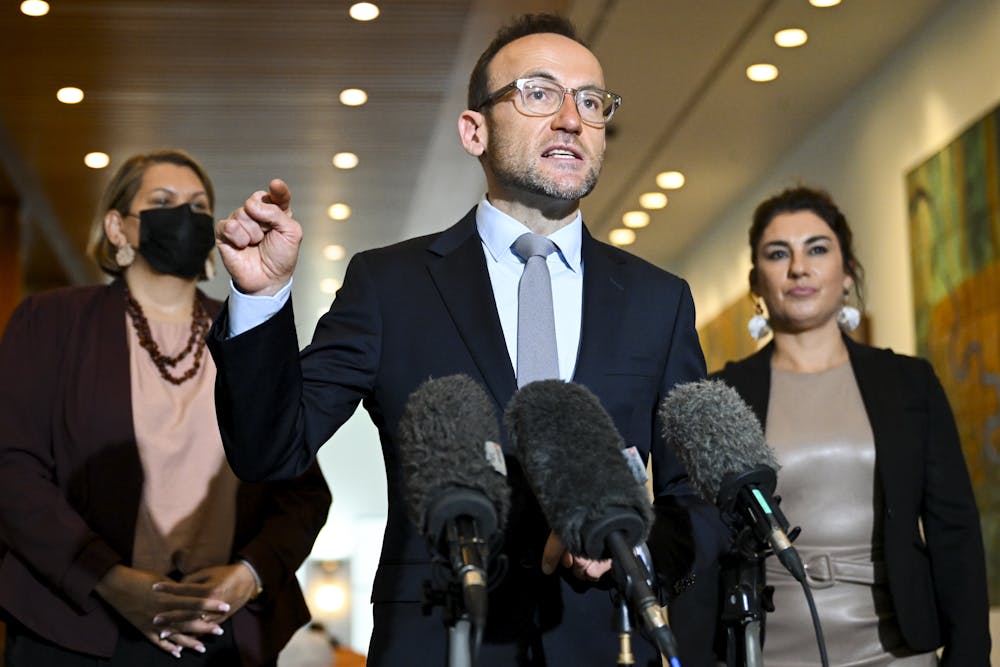
Industry has raised concerns over any toughening of the policy. Meanwhile, the Greens will push Labor to strengthen it further.
The safeguard mechanism covers the grid-connected power stations with a sectoral target. It also applies to 215 of Australia’s largest industrial emitters. Together, these 215 facilities produce almost 30% of Australia’s total annual emissions. So a stringent policy to curb this pollution is crucial to climate action.
Wait, what’s the safeguard mechanism?
The safeguard mechanism works by setting a limit on the emissions individual enterprises can produce in a year. This limit is put into place with “baselines” that get set in a number of different ways, depending on the type of company involved. Such companies might include a mining company, aluminium smelter, steelworks or airline.
If the company emits beyond their limit, they can buy carbon credits to compensate for, or “offset”, the excess emissions.
The mechanism covers hard-to-abate industries which are regulated on an individual basis, such as new coal, oil and gas projects, steel, aluminium, manufacturing and transport. These include Woodside’s Northwest Shelf gas project, Qantas, Chevron’s Gorgon gas project, Port Kembla steelworks, and AngloAmerican coal mines in central Queensland.
Coal fired power remains our biggest industrial source of emissions, but is regulated separately. A “sectoral baseline” has been set for all electricity generators connected to the national grid at 198 million tonnes of CO₂ equivalent each year.
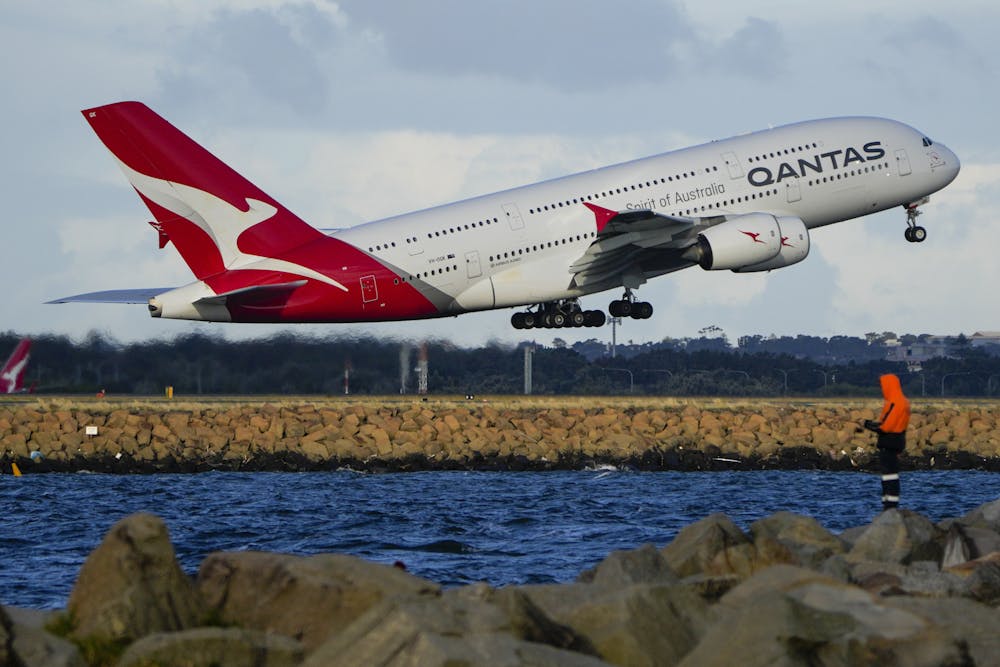 Qantas is among the companies regulated under the safeguard mechanism.
AP Photo/Mark Baker
Qantas is among the companies regulated under the safeguard mechanism.
AP Photo/Mark Baker
Rubbery baseline emissions
Historically, the safeguard mechanism hasn’t put strong obligations on industrial emitters to reduce their emissions. Indeed, industrial emissions have increased since the mechanism began in 2016.
Imposing a genuine carbon limit on high-emitting companies requires a clear definition and enforcement of the baselines. But the safeguard mechanism provides enormous scope for expanded production and, therefore, expanded emissions.
The government’s review paper identifies a major problem with how baselines have been set in the past. Namely, many facilities have been allowed to set their baseline emissions well above their actual emissions.
Baselines for each facilities’ emissions are currently measured according to “production-adjusted” emissions intensity. So, for example, a coal mine’s baseline is measured per tonne of coal commodity produced. This means over time, baselines rise or fall in proportion to a company’s expected production.
The government’s consultation paper reports that in the 2020-21 financial year the combined baseline emissions recorded for non-electricity grid emissions under the safeguard mechanism was estimated at 180 million tonnes of CO₂ equivalent.
But actual emissions in the same period were 137 million tonnes of CO₂ equivalent.
It should also be noted that research suggests up to one in five fossil fuel projects are underestimating their actual emissions. But regardless, the high baselines mean there’s no regulatory pressure for companies to reduce their emissions.
The current review paper seeks feedback on these issues. Removing the head room for facilities with baselines well above their actual emissions is on the cards.
 The government is considering expanding trade in carbon credits.
AAP Image/Mick Tsikas
The government is considering expanding trade in carbon credits.
AAP Image/Mick Tsikas
Carbon credit questions
The government is poised to propose significantly expanding carbon credit trading under the safeguard mechanism.
Carbon credits are granted to projects that reduce, store or avoid greenhouse gas emissions. These credits can be sold to the federal government or to private companies to offset a project’s own emissions.
Under the current safeguard mechanism, if a company exceeds its baseline emissions, then it can purchase Australian carbon credits to offset this.
These carbon offsets, however, are plagued with credibility problems. In fact, another federal government review is underway to examine the issues.
Read more: 'Untenable': even companies profiting from Australia's carbon market say the system must change
There are calls to strongly limit or remove questionable offsets linked to the safeguard mechanism.
For instance, climate science professor Mark Howden argued recently that offsets should not be used to give big emitters a “free ride” to continue polluting if they invest in carbon sequestration projects, at this stage. Instead, the immediate priorities should be limiting fossil fuel combustion burning, and making concrete plans for other industries to transition.
Despite this, the federal government is considering expanding trade in these and potentially other types of carbon credits.
The government is proposing a new type of carbon credit for companies emitting below their baseline. For instance, if an aluminium smelter reduced its emissions over 2024 and 2025, it could be granted credits to sell to others in the carbon market.
The government is also considering allowing companies to trade carbon credits on an international level, pending reforms to address integrity issues in safeguard mechanism like the baseline headroom problem.
Read more: Australia may be heading for emissions trading between big polluters
The international trade in carbon credits has been plagued with problems for 20 years. A 2021 literature review found little evidence demonstrating causal effect of carbon trading markets on emissions reduction.
It puts a strong case forward against linking carbon markets internationally, after Europe, Quebec and California case studies show linking carbon markets has led to price crashes and volatility – not stability.
The risk of a weak carbon trading market
We can expect industry to continue to lobby for a weak safeguard mechanism and carbon credit rules. But if the Labor government is genuine about wanting to reduce Australia’s emissions, our biggest polluters cannot be allowed to carry on emitting as usual.
And there is no role for a carbon trading policy that excuses big emitters from making clean energy transition plans.
Labor may need the numerous pro-climate independent senators or the Greens to make changes signalled in the safeguard consultation paper. They are unlikely to be satisfied with a weak carbon trading scheme.
Any proposed changes that undermine Australia’s emissions reduction goals will not easily be passed.
Authors: Rebecca Pearse, Lecturer, Australian National University


















