

the culture clash at the heart of the TVNZ-RNZ merger
- Written by Peter Thompson, Associate Professor of Media Studies, Te Herenga Waka — Victoria University of Wellington
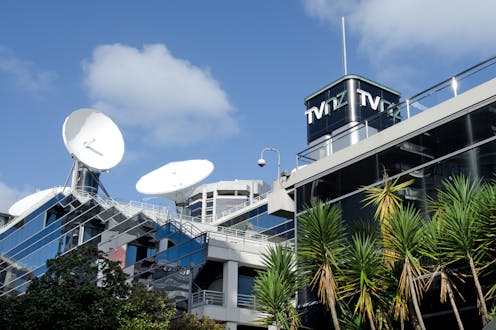
The 980 submissions in response to the Aotearoa New Zealand Public Media Bill are a testament to the importance – and contentiousness – of public media policy.
Most are supportive of the bill’s goal of strengthening public media, but many claim the new media entity it establishes could potentially distort the market, undermine its commercial competitors, and be subject to political interference.
These are critical questions. Aotearoa New Zealand Public Media (ANZPM) will encompass TVNZ and RNZ, with up to NZ$200m in public subsidies, including a new $109 million appropriation and a further $84.8 million in funds redirected from NZ On Air.
A key challenge, therefore, will be ensuring the ANZPM public charter is not compromised by the continuing pursuit of commercial revenues. The charter objectives – to contribute to a strong New Zealand identity, te reo and tikanga Māori, an inclusive and connected society, and an informed, participatory democracy – inevitably carry commercial opportunity costs.
Put bluntly, an educational children’s program, in-depth current affairs or a documentary about Māori culture will attract fewer eyeballs and advertising dollars than an imported drama or a populist reality show like the already controversial FBOY Island.
It may be that the best solution is the creation of an independent regulatory body to oversee charter delivery and the proper use of public funding.
Internal contradictions
Supporting ANZPM’s noncommercial objectives is the primary justification for providing direct public subsidies not available to competitors. This makes the charter the institutional DNA of the new entity; it should be the end to which all revenues – public and commercial – are the means.
The government’s Strong Public Media Business Case recommended a not-for-profit status, reinvestment of surpluses in public media objectives, and free availability of all first-run content. It also anticipated additional funding over time to compensate for an expected decline in commercial revenues. But none of this is specified in the ANZPM bill.
Read more: Merging commercial TVNZ and non-commercial RNZ won't be easy – and time is running out
On the contrary, ANZPM is merely required to make content predominantly free to access, opening the door to new subscription-based services, the scope of which is not defined.
Meanwhile, Budget 2022 anticipated the return of $306m in surpluses over six years. Other Treasury communications reveal pressure to assert its fiscal disciplinary oversight, and insistence on measures to ensure ANZPM maintains its commercial performance to reduce reliance on public subsidies.
Moreover, beyond 2026, there is nothing in the bill to ring-fence ANZPM’s future funding from annual budget scrambles. Any future government unsympathetic to public media could simply reduce or discontinue the public funding.
Culture clash
To anyone familiar with Labour’s previous attempt to restructure TVNZ with a public charter, the alarm bells will be ringing. Internal cabinet disagreements and Treasury demands for commercial performance saw TVNZ paying dividends exceeding its public funding and conflicted over its priorities.
Many in TVNZ resented the imposition of the charter, while commercial competitors resented public money being (mis)used to subsidise programming used to compete for ratings and revenue – including outbidding Sky for the rights to the Beijing Olympics.
The policy ambiguity in the balance of commercial and charter functions is therefore a potential risk in the current bill. RNZ and TVNZ have a very different character and philosophy, particularly in their news services.
If ANZPM combines the RNZ and TVNZ news operations and makes delivering eyeballs at 6pm the priority, its journalistic mission would look very different from a public service focus on in-depth reporting of serious issues.
Who calls the tune?
Ensuring the ANZPM entity remains independent and prioritises its charter over commercial performance will depend on the governance structure and institutional status. Board appointments and funding are potential vectors of political influence, while the source of ministerial oversight can significantly influence operational priorities.
As internal government communications reveal, the Bill aims to establish ANZPM as an Autonomous Crown Entity (ACE) rather than a Crown Entity Company (CEC). This has the advantage of giving the Ministry for Culture and Heritage primary oversight and limiting the influence of Treasury (which sought to retain a CEC structure).
However, as an ACE, it would be possible for the minister to issue directions in line with government policy – a potential source of political influence noted in several submissions on the bill.
Both RNZ and TVNZ are currently CECs, for which the Minister of Finance and Minister of Broadcasting and Media are shareholders. Although their boards agree business plans and statements of intent with the government, they are not subject to policy directives, while their governing legislation prohibits editorial interference.
The bad news, however, is that CECs are subject to the fiscal discipline of Treasury oversight which can potentially impose commercial performance objectives.
Independent oversight needed
An alternative option would be to make ANZPM an Independent Crown Entity (ICE) which offers greater autonomy from government. But this is usually reserved for quasi-judicial bodies like the Broadcasting Standards Authority and would make delivery of the charter highly dependent on the internal operational culture of ANZPM.
TVNZ remains the larger part of the new entity and the Minister of Broadcasting and Media has already hinted at its reluctance to grasp the extent to which its values will need to evolve as part of ANZPM. (Former TVNZ boss Ian Fraser once remarked that changing TVNZ’s commercial culture would require a “neutron bomb”).
The risk here is that TVNZ will approach its role in ANZPM as business-as-usual plus government funding.
So, the challenge is to insulate ANZPM from political interference, commercial demands from Treasury (which would compromise the charter and risk market distortion), and from internal subversion by those opposed to the public service mission.
To avoid simply choosing between the (not so) good, the bad and the ugly options, we need an independent regulatory body to review charter delivery, ensure the appropriate use of public funding, and evaluate future funding requirements.
Authors: Peter Thompson, Associate Professor of Media Studies, Te Herenga Waka — Victoria University of Wellington

















