

India's enormous solar park was meant to help poor communities. But it left the landless stricken
- Written by: Gareth Bryant, Senior Lecturer in Political Economy, University of Sydney
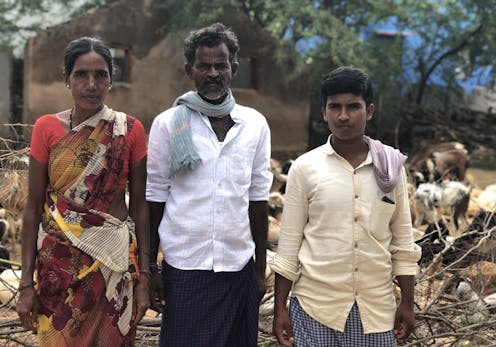
India, like many other countries, is looking to renewables as an antidote to soaring fossil fuel prices and to tackle climate change. Prime Minister Narendra Modi sees renewables as vital for a “developed India”.
But while renewables are seen as a major positive on a societal scale, these large scale facilities can – if done poorly – make life harder for people who live close to them.
That’s exactly what happened to one of the world’s largest solar installations, India’s Pavagada solar park. The park was meant to offer cheap clean power, avoiding 70 million tonnes of carbon dioxide per year and give an economic boost for a poor area. Our new podcast and research found, sadly, that didn’t all happen. Larger landowners profited, while poorer villagers lost access to agricultural land.
The problems of Pavagada show us the importance of genuine partnership with the rural communities where wind and solar farms will be built.

The Pavagada model was meant to be win-win
In November 2019, we were in a dusty village in the southern state of Karnataka. Earlier that year, the truly enormous 2 gigawatt Pavagada solar park had begun operating. There were so many solar panels that the five villages in the area were surrounded.
As we were talking with local women outside a small house, more and more people overheard our conversation and joined in. When the discussion became heated, our informants took us inside. “We want to tell you our story,” one said.
Though the house backed onto the solar park, it was dimly lit by only a single lightbulb. Over tea, we asked the women why talking about the solar park had brought up so much tension. One said:
The solar park did not help us. Work should be provided to all educated girls … The priority should be for landless people because the landowning people at least got the lease amount.
They told us that the project was a story of broken promises. Rather than providing solutions to local problems, the solar park had made things worse. Many had lost their livelihoods as farm workers, since the solar panels now covered agricultural land. By contrast, solar companies, government electricity distributors and larger landowners had profited greatly.
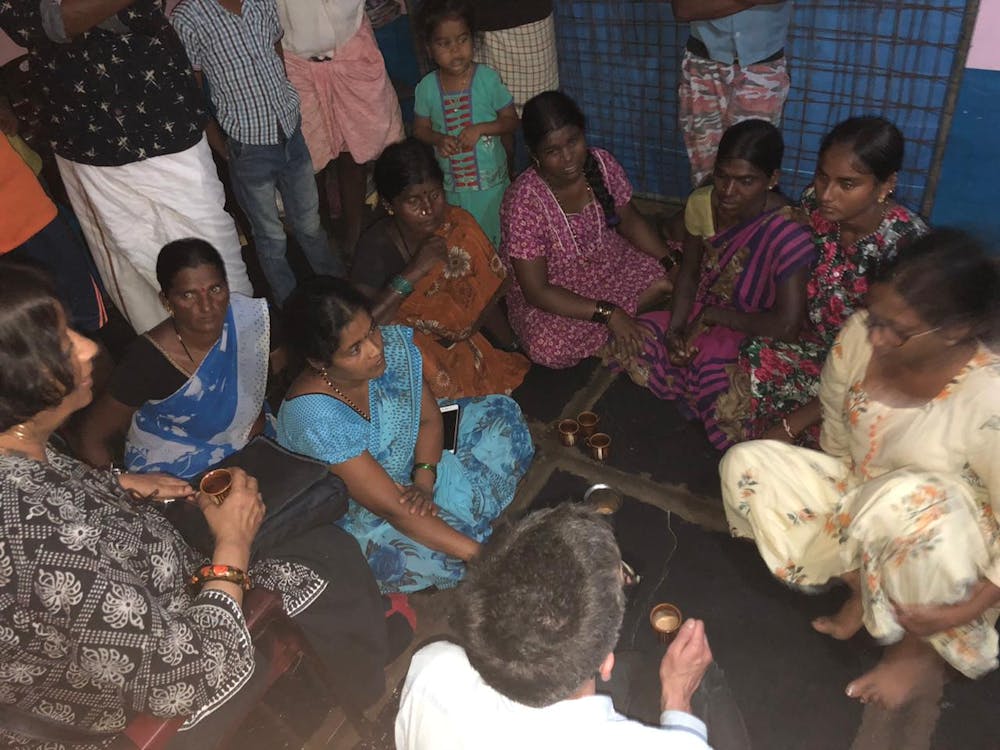 The women of Thirumani and surrounding villages wanted their story of broken promises to be told.
Priya Pillai, Author provided
The women of Thirumani and surrounding villages wanted their story of broken promises to be told.
Priya Pillai, Author provided
This was a shock to us. It wasn’t supposed to be this way. The Pavagada solar park was pitched as a flagship of India’s energy transition, able to generate as much power at peak times as a large coal-fired power station.
Worse, Pavagada was meant to be a role-model for ethical renewable energy development in emerging economies.
That’s because it relied on an innovative system of land leasing. The government authority created to oversee the project signed long-term leases with over 1,000 local farmers to obtain the land for the solar park.
These voluntary leases were meant to give farmers a new source of income, which many needed as they struggled to eke out a living amid worsening drought. Solar developers would get the scale they needed and overcome the common bottleneck of small-scale land holdings. And the leases would be achieved without the common land grabbing controversies plaguing large infrastructure projects in India for decades.
So what went wrong?
The model of the future ran into problems of the present. Our five years of interviews and fieldwork with village women, community representatives, farmers, local government officals, solar company managers, and renewable energy authorities clearly showed the Pavagada model wasn’t distributing benefits evenly. The energy transition left winners – and losers.
Who won? Larger landowners. Who lost? The landless. Over half of the 10,000 people in the five villages near the park are landless agricultural workers, as is common in much of rural India. Because they do not own land, they receive no income from the leasing model. And with much local farming land leased to the solar park, many landless labourers lost their livelihoods.
Sadly, this was predicted in meticulous detail in an early World Bank report, which warned about the effect on farm workers and the landless before the development began.
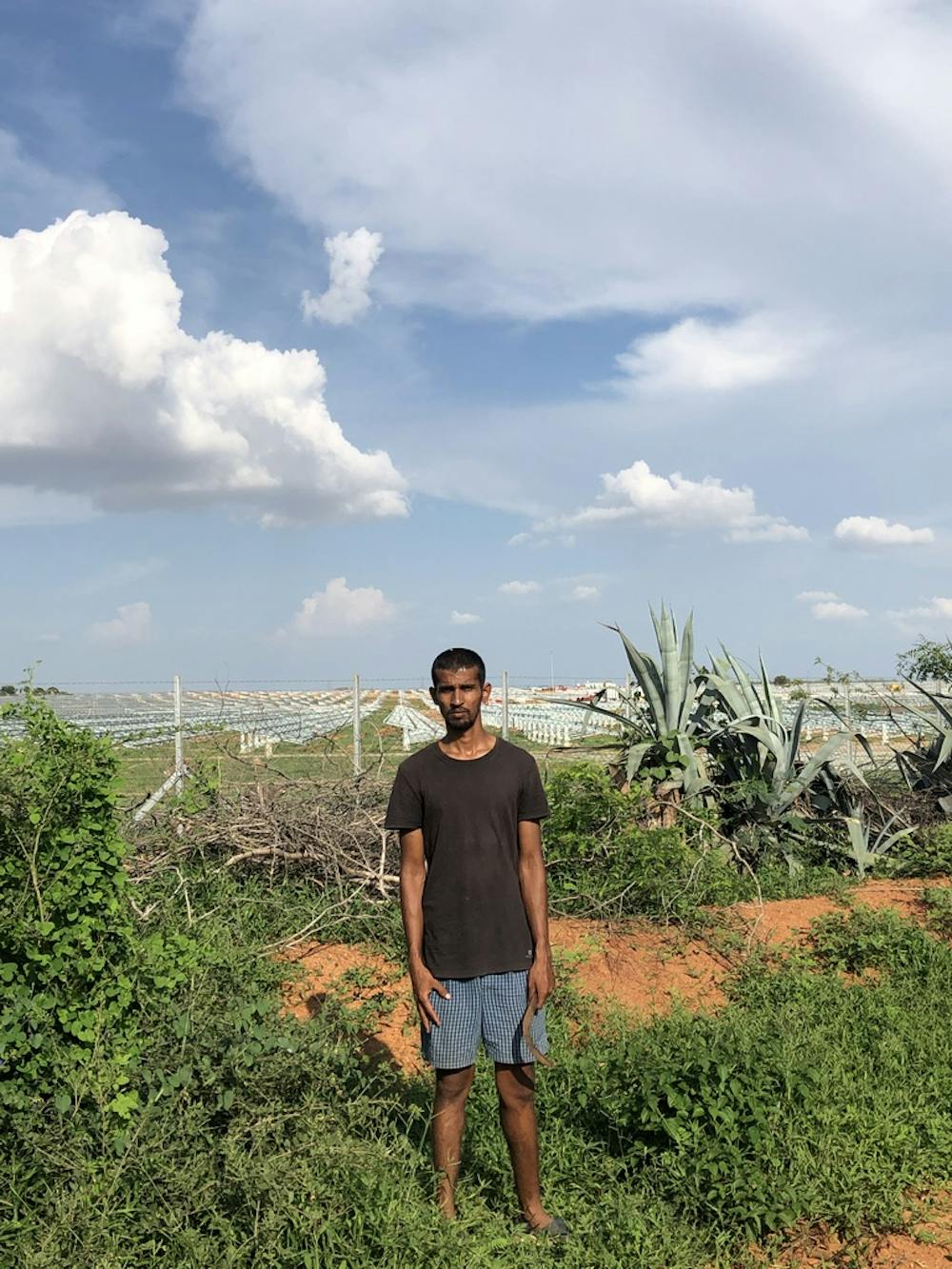 A mango farmer who chose not to lease his land.
Priya Pillai, Author provided
A mango farmer who chose not to lease his land.
Priya Pillai, Author provided
The huge project did create some new jobs for local people, mostly temporary employment in grass cutting, panel washing and security. But this work has not fully replaced lost livelihoods.
Those worst affected were more likely to be women, particularly those from lower castes or Adivasi (Indigenous) backgrounds. This is because their financial independence came solely from agricultural income.
Even the landowners expressed disillusionment. That’s because they could see their former farm workers were struggling.
As one landowner told us:
people who do not have land, no benefit for them. Rather, they have lost their livelihood, as no one calls them for work.
What should we learn for large-scale renewable projects?
Building large-scale renewable energy projects is essential if we are to meet our climate goals. So how can we do it more fairly?
Focus on the communities affected and find ways of making sure profits and jobs make it to those who need it the most. Because of their need for land, solar and onshore wind have to be built in the regions. But this is often where a country’s poorer people live – and where land is a key difference between wealth and poverty.
Pavagada holds a painful lesson. We need renewables urgently. But we must build it alongside the local communities who will host these new power sources. As many community members told us, they were not opposed to solar. What they wanted was a genuine partnership with revenue sharing, sharing of land across solar and agriculture, and more jobs and opportunities. In short, they were calling for a just transition.
Authors: Gareth Bryant, Senior Lecturer in Political Economy, University of Sydney


















