

Ross Garnaut thinks Australia can become a low-carbon superpower; Clive Hamilton is not convinced
- Written by: Clive Hamilton, Professor of Public Ethics, Centre for Public and Contextual Theology, Charles Sturt University
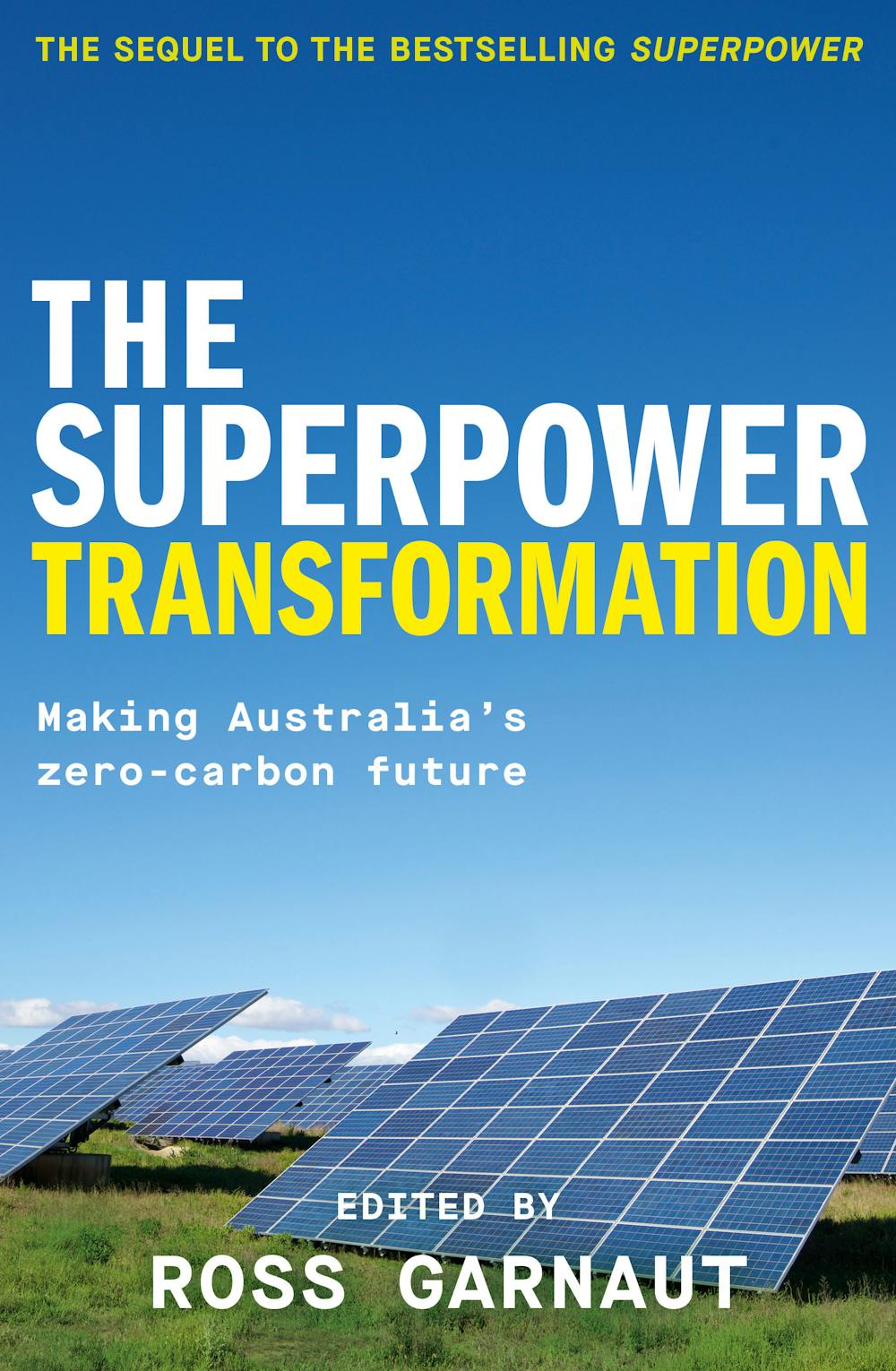
Ross Garnaut is a big beast in the Australian climate policy world, and a Labor favourite since his days as economic adviser to Bob Hawke. His 2008 Climate Change Review shifted the dial on policy, encouraging the Rudd and Gillard governments to pursue carbon pricing laws. He fell out of favour when the Coalition, led by Tony Abbott and dominated by climate science deniers, defeated the Labor government in 2013 on the back of a carbon price scare campaign.
Now he is back with a follow-up to Superpower: Australia’s Low-Carbon Opportunity (2019), an optimistic vision to turn Australia into “a global superpower in energy, low-carbon industry and absorption of carbon in the landscape”.
The Superpower Transformation is promoted as a “practical plan” to put the vision of Superpower into effect. Garnaut has been joined by six experts, who cover various elements of the plan to slash Australia’s emissions to zero and build a new energy economy that will also materially aid the rest of the world.
Review: The Superpower Transformation – edited by Ross Garnaut (La Trobe University Press).
Australia, Garnaut argues, is blessed with a superabundance of the five endowments we and the world need for the zero-carbon energy and industrial revolution now getting underway.
They are:
copious renewable energy resources
expanses of land suitable for carbon storage
the world’s largest supply of energy intensive minerals, which can be turned into zero emissions metals in Australia
a large share of the scarcer minerals needed to make batteries, wind turbines and solar farms
the skills and infrastructure left over from the old resource industries.
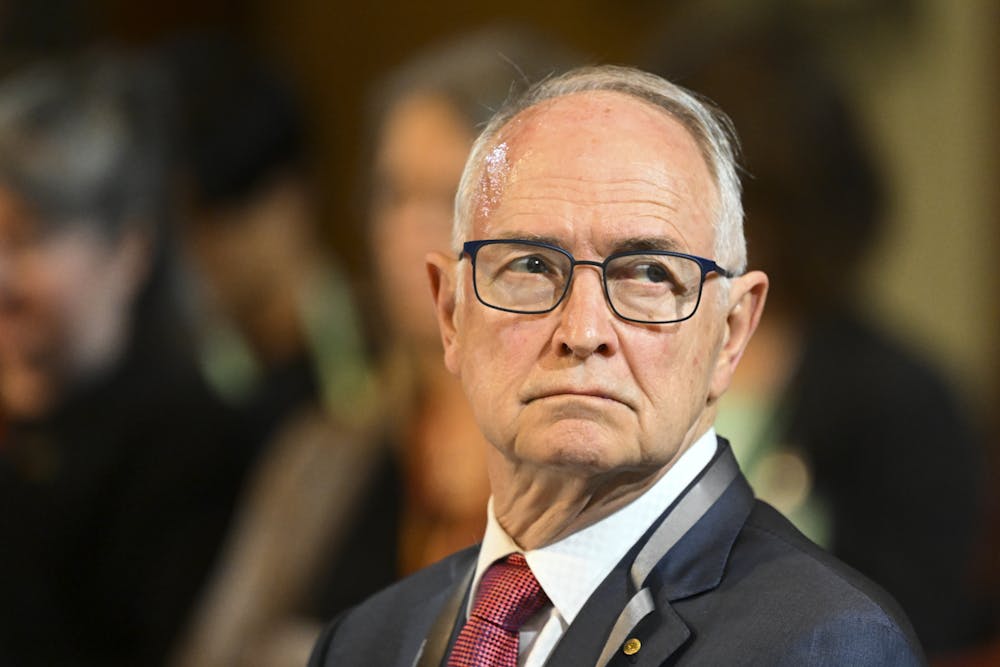 Ross Garnaut at the Jobs and Skills Summit, Parliament House, Canberra, September 2022.
Lucas Coch/AAP
Read more:
Climate change: carbon offsetting isn't working – here's how to fix it
Tight budgets
A chapter written by Malte Meinshausen – perhaps Australia’s leading authority on budgets and pathways – and his colleagues Zebedee Nicholls, Rebecca Burden and Jared Lewis crunches the numbers on the world’s and Australia’s permissible carbon budgets. It sets out to answer the question: “Will the transition be swift enough to avoid catastrophic climate outcomes?”
While progress has unquestionably been made since the 2015 Paris conference, a far-reaching direction change in each of the big polluting nations must occur this decade if there is to be a chance of getting anywhere near 1.5°C.
Meinshausen and his co-authors consider what would be needed if Australia is to do its fair share – a share that was determined in the 2014 report of the Climate Change Authority to be 0.97% of the global carbon budget (I was a member of the CCA at the time). They tell us bluntly that the new government’s 43% by 2030 target is inconsistent with our international commitments.
In fact, across the globe, national targets are “woefully inadequate” and Australia is certainly not up there with the leaders. We may no longer be a laggard, but we are loping along in the middle of a slow-moving pack.
The authors also tell us that “strong policies are needed to get Australia most of the way to net zero by 2035”. Yes, 2035. That is the year by which the bulk of the emission cuts need to be achieved. The remaining cuts get much harder, requiring a ladder or two to access the high-hanging fruit. The authors don’t say it explicitly, but the message is pretty clear. Australia will not cut its emissions deeply enough and quickly enough to make its fair contribution to the global goal of limiting warming to 1.5°C.
Ross Garnaut at the Jobs and Skills Summit, Parliament House, Canberra, September 2022.
Lucas Coch/AAP
Read more:
Climate change: carbon offsetting isn't working – here's how to fix it
Tight budgets
A chapter written by Malte Meinshausen – perhaps Australia’s leading authority on budgets and pathways – and his colleagues Zebedee Nicholls, Rebecca Burden and Jared Lewis crunches the numbers on the world’s and Australia’s permissible carbon budgets. It sets out to answer the question: “Will the transition be swift enough to avoid catastrophic climate outcomes?”
While progress has unquestionably been made since the 2015 Paris conference, a far-reaching direction change in each of the big polluting nations must occur this decade if there is to be a chance of getting anywhere near 1.5°C.
Meinshausen and his co-authors consider what would be needed if Australia is to do its fair share – a share that was determined in the 2014 report of the Climate Change Authority to be 0.97% of the global carbon budget (I was a member of the CCA at the time). They tell us bluntly that the new government’s 43% by 2030 target is inconsistent with our international commitments.
In fact, across the globe, national targets are “woefully inadequate” and Australia is certainly not up there with the leaders. We may no longer be a laggard, but we are loping along in the middle of a slow-moving pack.
The authors also tell us that “strong policies are needed to get Australia most of the way to net zero by 2035”. Yes, 2035. That is the year by which the bulk of the emission cuts need to be achieved. The remaining cuts get much harder, requiring a ladder or two to access the high-hanging fruit. The authors don’t say it explicitly, but the message is pretty clear. Australia will not cut its emissions deeply enough and quickly enough to make its fair contribution to the global goal of limiting warming to 1.5°C.
 In order to be effective, carbon sequestration in soil and vegetation must be secure for a thousand years. Image: Barrington Tops, NSW, Australia.
Nicholas Rhodes/Unsplash
Garnaut is upbeat about the possibilities for storing a lot more carbon in Australia’s soils and vegetation, and he is supported by a rose-coloured chapter on land carbon by Isabelle Grant. But Meinshausen and his colleagues, in a concise and hard-hitting breakout box, remind us that any offsets from sequestration must be genuine and permanent. Permanent means that wherever we put the captured carbon, it must still be there in 1,000 years if it is to offset emissions from burning fossil fuels.
They are sceptical. Take forests: they must be free from fires, disease, droughts and beetle attacks, all of which are more likely in a warming climate. The authors note that only putting carbon into safe and secure geological reservoirs “comes with a high likelihood of permanence”. In a crushing final two pages, they conclude that under any reasonable or even optimistic set of assumptions, the Superpower pathway cannot be achieved. Instead, Australia will have to do things beyond cutting domestic emissions if we are not to be punished by the international community.
What things? We could contribute more to the “loss and damage” fund to help poor countries cope with the disasters we have helped cause. We could send green technologies and energy transition minerals to developing countries (not for free, of course). Finally, we could compensate for our excessive consumption of the global emissions budget (which has left less for others) by “a strong program in sustainable negative emissions”.
This is a bit odd, since the authors have basically canned land-based sequestration, and geological carbon capture and storage at scale remains a pipe-dream, not least because it would entail the construction of a vast and resource-intensive industrial infrastructure to offset some of the damage being caused by the other vast and resource-intensive industrial infrastructure.
By the end of chapter two, we wonder whether the hope Garnaut kindled in us is, in fact, hopium.
Read more:
COP27: three reasons rich countries can no longer ignore calls to pay developing world for climate havoc
Growth fetishism
Superpower Transformation is an important contribution to the extensive energy transition literature. Yet, like most of that literature, it implicitly characterises climate change as an externality or unpriced cost (a very big one) of an otherwise functioning system.
As an orthodox economist, it is no surprise that Ross Garnaut should have faith in the prevailing political-economic system and the perpetual economic expansion on which it relies. In fact, rather than question the sustainability of the growth project, one of the promises of Superpower Transformation is that it will increase Australia’s rate of economic growth.
It is uncomfortable to be reminded that, of the nine planetary boundaries that delimit the safe operating space for human societies to continue flourishing, four have already been breached and one more, ocean acidification, almost certainly will be. The planet’s regenerative capacity and its ability to absorb our waste are now stretched way beyond sustainable limits.
The huge investments that will go into the new energy revolution, with a disproportionate amount in Australia, will reduce carbon emissions. Yet the resources needed for the energy transition, and the waste generated by it, are both enormous. The volumes of alumina and iron ore needed to enable the necessary expansion of the electricity transmission network are alone staggering.
There is a chapter in Superpower Transformation by geology professor Mike Sandiford that begins by hinting at the dark side to decarbonising the economy – that is, the “extraordinary increases in supply of the critical energy transition metals”. But the chapter peters out without coming to grips with how that can work.
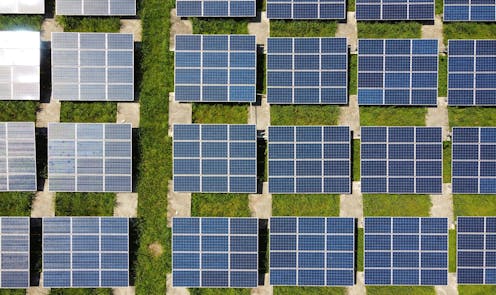
Garnaut estimates that the solar farms needed for net zero in Australia would cover 3.75 million hectares – “shockingly large”, he writes. The life span of solar panels is 25-30 years, meaning they have to be replaced with new ones every 25-30 years, or perhaps much sooner because newer ones are better. That means bulldozing the landscape across Western Australia and Queensland to extract the metals needed to replace the solar panels, a process that will never end.
At present, it costs around US$20-30 to recycle a solar panel and $1-2 to send it to landfill. Unless rapid progress is made on recycling technologies for solar panels, we will soon face an enormous waste disposal problem, a “solar trash wave”.
In order to be effective, carbon sequestration in soil and vegetation must be secure for a thousand years. Image: Barrington Tops, NSW, Australia.
Nicholas Rhodes/Unsplash
Garnaut is upbeat about the possibilities for storing a lot more carbon in Australia’s soils and vegetation, and he is supported by a rose-coloured chapter on land carbon by Isabelle Grant. But Meinshausen and his colleagues, in a concise and hard-hitting breakout box, remind us that any offsets from sequestration must be genuine and permanent. Permanent means that wherever we put the captured carbon, it must still be there in 1,000 years if it is to offset emissions from burning fossil fuels.
They are sceptical. Take forests: they must be free from fires, disease, droughts and beetle attacks, all of which are more likely in a warming climate. The authors note that only putting carbon into safe and secure geological reservoirs “comes with a high likelihood of permanence”. In a crushing final two pages, they conclude that under any reasonable or even optimistic set of assumptions, the Superpower pathway cannot be achieved. Instead, Australia will have to do things beyond cutting domestic emissions if we are not to be punished by the international community.
What things? We could contribute more to the “loss and damage” fund to help poor countries cope with the disasters we have helped cause. We could send green technologies and energy transition minerals to developing countries (not for free, of course). Finally, we could compensate for our excessive consumption of the global emissions budget (which has left less for others) by “a strong program in sustainable negative emissions”.
This is a bit odd, since the authors have basically canned land-based sequestration, and geological carbon capture and storage at scale remains a pipe-dream, not least because it would entail the construction of a vast and resource-intensive industrial infrastructure to offset some of the damage being caused by the other vast and resource-intensive industrial infrastructure.
By the end of chapter two, we wonder whether the hope Garnaut kindled in us is, in fact, hopium.
Read more:
COP27: three reasons rich countries can no longer ignore calls to pay developing world for climate havoc
Growth fetishism
Superpower Transformation is an important contribution to the extensive energy transition literature. Yet, like most of that literature, it implicitly characterises climate change as an externality or unpriced cost (a very big one) of an otherwise functioning system.
As an orthodox economist, it is no surprise that Ross Garnaut should have faith in the prevailing political-economic system and the perpetual economic expansion on which it relies. In fact, rather than question the sustainability of the growth project, one of the promises of Superpower Transformation is that it will increase Australia’s rate of economic growth.
It is uncomfortable to be reminded that, of the nine planetary boundaries that delimit the safe operating space for human societies to continue flourishing, four have already been breached and one more, ocean acidification, almost certainly will be. The planet’s regenerative capacity and its ability to absorb our waste are now stretched way beyond sustainable limits.
The huge investments that will go into the new energy revolution, with a disproportionate amount in Australia, will reduce carbon emissions. Yet the resources needed for the energy transition, and the waste generated by it, are both enormous. The volumes of alumina and iron ore needed to enable the necessary expansion of the electricity transmission network are alone staggering.
There is a chapter in Superpower Transformation by geology professor Mike Sandiford that begins by hinting at the dark side to decarbonising the economy – that is, the “extraordinary increases in supply of the critical energy transition metals”. But the chapter peters out without coming to grips with how that can work.
Garnaut estimates that the solar farms needed for net zero in Australia would cover 3.75 million hectares – “shockingly large”, he writes. The life span of solar panels is 25-30 years, meaning they have to be replaced with new ones every 25-30 years, or perhaps much sooner because newer ones are better. That means bulldozing the landscape across Western Australia and Queensland to extract the metals needed to replace the solar panels, a process that will never end.
At present, it costs around US$20-30 to recycle a solar panel and $1-2 to send it to landfill. Unless rapid progress is made on recycling technologies for solar panels, we will soon face an enormous waste disposal problem, a “solar trash wave”.
 Around 90% of the word’s fish stocks are fully or overexploited.
Linda Robert/Unsplash
Human population is almost eight billion and is expected to reach almost 11 billion by the end of the century, with each human on average consuming more of the planet’s remaining resources. Already, the stresses on the oceans are reaching extreme levels. Some 90% of global fish stocks are fully exploited or overexploited. The oceans are warming and acidifying. In places, they are heavily polluted and contaminated by plastics.
So there is something wrong with the system that drives our economy and guides our lives. We need technofixes such as those detailed in Superpower Transformation, yet the fear remains that investment in clean technologies can never keep up with the resource demands of exponentially rising global consumption.
Something’s gotta give: either humans radically change the way we live on the planet or the Earth system that sustains us will break beyond repair, if it hasn’t already.
Authors: Clive Hamilton, Professor of Public Ethics, Centre for Public and Contextual Theology, Charles Sturt University
Around 90% of the word’s fish stocks are fully or overexploited.
Linda Robert/Unsplash
Human population is almost eight billion and is expected to reach almost 11 billion by the end of the century, with each human on average consuming more of the planet’s remaining resources. Already, the stresses on the oceans are reaching extreme levels. Some 90% of global fish stocks are fully exploited or overexploited. The oceans are warming and acidifying. In places, they are heavily polluted and contaminated by plastics.
So there is something wrong with the system that drives our economy and guides our lives. We need technofixes such as those detailed in Superpower Transformation, yet the fear remains that investment in clean technologies can never keep up with the resource demands of exponentially rising global consumption.
Something’s gotta give: either humans radically change the way we live on the planet or the Earth system that sustains us will break beyond repair, if it hasn’t already.
Authors: Clive Hamilton, Professor of Public Ethics, Centre for Public and Contextual Theology, Charles Sturt University 

















