

Modern Australian
The Times

Humans are going back to the Moon, and beyond – but how will we feed them?

  • Written by Kim Johnson, Senior lecturer, La Trobe University
Humans are going back to the Moon, and beyond – but how will we feed them?

NASA’s Artemis I launch is a major step forward in humans going deeper and spending longer in space than ever before.

Future Artemis missions plan to take crew to the Moon and eventually Mars, which is likely to be a three-year round-trip.

But what will the astronauts eat? There are only so many protein bars and vitamins one can tolerate and survive on for years on end.

Plants are the basis of life on Earth with their amazing ability to convert light, water and carbon dioxide (CO₂) into food, and are the logical solution to support humans in space.

The challenges of a space garden

Astronauts have already eaten space radish, chilli peppers and lettuce grown on the International Space Station, and having freshly grown veggies in microgravity can support health and wellbeing. But there are a number of challenges in growing a flourishing space garden.

Space environments are CO₂-rich, lack soil microbes, have altered gravity, are exposed to potentially harmful solar radiation, and need to use recycled, high-salt water. For plants to thrive in space and offer the full range of nutrients for human health, they need a redesign.

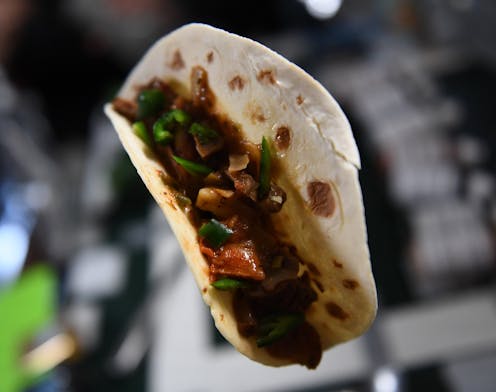
After months of freeze-dried or prepackaged space food, imagine going to your space garden, picking a ripe juicy tomato and spicy chilli to add to your tacos. Adding fresh produce has been a good way to improve astronaut wellbeing, supply essential vitamins and minerals, and add variety and flavour, especially as low-gravity environments affect our taste and smell.

A renewable source of fresh food is essential to future long-term space missions, to avoid astronauts experiencing “food fatigue”, malnutrition and weight loss.

A man looking at bright red chilies growing in a rectangular opening in the wall of a space capsule
Chilies have been successfully grown on the ISS, and astronauts have consumed some of them in tacos. NASA Johnson, CC BY-NC-ND

Space plants are currently grown in closed boxes with low energy LED lights, porous clay “soil” with water, nutrients and oxygen supplied to roots; high-tech sensors and cameras monitor plant health. Plants did not evolve to grow in a box and use energy and resources in readiness for changes in light, temperature and disease, limiting full growth potential.

So there is great opportunity to adapt plant genetics to produce faster-growing “pick and eat” food crops such as tomato, carrot, spinach and strawberry designed to reach their maximum potential in closed, controlled environments.

A black tray of small green leafy plants laid out in a grid
Astronauts have also successfully grown radishes on the ISS, providing further data on space gardening experiments. NASA Johnson, CC BY-NC-ND

A sustainable space plant future

Future plant growth systems for space will need to be entirely sustainable. That means working alongside all the other systems on a space station or a lunar/Martian base, recycling water and nutrients.

All plant parts will need to be food, compost or converted into useful products such as fuels and plastics. Human waste, including urine, offers a nutrient source for plants, yet they also need to be able to cope with this salty water supply. However, there’s one plant that could be particularly suited to the task.

Duckweed may not be available at your local supermarket, but this very fast-growing plant could be in all space gardens thanks to its ability to thrive in recycled water and be zero waste, with the whole plant being eaten.

Duckweed doubles its weight in just two days, is harvested continually, and is high in protein, nutrients, antioxidants and vitamins. Only a few essential elements (such as vitamin B12/D) are missing that could make it a reliable base source for complete human nutrition.

Read more: Duckweed is an incredible, radiation-fighting astronaut food – and by changing how it is grown, we made it better

Recent technical advances in genome editing, gene regulation, and methods to analyse nutrients can be harnessed to adapt duckweed and other plants for optimal growth, minimal waste and complete nutrition.

New plants developed in this way can contain proteins perfectly balanced for human digestion and use, healthy plant oils for an energy boost, and soluble fibre for better gut and cardiovascular health.

Specks of round green leaves on a dark background
Duckweed, a fast-growing aquatic plant, could be the next space ‘superfood’. Onushi/Shutterstock

Striving to explore space has brought us thousands of innovations we use in everyday life. We can expect that inventions we come up with to support humans thriving in space will deliver multiple and essential sustainability benefits to Earth, especially to on-demand supply of nutrition and biomaterials. Experts across the globe are working together toward these dual goals, including plant biologists, engineers, food chemists, psychologists, sensory experts, nutritionists, ethicists, and legal experts.

A new frontier of human achievement is on the horizon – humans will soon not only be looking up to the night skies in wonder, but also travelling to those destinations beyond our own atmosphere, and in so doing planting seeds of a new way of life on Earth and beyond.

Authors: Kim Johnson, Senior lecturer, La Trobe University

Read more https://theconversation.com/humans-are-going-back-to-the-moon-and-beyond-but-how-will-we-feed-them-189794

Chatswood Tutoring And Its Role In Academic Achievement

Academic success often requires more than classroom attendance alone. Students face increasing expectations as they progress through school, particu...

Why Laser Hair Removal Treatments Continue Growing In Popularity

Managing unwanted hair can become time-consuming and frustrating for many people, especially when shaving, waxing, and other temporary methods requi...

Choosing the Right Devices for a Flexible Workplace

For IT leaders managing large fleets, the device layer is where workforce productivity and security policy meet. The shift towards flexible and hybrid...

How Business Advisory Services Help Companies Achieve Sustainable Growth

Every business owner aims to build a profitable and sustainable organisation. While dedication, innovation, and hard work are important, achieving l...

Why Body Contouring Has Become A Popular Cosmetic Treatment

Many people maintain healthy lifestyles through regular exercise and balanced eating habits but still struggle with stubborn areas of fat that are dif...

How to Choose the Right POS Hardware for Your Business in Australia

A lot of Australian business owners spend weeks researching POS software but buy hardware almost as an afterthought. That's a mistake. The wrong har...

Why Material Handling Hose Is Critical for Industrial Efficiency

A high-performance material handling hose is an essential component in industries that transport abrasive, dry, or bulk materials on a daily basis...

How to Choose the Right Lawyer in Melbourne for Your Situation

Choosing legal support can feel difficult, especially when the stakes are personal or business-related. The right lawyer in Melbourne should underst...

Hoteliers Look to Clever Value Adds to Increase Revenue

The Australian hospitality industry is still in recovery mode after a notoriously rough patch in recent years. While there has been a post-COVID tra...

Moving to Queensland? Here’s How to Prep Your Car for the Big Move North

There’s no sign of the northern migration slowing down, with thousands of southerners fleeing from chaotic lifestyles and cooler climates for a brig...

Diesel Shortage to Impact Trades and Contractors

Strait of Hormuz blockage affecting all major parts of trades and construction Trades and construction across residential, commercial and industria...

Why Holiday Home Owners Turn to Rental Management Agents

The Allure — and the Reality — of Renting Out Your Property Owning a holiday home is a dream for many Australians. Whether it's a beachside sha...

Why Finding Reliable Doctors In Bundoora Is Important For Long-Term Health

Access to quality healthcare plays an important role in maintaining overall wellbeing and managing health concerns early. Trusted Doctors in Bundoor...

Understanding the Different Types of Car Services: Minor vs Major

When it comes to car maintenance, one of the most important things every vehicle owner should understand is the difference between a minor and a maj...

How Superannuation and TPD Insurance Work Together

Superannuation is an essential part of financial planning in Australia. It is designed to provide individuals with income during retirement, helping...

Tiny Towns funding granted for Mt Hotham and Mt Buller upgrades

Alpine Resorts Victoria (ARV) has welcomed funding support from the Victorian Government’s  Tiny Towns Fund, with both Mt Hotham and Mt Buller se...

Locksmith Services: Why Professional Security Solutions Matter More Than Ever

Security is a critical concern for homeowners, businesses, and vehicle owners alike. Whether it involves protecting a property, replacing damaged lo...

Why Tooth Fillings Are Important For Protecting Damaged Teeth

Cavities and minor tooth damage are common dental problems that can worsen if left untreated. Professional tooth fillings help restore damaged teeth, ...

















