

Netflix psychiatrist Phil Stutz says 85% of early therapy gains are down to lifestyle changes. Is he right?
- Written by: Adrienne O'Neil, Professor & Co-Director Food & Mood Centre, Deakin University
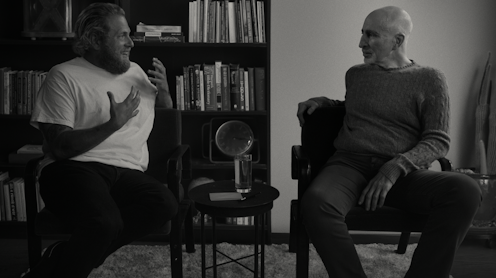
Jonah Hill’s Netflix documentary, Stutz, is an insightful journey into the mind of his therapist, renowned psychiatrist Phil Stutz. Hill delves into Stutz’ model of care, creatively using visual depictions of key concepts and “tools” drawn by Stutz himself.
This model is founded upon one’s relationship with their physical body. When he’s discussing the importance of health behaviours like exercise, diet and sleep, Stutz estimates 85% of the initial gains to someone with mental health concerns commencing therapy can come from focusing on these “lifestyle” factors. Surprised, Hill says in the film:
When I was a kid, exercise and diet was framed to me in like, ‘there’s something wrong with how you look’. But never once was exercise or diet propositioned to me in terms of mental health. I just wish that was presented to people differently. Because for me, that caused a lot of problems.
So, is Stutz right?
Read more: You've got a friend: young people help each other with their mental health for 3.5 hours every week
What does the latest evidence tell us?
While the 85% figure is debatable, there is now good evidence therapies targeting lifestyle factors can be a critical part of treating psychiatric conditions such as depression. A recent meta-analysis (which brings together results from different research studies) shows exercise may be as powerful as anti-depressant medication for depression.
Our own research shows a modified Mediterranean diet can substantially improve symptoms and functioning of people living with moderate to severe depression.
The mental health benefits of these interventions occur independent of weight loss, can be used in combination with medications (such as antidepressants or antipsychotics) and are cost-effective because of societal gains such increased workplace productivity.
And the benefits of these approaches can be be experienced relatively quickly, with effects evident in as little as three weeks.
Lifestyle changes can reduce the risk of common conditions such as heart disease and diabetes, which contribute to the 20-year life expectancy gap for those experiencing mental illness.
The strength of the evidence means it has now been cited in key policy documents, advocacy and clinical practice guidelines in Europe and the United Kingdom.
The principal organisation representing the medical specialty of psychiatry, the Royal Australian and New Zealand College of Psychiatrists, now recommends lifestyle modification should be considered the first step in treating depression.
Despite all of this, this approach has not been comprehensively taken up by mainstream mental health-care providers in Australia or in the setting of the Stutz documentary, the United States.
‘You have to give somebody the feeling they can change right now.’Supporting clinicians
The use of lifestyle therapies is a reasonably new area to psychiatry compared to other treatments such as antidepressant medication or talk therapy with psychologists. Our randomised control trial showing diet can be a treatment strategy for depression mentioned previously was the first of its kind and was only completed in 2017.
There are various barriers to its translation in mental health care: training, funding, access and variability in quality given the historical absence of guidelines.
In October, we published the first international guidelines that can be used across any clinical setting – from general practices, to specialist mental health care and by dietitians - in any country. They cover nine established and emerging lifestyle “pillars” to support whole-of-person care. These are:
1. physical activity and exercise – improving aerobic and resistance training, yoga, reducing sedentary behaviours
2. relaxation techniques – such as guided breathing exercises
3. engaging (or re-engaging) with employment or volunteering
4. getting enough sleep
5. mindfulness-based therapies and stress management (including coping skills)
6. healthy diet that includes intake of a wide variety of plant-based whole foods and minimises highly processed foods
7. quitting smoking
8. improving social connections
9. interaction with nature – in green spaces such as forests and parks, and blue spaces like the ocean or creeks and rivers.

Clinicians can shape their approach in four key ways:
increase lifestyle and social assessments. Our guidelines contain a list of recommended tools to capture changes in a patient’s health behaviours across the course of therapy as well as social screening tools to help understand their socioeconomic backdrop (such as stable housing, access to resources)
get input from allied health professionals (such as dietitians or exercise physiologists), patients’ support networks including other health professionals, community, family, carers and peers. It’s important to know, for example, how someone’s household or neighbourhood may shape their ability to give up smoking
identify behavioural change strategies. Each individual will have a different mindset in terms of their openness to changing their behaviours. Clinicians can use the guidelines to identify the best strategies for different individuals
help reduce stigma and/or assumptions that lifestyle is a choice. Instead, understand and explain to patients how individual, social and commercial factors can play a role and make it harder for them to make changes. This can make it feel less like a personal responsibility or fault and help navigate realistic changes.
Read more: Pharmacists could help curb the mental health crisis – but they need more training
Still more to understand
While these guidelines and resources are an important first step, there are key questions in this field that remain unanswered.
These include how to best personalise treatments using a person’s unique physiology, genetics, demographics, background and individual preferences.
We need to examine how this approach compares to gold-standard care such as psychotherapy, especially for more severe depression. We are currently testing this question and recruiting participants for a national trial.
It is important to note medication and other therapies can play an important role in mental health treatment. Medications should not be ceased or changed without consulting a medical professional. We have also created a course for health professionals who want additional support.
For now, our guidelines provide a way for health professionals to begin addressing Jonah Hill’s point – that lifestyle factors should be presented to people as critical to their mental health.
If this article has raised issues for you, or if you’re concerned about someone you know, call Lifeline on 13 11 14.
Authors: Adrienne O'Neil, Professor & Co-Director Food & Mood Centre, Deakin University



















