

Modern Australian
The Times

What is the Indo-Pacific Economic Framework, about to be negotiated in Brisbane?

  • Written by Patricia Ranald, Honorary research associate, University of Sydney
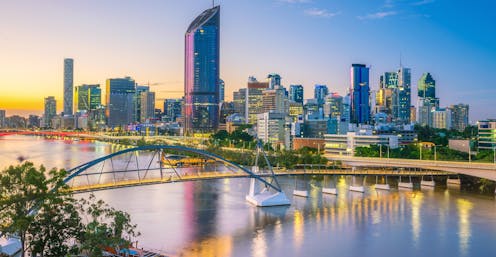
What is the Indo-Pacific Economic Framework, about to be negotiated in Brisbane?

Australia is about to play host to negotiators from 14 countries involved in the Indo-Pacific Economic Framework (IPEF) over six days in Brisbane from Saturday.

They include the United States, Australia, Brunei, Fiji, India, Indonesia, Japan, South Korea, Malaysia, New Zealand, the Philippines, Singapore, Thailand and Vietnam, but not China.

Although as unfamiliar as many of the acronyms in the alphabet soup of trade deals to which Australia is a party, the IPEF has a very specific focus.

The US wants to use it to diversify its supply chains away from China towards its allies and create US-style rules in a region encompassing the Indian and Pacific Oceans and extending from the east of Africa to the west of the United States.

At the launch of negotiations in May the US said the agreement would

enable the United States and our allies to decide on rules of the road that ensure American workers, small businesses, and ranchers can compete in the Indo-Pacific.

And the US is not involved in the two other big regional trade agreements involving IPEF members including Australia:

  • the Regional Comprehensive Economic Partnership (RCEP) of the ten ASEAN nations plus five others including China

  • the Comprehensive and Progressive Trans-Pacific Partnership (CPTPP) of 11 nations excluding China, from which the Trump administration withdrew in 2016.

There is still strong bipartisan US Congressional opposition to legally binding agreements like the CPTPP. This means in negotiating IPEF the US will not offer increased market access to Australia or other member countries.

The “four pillars” of the framework are

  1. trade, in which there will be a general commitment to boost trade among members while recognising labour rights, environmental and other concerns

  2. supply chains, aimed at diversifying away from China and facilitating cooperation among members in the event of major disruptions

  3. clean economy, in which there will be recognition of the role of incentives in encouraging energy transitions

  4. fair economy, in which the members commit to preventing and combating corruption and tax evasion.

India has opted out of the trade pillar but says it will sign up to the other pillars.

This means the IPEF will offer no immediate trade benefits for Australia or other countries, but for developing countries it will offer the prospect of US energy and other projects as an alternative to China’s One Belt One Road initiative.

Christian Gomez/The New American More open process but negotiating documents secret The Albanese government’s policy promises more transparent and accountable trade negotiations, including access to negotiating texts and independent evaluation of their costs and benefits. It has promised this for the IPEF, and both civil society and business organisations have been invited to present their views to IPEF negotiators in Brisbane. But this will be a one-way street because Australia and other IPEF countries have signed agreements with the US pledging to keep all negotiating documents secret until five years after the negotiations. Without access to the details of the proposals, consultation will be extremely limited. Standards on human rights, labour and the environment Civil society groups have made submissions supporting the IPEF goals of higher standards for labour rights and environmental protection, and are asking for them to be made fully enforceable. It remains to be seen whether all IPEF countries will commit to these goals without the carrot of access to the US market, and how commitments would be enforced unless they were legally binding. A strategic balancing act for Australia Australia is a US ally, but China is Australia’s largest export market. Foreign Minister Senator Penny Wong recently said the government’s policy was to deepen regional relationships, building a regional order in which all states can contribute to a strategic equilibrium “rather than be forced to choose sides”. The Albanese government is also hoping its recent success in re-establishing diplomatic contact with China will help ease China’s trade restrictions on Australian barley, wine and lobsters and contribute to regional stability. Read more: We've just signed the world's biggest trade deal, but what is the RCEP? But the US recently announced new trade restrictions against China, including a ban on US exports associated with the manufacturing of computer chips, and secondary restrictions on countries that export these products to China, including IPEF members South Korea and Singapore. Singapore’s prime minister Lee Hsien Loong responded saying a further decoupling between the US and China could “result in less economic cooperation, less interdependency, less trust, and possibly, ultimately, a less stable world.” The negotiations will present a challenge for the Albanese government’s policies on trade transparency, labour and environmental standards and regional stability. Authors: Patricia Ranald, Honorary research associate, University of Sydney

Read more https://theconversation.com/what-is-the-indo-pacific-economic-framework-about-to-be-negotiated-in-brisbane-196122

Organisational Experts Share Their Tips for Achieving a Clutter-Free Kitchen

They say the kitchen is the heart of a house which means a clutter-free kitchen not only makes your home in general look nicer, it also makes cookin...

10 Creative Ways AI Image Extenders Are Transforming Digital Content Creation in 2026

Introduction Artificial intelligence continues to reshape the digital landscape, and one of the most exciting innovations in 2026 is the rise of AI i...

What to Do When You're Arrested in Victoria

Most people have thought about this in the abstract. A knock at the door, a hand on the shoulder, a car pulled over on the Hume. In the abstract, th...

Common Financial Disputes During Separation

Separation hits on many levels, not just emotionally. When a partnership ends, untangling the financial side — assets, debts, and everything built t...

Why Posting More Content is Killing Your Brand

More content. More often. More platforms.Most brands have been running this playbook for three years. Most brands have nothing to show for it.Not be...

Garden Clean-Up vs. Regular Maintenance: Which Do You Really Need?

Most people ring a gardener and ask for a "tidy up." What they mean by that, and what the garden actually needs, are often two completely different ...

Solar Panel Maintenance Tips for Melbourne Homes

Three years in and the panels are still on the roof. The inverter is still blinking. The electricity bills are still lower than they used to be, rou...

Cost Effective Kitchen Renovations – From the Ground Up

Even in times of uncertainty, it seems renovations continue to be on the to-do list for many Australian property owners. As a result, demand on materi...

Why Bathroom Product Selection Matters More Than Most Homeowners Realise

Most homeowners think wrong when it comes to a bathroom renovation. They think hard about the layout. Spend hours choosing tiles. Agonise over pain...

How An Asbestos Removalist Ensures Safe And Compliant Property Environments in Melbourne

Maintaining a safe environment within residential and commercial properties requires careful management of hazardous materials, which is why engaging ...

Why Protein Bars Are A Convenient Option For Daily Nutrition And Energy

Maintaining balanced nutrition throughout the day can be challenging, especially for individuals with busy schedules, which is why protein bars hav...

Property Settlements After Separation: Key Considerations

Dividing assets after a separation is one of the more complex and emotionally charged aspects of the process. Understanding how property settlements...

Why Dust Control Matters During Bathroom Demolition

People usually expect bathroom demolition to be noisy.  No one thinks of dust — but it turns up everywhere. Inside cupboards. On couches. Along...

Why Roller Shutters And Outdoor Blinds Are Popular For Modern Properties

Many homeowners and businesses now install roller shutters to improve security, privacy, insulation, and weather protection across residential and ...

Slushie Machine Hire for Events: What to Check Before Booking

There's a moment at every great event when guests stop what they're doing and just enjoy something. A slushie machine is often that moment. It draws p...

Why AS/NZS Certified Sunglasses Are Essential for Australian Kids

Australia has some of the highest UV radiation levels in the world. That's not a warning label exaggeration; it's a measurable, documented fact that s...

Why People Regain Weight After Weight Loss?

Losing weight is hard; keeping it off is harder; and regaining it after all that effort is something many people go through more than most realise. ...

10 Benefits of Having a Frozen Yoghurt Machine for Your Business

Frozen yoghurt is a commercially viable dessert option for a wide range of food service businesses due to its versatility, efficiency, and consisten...

















