

Modern Australian
Men's Weekly

.

The rich history of our love affair with luxury

  • Written by Peter McNeil, Distinguished Professor of Design History, UTS, University of Technology Sydney
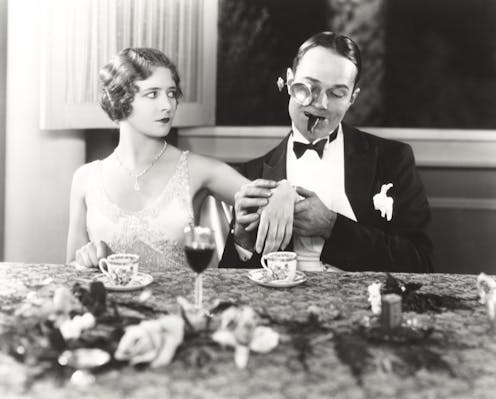
The rich history of our love affair with luxury

In today’s world it could be said, to a certain degree, that even a relatively impoverished person engages with luxury, in some way.

If you enjoy regulated heating or cooling at home, regular lighting, chicken meat, or eat chocolates, you are engaging with formats that once indicated luxury.

But what is, and is not, considered to be a luxury, changes with the times.

Decadence and luxury

When we describe a dessert as “decadent” today, we must remember it really means decaying, a concept related to the “Romans of the decadence” whose lavish lifestyles are held up as proof of why the Empire had to fail.

The Romans saw luxury as quintessentially foreign and therefore alien to the true and olden spirit of the Roman polis. This is why luxury was often represented as coming from “the Orient”, the source of rare scents, spices, gems, ivories and enslaved peoples.

As a result, the Romans introduced sumptuary laws, which were prescriptions to manage conspicuous consumption of things like expensive clothing and jewellery worn by social groups, but also the amount spent on banquets and even funerals.

This was necessary, because the ancient Romans enjoyed conspicuous luxury. They liked to eat food whose ingredients resembled another. They enjoyed delicacies such as fattened fowls, peacock, oysters, ham, wild boar and fig-peckers, the latter eaten whole, sometimes all combined together in a crusted paté, even though this was forbidden by the new laws. There were even luxuries in enslaved peoples. The poet Juvenal commented satirically that clearly it was better to have a bevy of pretty pageboys (exoleti) arranged according to their nationality, size and hair colour serving the drinks rather than coarse household help.

There is a long continuity in this type of consumption. In the 19th century, for example, there was a premium on tall footmen matching in size and the Victorians loved elaborate feasts with multiple courses.

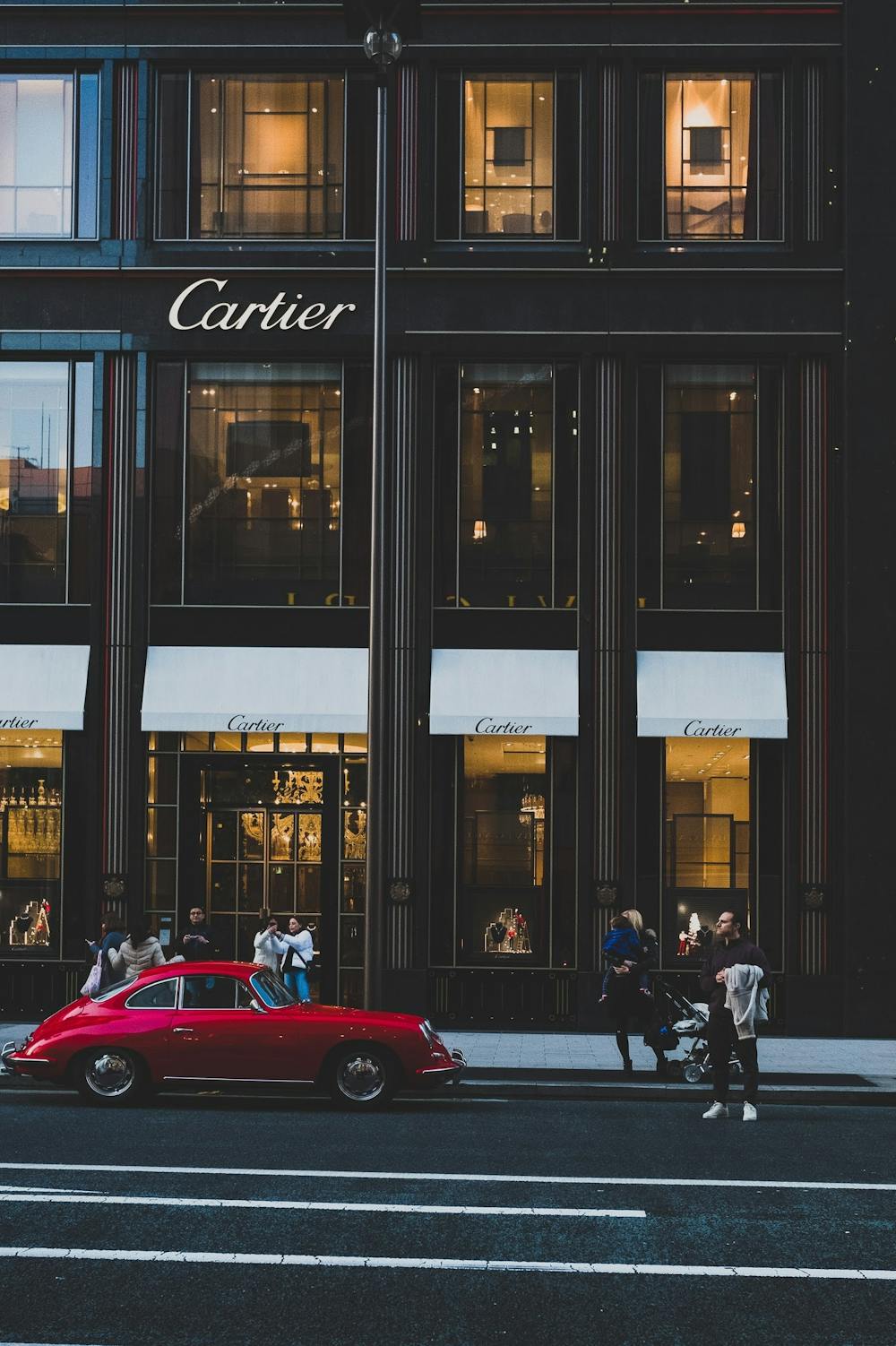
Marissa Grootes/ Unsplash Follow the money By the mid 19th century, wealth from new industries created enormous fortunes at a time when taxation and labour costs were low. North Americans became the richest people in the world. Clare Booth Luce, formerly married to the chairman of Time- Life, said: In America money is a thing less valued in the spending than in the earning. It is less a symbol of luxury than of ‘success’, less of corruption than of virtue. While Americans were good at making money, they seemed to need Europeans to spend it. The raft of rich American women who began to marry into the European aristocracy in the late 19th century were known as the “dollar princesses”, the term coming from a popular song. The British aristocracy were, of course, in turn marrying into this American wealth. Between 1890 and 1914, half the world’s capital flowed through London. The Dollar Princesses paid for enormous renovations and modernisation of stately homes, were photographed with dozens of trunks as they moved across the Atlantic, and patronised the luxury establishments of jewellers, couturiers, florists and caterers. The arrival of the wealthy Americans heiresses coincided with a series of challenges to the British aristocracy including the introduction of death duties, the rise in income tax and The Great Unrest of 1912. Living in style Between the end of the 19th century and the start of the first world war, luxury was widely reported and commented upon in diaries and memoirs. The house parties about which so much was written were characterised by excessive meals of great refinement, elaborate flowers and large numbers of visible servants. Much luxury was French. Edward VII was a famed Francophile. The Entente Cordiale of 1904 benefited British French trade and travel. Louis Vuitton opened in Bond St in 1900. His new flat trunks for cars were stackable, replacing older domed tops designed to repel water. Cartier opened in London in 1902. Faberge also had a new London store. The Paris Ritz opened in 1898 and the London Ritz Hotel in 1905, decorated in a newly fashionable white and gilt Louis XVI style. Service Stripes This was a period when wealthy women were laden with jewels: Kenneth Clark, the art historian, noted of a New York party in 1930 that the women “even brought pieces of jewellery in their hands and laid them down on the dinner table. This could have happened in the Middle Ages.” Mrs Greville, one of the wealthiest women in England (daughter of a Scottish brewer), loved her jewels, owning pieces that could be traced back to Marie Antoinette and the Empress Josephine. The late Queen Mother, a great lover of luxury and thoroughly Edwardian figure, inherited key pieces of jewellery from Mrs Greville in 1942, a friend from the time she was still Duchess of York. But, as Elizabeth wrote in her diaries, she did not wear the lavish Cartier and Boucheron pieces until 1947, so as to not appear “out of sync” with the austerity movement immediately after the war. Profligate luxury risks looking out of step with public morals. Simon Launay/ Unsplash The Queen Mother wore all Mrs Greville’s jewels at her 80th Birthday party – and the owner of them now is Camilla, the Queen Consort. As Camilla is the grand-daughter of Edward VII’s mistress Mrs Keppel, the story comes full circle. Mrs Greville left an estate in the 1940s worth approximately £39 million or 67 million AUD. This is not much money if we compare it to the fortunes held by global billionaires today. Gina Reinhart has between A$28.8 and A$31.4 billion. She lives discreetly part of the year in Dalkeith Perth in her late father’s home, in Singapore at a gated community, and on an ocean liner. Luxury today Today, luxury is seen as the embodiment of growing income inequality within states and communities, and also between different nations in the world. This is not new, although in the past luxury and inequality were seen as part of how a hierarchical society was structured: acknowledged, rather than seen as a problem. Luxury is not the cause of inequality, though it might be one of its effects. When societies aims towards income and social equality (as some postwar societies did), luxury – or at least the public discussion of luxury – seems to disappear. By contrast, societies like the present, in which 1% of the population owns 49% of the world’s wealth, lead luxury to the fore. Authors: Peter McNeil, Distinguished Professor of Design History, UTS, University of Technology Sydney

Read more https://theconversation.com/the-rich-history-of-our-love-affair-with-luxury-192732

Why Australian Businesses Are Having a Second Think About Digital Growth

Running a business these days is a whole lot different to how it was even a few short years ago. Customers are better informed, there's more competi...

Restaurants Risk Compliance Issues Amid Commercial Plumber Shortage

As demand for housing, roads and facilities increases, so does the demand for trade workers. According to Infrastructure Australia, the construction i...

The Importance Of A Professional Medical Fitout Melbourne For Modern Healthcare Facilities

Healthcare environments must operate with precision, efficiency, and a strong focus on patient comfort. A well-planned medical fitout Melbourne hel...

Top Safety and Comfort Features to Consider in Family Off Road Caravans

Exploring Australia’s coastline, bush tracks or outback locations is far more enjoyable when travelling in a caravan designed for both comfort and...

“Logistical Nightmare” – Rural and Remote Communities Supply Chain Nightmares

Australia’s road logistics need major reform to counteract the supply chain issues that are hitting rural and regional communities hard. With 80% of...

The Importance Of Quality Bait Boards For Boats To Enhance Fishing Efficiency And Comfort

Fishing enthusiasts understand that having the right equipment on board makes every trip smoother and more enjoyable. One essential accessory for an...

The Essential Safety Gear Every Tradesman Needs

Across industries like construction, electrical work, plumbing, carpentry, and welding, workers face hazards every single day. For tradesmen, having...

Best POS System Features That Boost Customer Experience

Source: Unsplash Starting and scaling a retail business is unlikely possible without an effective Point of Sale (POS) system. It is the tech heartbe...

Understanding SMSF Setup Online and Why More Australians Are Choosing Digital Fund Establishment

liManaging your own superannuation gives you greater control over investments, retirement planning, and long-term financial decision-making. As inte...

Double Carport: Complete Guide to Design, Cost, and Installation

A double carport provides practical, cost-effective protection for two vehicles whilst adding value and functionality to your property. Whether you're...

How External Blinds and Awnings Improve Comfort, Privacy, and Energy Efficiency

Outdoor comfort and protection are essential for homes and commercial properties, especially in regions with strong sunlight, high UV exposure, and ...

Worksite Comfort Upgrades That Boost Team Productivity

Jobsite productivity doesn’t depend solely on tools, training, or scheduling. It also hinges on something often overlooked: worker comfort. When e...

NDIS Occupational Therapy: Your Complete Guide to Accessing Support and Services

Occupational therapy plays a crucial role in helping NDIS participants achieve their goals and improve their daily living skills. For people with disa...

How to Start Trading Futures in Australia: Markets, Margin and Regulation

Futures trading has become increasingly popular among Australian traders seeking opportunities across global commodities, indices, currencies and ener...

The Importance Of Residential Scaffolding For Safe And Efficient Home Projects

Home construction and renovation projects require reliable access systems that prioritise both worker safety and structural stability. Whether the p...

Understanding All on 4 Dental Implants and Their Benefits for Full Mouth Restoration

Tooth loss can affect daily life in many ways, including chewing difficulties, speech problems, facial changes, and reduced confidence. Modern denti...

Why Removalists Are Essential for a Smooth, Safe, and Hassle-Free Moving Experience

Moving homes or offices can be overwhelming, especially when you’re trying to balance packing, organising, heavy lifting, and time-sensitive deadl...

Understanding Domestic Violence Orders in Queensland

Domestic violence is an issue that affects many households. This article will break down the key aspects of Domestic Violence Orders (DVOs) in Queen...

















