

What are 'masking' and 'camouflaging' in the context of autism and ADHD?
- Written by: Beth Radulski, PhD Candidate and Neurodiversity Project Manager, La Trobe University
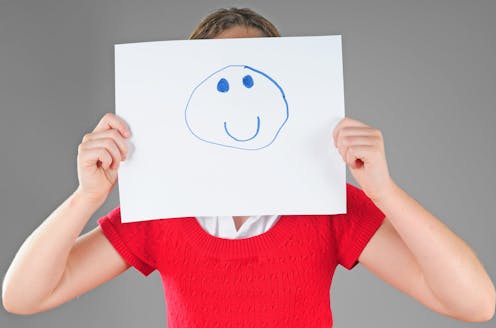
Many autistic people and ADHD-ers report using “masking” and “camouflaging” in their lives. This is where people conceal certain traits and replace them with neurotypical ones to avoid being recognised as neurominorities.
This can involve changing things such as
tone of voice
facial expressions
eye contact
speech patterns, and
body language.
Autistic people make these changes in an effort to match dominant social norms.
Some ADHD-ers also embrace the concept, though ADHD masking remains under-explored in research.
Masking and camouflaging can cause immense stress for neurominorities. And they’re different to the adjustments neurotypical people make in response to social cues. While neurotypical people may moderate behaviour to enhance social success, masking and camouflaging differ as they are used to avoid negative consequences.
Here’s what you need to know.
How does masking or camouflaging affect neurominorities?
Masking and camouflaging are linked to:
Yet, without masking and camouflaging many autistic people report experiencing difficulty getting jobs and qualifications or issues with social exclusion. They may even risk verbal and physical assaults.
The consequences of unmasking can be enormous. Disclosing autism can risk permanent residency applications being denied, and may lead to unwanted “treatments”. For autistic people of colour in particular, this can even result in violence from police.
Reducing the need for masking and camouflaging
In my late twenties, I found out I am autistic. Suddenly, things started to make sense. From failing ninth grade, to chronic unemployment, and social isolation, I realised my disorder was causing these poor outcomes – or so I first thought.
This medical model understanding assumes disability is created primarily by a medical disorder in the body or brain. That struggles autistic people or ADHD-ers face with social life, employment, or schooling are because their brain doesn’t work the way it “should”.
The neurodiversity movement asks us to rethink this. It challenges us to ask how society can change to better include neurominorities (rather than seeing neurominorities as a problem needing to be “fixed”).
The #TakeTheMaskOff campaign on Twitter, driven by neurodiversity activists, aims to address anti-autism discrimination and boost social acceptance and inclusion.
So, how can society prevent poor wellbeing, social, educational, and employment outcomes for neurominorities? And what’s this got to do with masking?
My research suggests a first step is to begin identifying how neurotypical privilege – the cultural and social dominance of neurotypical norms – drives masking and camouflaging.
My work on autism is influenced by the work of activists who have paved the way for disability anti-discrimination policy. My recent paper argues for an intersectional approach to examining why autistic people use masking and camouflaging and what changes we can make to reduce the need for them to do so.
Intersectionality identifies how forces such as colonialism, racism and patriarchy help reinforce systemic inequity.
For example, might neurominority women in male-dominated settings be under extra pressure to mask in order to “pass” as neurotypical? Might autistic people of colour face unique risks when unmasking, in ways that most white people do not?
Perhaps one day we will see legal protections for visible neurominorities who cannot mask and camouflage, or choose not to.
 We can begin identifying how neurotypical privilege – the cultural and social dominance of neurotypical norms – drives masking and camouflaging.
Photo by Leeloo Thefirst/Pexels, CC BY
We can begin identifying how neurotypical privilege – the cultural and social dominance of neurotypical norms – drives masking and camouflaging.
Photo by Leeloo Thefirst/Pexels, CC BY
In the meantime, you can support neurodiversity inclusion by:
Schools, workplaces, social circles, and research institutions should address neurotypical privilege. They should empower diverse neurominority leaders, and support them to drive systemic cultural change.
This is how we can remove barriers to unmasking, and improve life for neurominorities at work, school and in broader society.
Authors: Beth Radulski, PhD Candidate and Neurodiversity Project Manager, La Trobe University


















