

The last 5 kilos really are the hardest to lose. Here’s why, and what you can do about it
- Written by: Nick Fuller, Charles Perkins Centre Research Program Leader, University of Sydney

Anyone who has tried to lose weight will be familiar with these nine frustrating words: the last five kilos are the hardest to lose.
You’re just about to hit your target weight, but suddenly the scales won’t budge – even though you’re still following the same healthy diet, lifestyle habits and exercise plan.
There’s a scientific basis for why losing the last few kilos is hard, called the weight-loss plateau. But before you hit Google for one of those programs promising to help you lose the last five kilos, here’s some important information about why it occurs, and five simple things you can do to break through it.
Read more: These 4 diets are trending. We looked at the science (or lack of it) behind each one
Understanding the weight-loss plateau
The weight-loss plateau is basic biology.
When your body registers something threatening its survival, it automatically triggers a series of physiological responses to protect against the threat.
So when we adjust our diet and reduce our calorie intake, our body registers we’re losing weight and believes it’s under threat. It makes adjustments for protection, reducing our metabolic rate and burning less energy, slowing the rate at which we lose weight.
It also secretes higher levels of an appetite hormone called ghrelin, which is known to increase hunger and promote the conservation of fat stores.
Research has shown this plateau starts to creep in anywhere between three and six months of weight loss, and then typically weight regain occurs. So for those needing to lose a large amount of weight, the plateau will be evident well before the last five kilos.
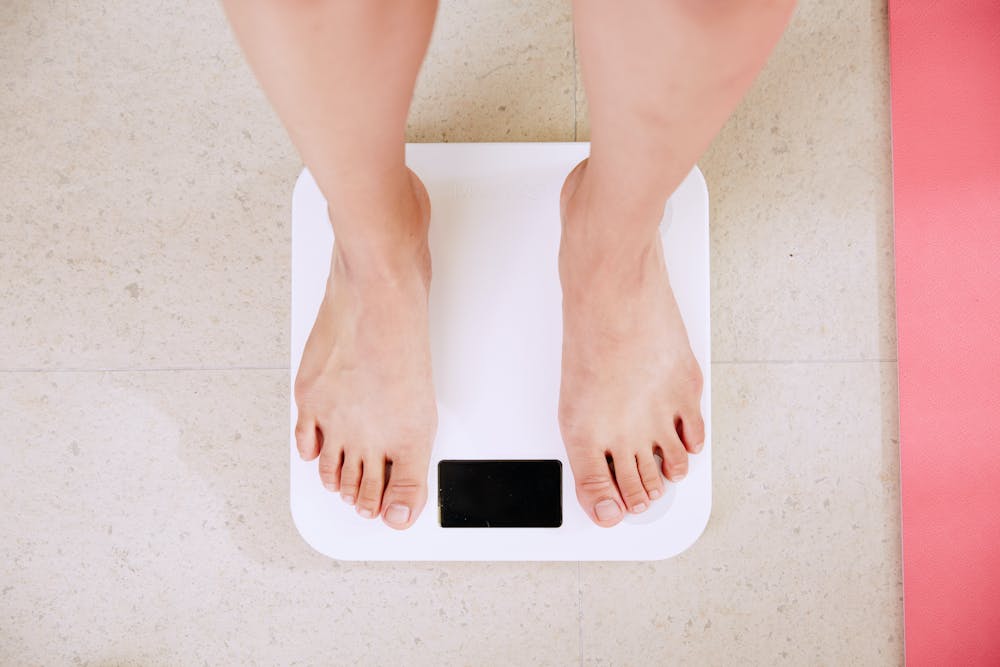
A weight-loss plateau can be hard to break. Whatever the time frame, it’s a sign your previously successful approach to losing weight needs modification.
Here’s what you can do.
1. Revisit your weight-loss goal
The first and most important thing you may need to modify when you hit a weight-loss plateau is your definition of healthy body weight.
Ask yourself: what’s so special about the weight I’m trying to achieve?
Many people use the body mass index (BMI) to set their weight-loss goal but the number on the scales – and the score generated when you enter your weight and height into the BMI calculator – is nonsense. It doesn’t tell the whole story of what it means to be a healthy weight.
Read more: Using BMI to measure your health is nonsense. Here's why
This is because the BMI calculator misses two more meaningful measures: body fat percentage and body fat distribution.
If you’ve been exercising regularly as part of your weight-loss plan, you’ll have gained muscle, or improved your muscle-to-fat ratio, and muscle is heavier than body fat, impacting the number on the scales.
You’re also likely to have changed where fat is distributed in your body, reducing the amount of unhealthy fat stored around the stomach, close to the organs, thus reducing your risk of disease.
So grab the tape measure, check how your clothes fit, and think about how you feel to confirm whether you really need to lose those final few kilos. Work towards a waist circumference of about 80cm for women and about 90-94cm for men.
 Revisit your weight-loss goal.
farhad ibrahimzade/unsplash, CC BY
Revisit your weight-loss goal.
farhad ibrahimzade/unsplash, CC BY
2. Focus on meal size throughout the day
The current fad is intermittent fasting. This often means breakfast is the first to be scrapped from the menu in an attempt to cut calories from the diet and shorten the time you’re allowed to eat throughout the day. But when you eat and how much you eat at each meal does matter, and it’s breakfast that’s the most important.
Controlled research studies have shown this is the time when your body best uses the calories you put in – in fact, it burns the calories from a meal two-and-a-half times more efficiently in the morning compared with the evening. Instead of reducing your eating window, load up your breakfast and reduce the size of your evening meal.
Read more: What are 'fasting' diets and do they help you lose weight?
3. Consider more strength-building exercises
Relying on diet alone to lose weight can reduce muscle along with body fat. This slows your metabolism, and makes it harder to keep the weight off in the long term.
Any physical activity will go a long way to preserving your muscle mass, but it’s important to incorporate a couple of days of strength-building exercises in your weekly exercise routine. Exercises using body weight – like push-ups, pull-ups, planks and air squats – are just as effective as lifting weights in the gym.
4. Review your food intake
As you lose weight, your body requires less fuel, so reviewing and adjusting your calorie intake is essential when you hit a weight-loss plateau.
Generally speaking, you need to consume 10% fewer calories when you reduce your weight by 10%, just to maintain the new weight. But this shouldn’t mean deprivation or starvation. Instead, you should be focusing on an abundance of nutrient-dense foods and keeping the treats and takeaway to just once per week.
Read more: What's this 'longevity' diet, and will it really make you live longer?
5. Check your stress
Stress will derail your weight-loss success. Stress increases your body’s production of cortisol, promoting fat storage and triggering unhealthy food cravings.
The best type of stress management is exercise. To encourage more exercise, take up something you enjoy, no matter what it is. But make sure to include variety, as doing the same routine every day is a sure-fire way to get bored and avoid activity, and can also make it hard to hit your goals.
The bottom line
A weight-loss plateau is frustrating and can derail your diet attempt.
Understanding why the weight-loss plateau occurs, making sure the weight-loss target you’ve set is realistic, and following the steps above will get you back on track.
Read more: Hoping to get in shape for summer? Ditch the fads in favour of a diet more likely to stick
Authors: Nick Fuller, Charles Perkins Centre Research Program Leader, University of Sydney


















