

20 years ago, vast bushfires razed Canberra's suburbs – and bushfire science was never the same
- Written by: Andrew Gissing, CEO, Natural Hazards Research Australia, Adjunct Fellow, Macquarie University
It has been 20 years to the day since bushfires burst out of the Brindabella Ranges and into the suburbs of our nation’s bush capital. Four lives were lost, many people were injured and more than 500 homes were destroyed.
There had been big bushfires before, and there were bigger bushfires to come, but the tragic day in Canberra of January 18, 2003 marked a pivotal moment in Australian bushfire science.
Today, we know much more about how extreme bushfires behave, we have computer models to show where they might move to, and our communications and warnings have vastly improved. We have now had 20 years of a coordinated national research effort on bushfire, and developing this science has made all Australians safer.
While even the best science doesn’t aim to eliminate fire from our land and there remains much to learn, as a country we are better placed to respond swiftly when a bushfire strikes. And crucially, we better understand risk – the Canberra fires showed even urban communities can be in danger if close enough to the bush.
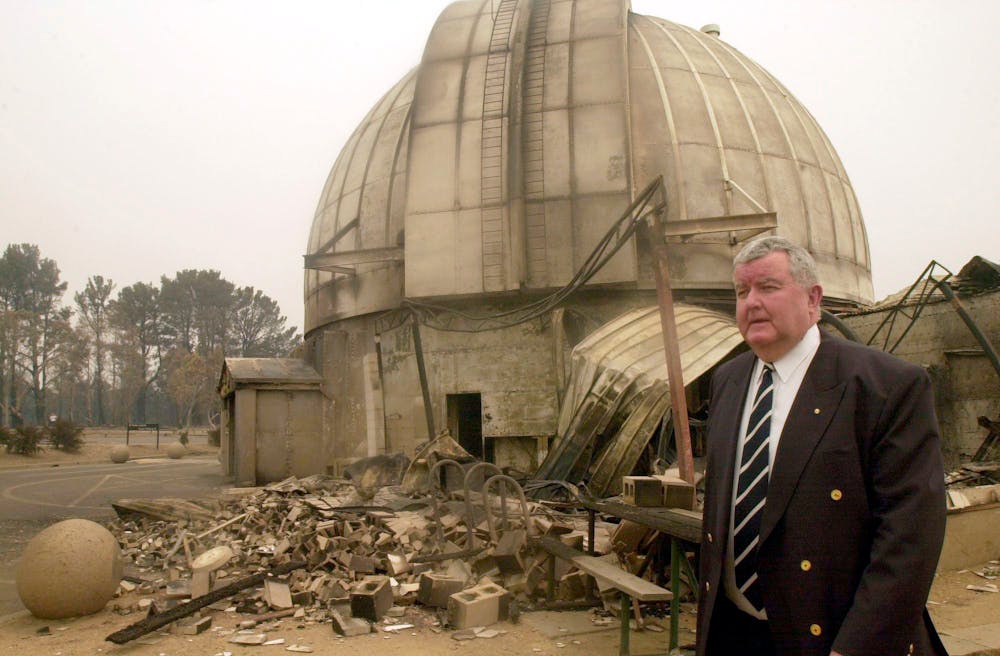
What happened?
The Canberra bushfire led to two major inquiries: a government inquiry led by former federal ombudsman Ron McLeod, and a coronial inquiry.
Both identified shortcomings in the speed of the emergency response, and made a wide range recommendations on reducing fuel loads, training personnel, and the need to better warn the public.
The fires started in the New South Wales high country more than a week before they hit Canberra. What we remember today as an urban bushfire was, for many days, several bushfires in a heavily forested landscape. Bushfire authorities quickly realised that the science behind fire ignition, propagation and suppression in such remote areas needed to improve.
Over time this encouraged a more fulsome, year-round approach to land management, including regular prescribed burning and an acknowledgement of the vital role of Indigenous people in caring for Country.
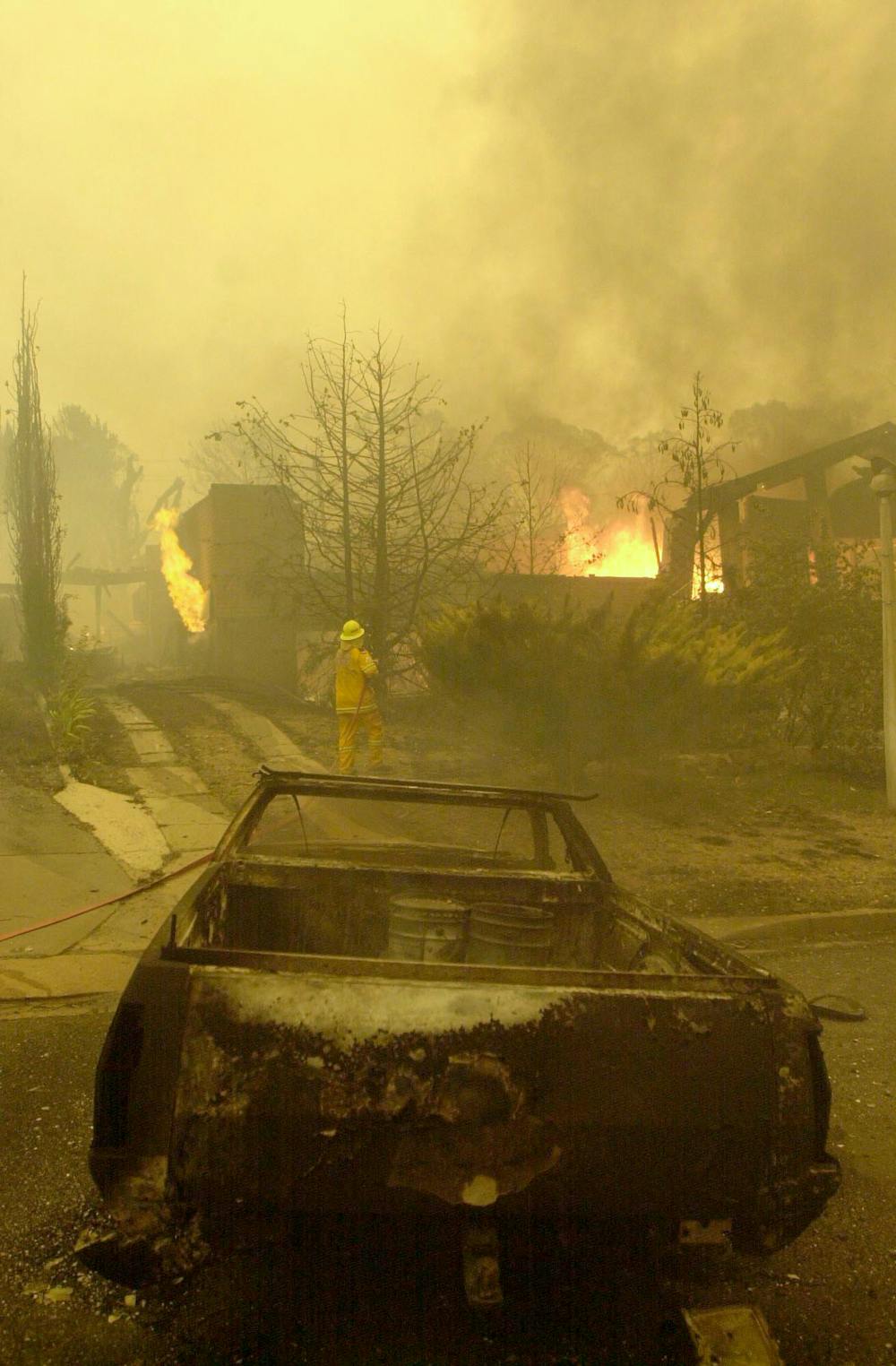 The 2003 Canberra fires were notable for the widespread destruction of suburbs.
AAP Image/Alan Porritt
The 2003 Canberra fires were notable for the widespread destruction of suburbs.
AAP Image/Alan Porritt
Understanding fire thunderstorms
In the ACT’s mountainous terrain, the wind causes extreme bushfires to rapidly intensify and change direction dramatically. In fact, the Canberra bushfire led to Australia’s first documented fire tornado, which wreaked severe destruction over pine plantations and in the suburbs of Chapman and Kambah.
Today, scientists have a far better grasp on the atmospheric conditions that can lead to fire-generated thunderstorms and when they are likely. Known as “pyrocumulonimbus”, these thunderstorms can dramatically increase a bushfire’s size and strength, change local wind direction causing fire to spread, and generate lightning that starts ember storms and other fires.
Read more: Firestorms and flaming tornadoes: how bushfires create their own ferocious weather systems
The unprecedented behaviour of the Canberra fires helped improve scientists’ understanding of how extreme bushfires behave and how they interact with the weather and the landscape. This has influenced bushfire behaviour modelling, which is now critical to firefighting and warnings, and has saved lives.
In the last 20 years, many more bushfires have generated thunderstorms. Notable examples include the 2009 Black Saturday bushfires in Victoria, the 2016 Waroona bushfire in Western Australia, the 2017 Sir Ivan bushfire in NSW and multiple bushfires during the devastating 2019-20 season.
Experts now keep a watchful eye on conditions that may lead to their formation so they can better position resources and warn communities.
 Destroyed houses in the Canberra suburbs of Chapman & Duffy in 2003.
AAP Image/Alan Porritt
Destroyed houses in the Canberra suburbs of Chapman & Duffy in 2003.
AAP Image/Alan Porritt
When bushfire strikes suburbia
The Canberra bushfires razed suburban areas such as Duffy, Holder, Weston, Chapman, Rivett and Kambah. It again showed the rest of Australia that bushfires aren’t an issue relegated to rural areas.
The McLeod report found the Canberra community “had not been sufficiently well prepared” to understand the bushfire threat as a consequence of situating the city in bushland. It called for a major program of community education.
Today, fire agencies run a range of community engagement programs, showing people what their risk is and how to be as prepared as possible.
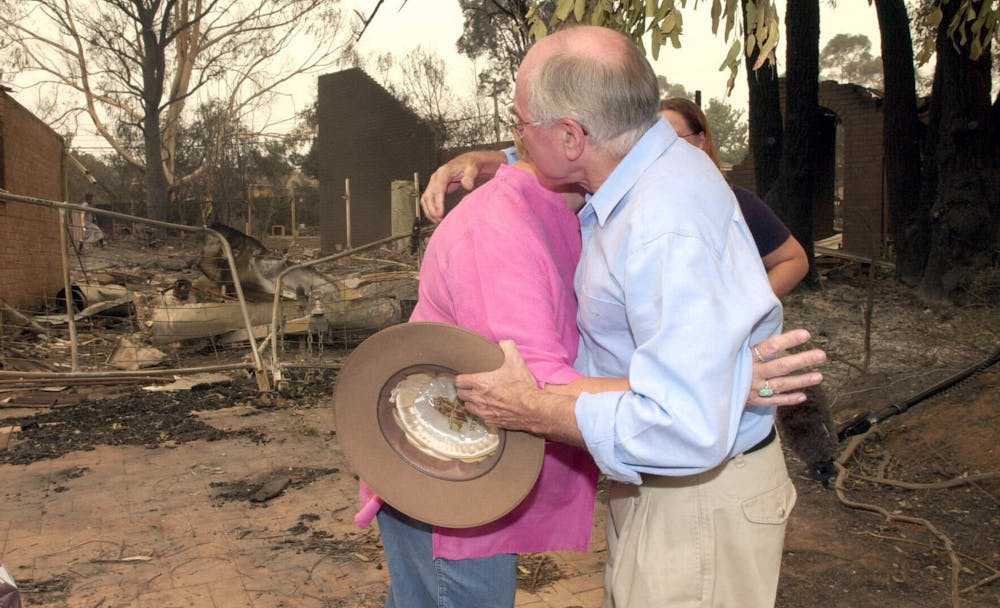 Then Prime Minister John Howard touring the devastated suburb of Duffy.
AAP Image/Pool
Then Prime Minister John Howard touring the devastated suburb of Duffy.
AAP Image/Pool
After the main fire front had passed, fire continued to jump from house to house. This was a major reason so many houses in Canberra were destroyed. Research since then led to a national update to construction requirements for building in high bushfire-risk areas.
Communications and warnings were widely criticised during the Canberra bushfire. For example, the Mcleod Report found some of the advice given to the community was “seriously inadequate” and confusing. In particular, it pointed to inconsistent advice from the police and the Emergency Services Bureau regarding when residents should evacuate.
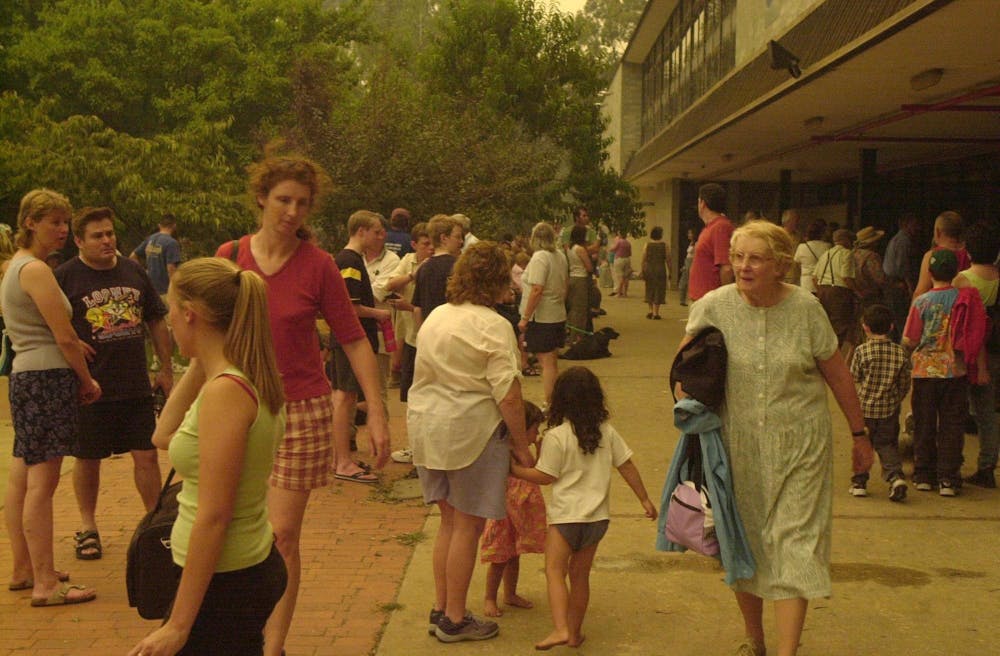 Canberra residents gathering at an evacuation centre.
AAP Image/Alan Porritt
Canberra residents gathering at an evacuation centre.
AAP Image/Alan Porritt
Research conducted after the 2003 fires informed the development of the Australian Warning System. Today, the wording, structure and style of all natural hazard warnings is no longer radically different across the country, but is a consistent three-level scaled warning system.
Still, improving warning systems continue to be a focal point after every emergency.
Read more: Expectations and harsh reality: why bushfire warnings fail
What’s next?
Bushfire extremes will worsen in Australia as our climate warms. We are currently in our third consecutive La Niña cycle, which brings relatively cooler, wet weather to Australia – but that will change.
Our fire seasons are lengthening and the bad bushfire days are occurring more often. Bushfires won’t just happen in isolation, we may also be dealing with heatwaves, cyclones or floods in other parts of the country at the same time.
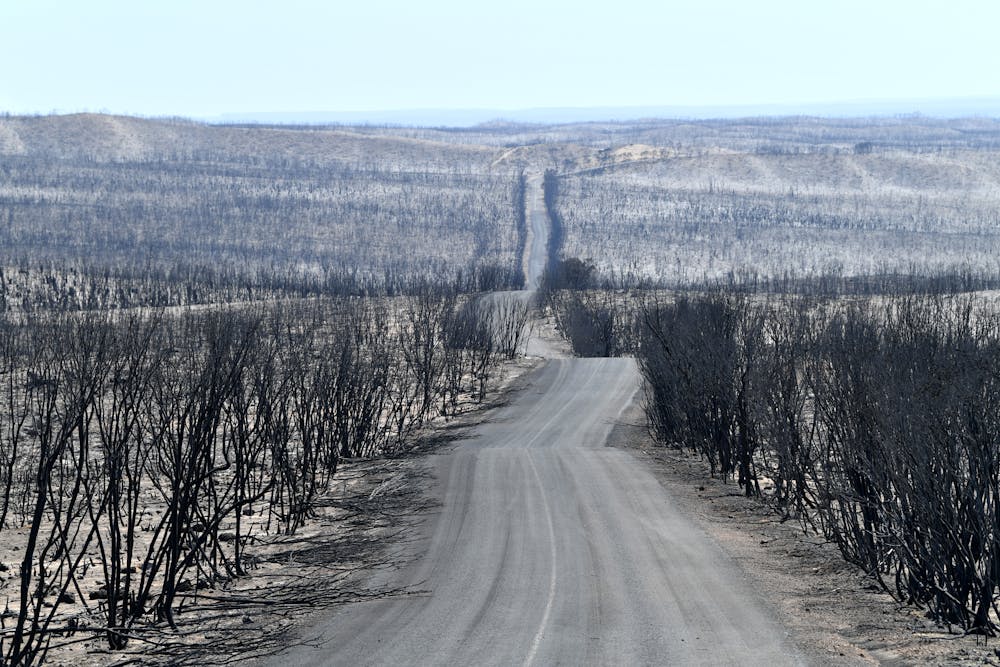 Flinders Chase National Park after bushfires swept through on Kangaroo Island in January, 2020.
AAP Image/David Mariuz
Flinders Chase National Park after bushfires swept through on Kangaroo Island in January, 2020.
AAP Image/David Mariuz
To adequately prepare Australia for these cascading, back-to-back hazards, we must transform the way we manage risk now. This involves better land use planning and mitigation by building in more appropriate places with less risk. Research is integral to this.
We must continue to innovate with bushfire modelling, give experts the best training and tools they can have to keep us safe, and continue to improve warnings systems. Importantly, we must better integrate Indigenous knowledge and practices into bushfire management, and work more closely with Indigenous knowledge holders to strengthen partnerships.
We have learnt a lot from the devastating Canberra bushfires of 2003. But as climate change brings bigger challenges, there is much more to learn. One would be a fool to think we can conquer nature, but we can learn how to better live with what it throws at us.
Authors: Andrew Gissing, CEO, Natural Hazards Research Australia, Adjunct Fellow, Macquarie University


















