

In the Year of the Rabbit, spare a thought for all these wonderful endangered bunny species
- Written by: Emma Sherratt, Senior Research Fellow in Ecology & Evolutionary Biology, University of Adelaide
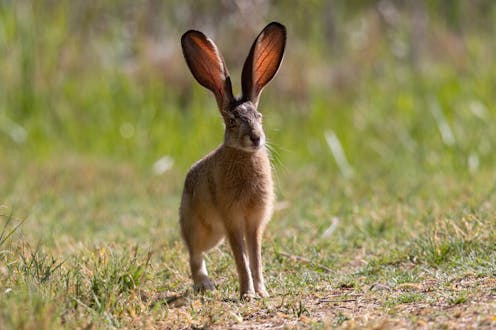
What do you think when you hear the word “rabbit”? Does your mind conjure images of cartoon bunnies eating carrots? Or the fluffy tails and floppy ears of pet bunnies? Maybe you think about their incredible ability to reproduce.
For many Australians, “rabbit” is synonymous with “pest” because of their infamous introduction and subsequent invasion around 164 years ago. The destruction rabbits cause to Australian landscapes is harmful and serious, but there’s a lot more to bunnies when we cast our thoughts overseas.
With the Year of the Water Rabbit starting in the Chinese calendar on January 22, it’s the perfect time to expand your rabbit knowledge across the far reaches of the globe, highlighting several species that really need our support.
What, if anything, is a rabbit?
Called rabbits and hares in some regions, and cottontails and jackrabbits in others, the long-eared animals we tend to call bunnies and the lesser-known pikas (small mountain-dwelling animals from Asia and North America) form a group of animals known as Lagomorpha.
There are in fact about 108 lagomorph species currently recognised by science, found on all continents except Antarctica. They are the evolutionary cousins of rodents and sit very closely to our primate branch in the tree of life.
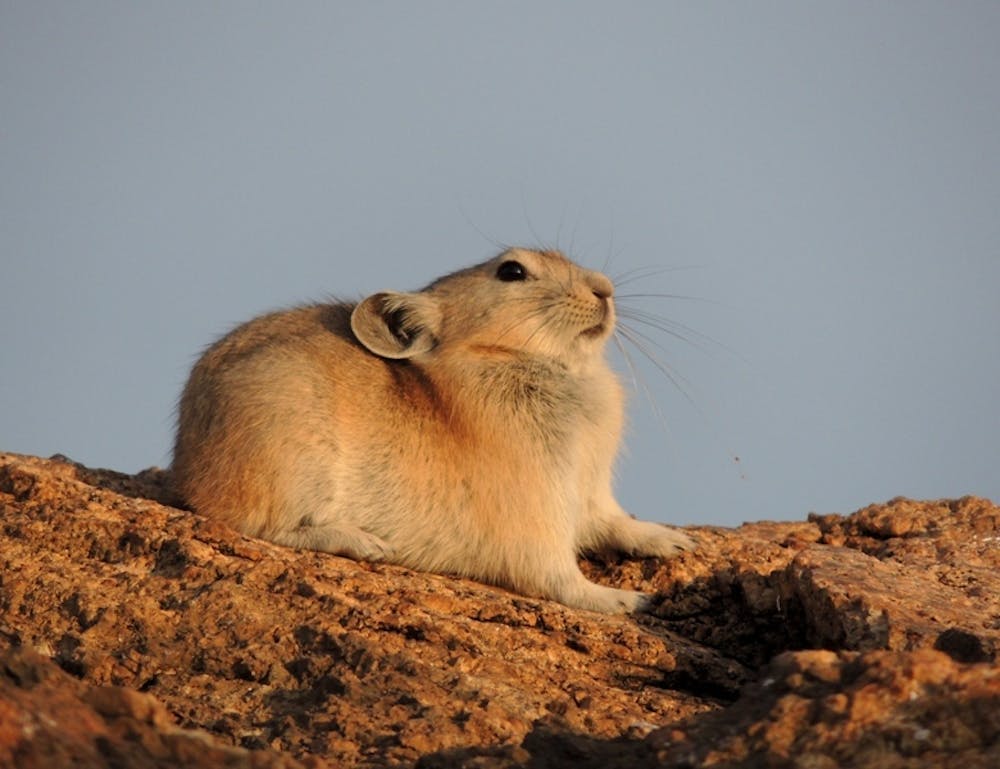
In 2013, researchers found that more than two-thirds of rabbit species were already threatened by climate change.
Since then, the number of species that are endangered or critically endangered has risen from 13 to 16 on the International Union for Conservation of Nature Red List. The rabbits need our help.
Real-world water rabbits
Water rabbits are not just an astrological fancy. The swamp rabbit (Sylvilagus aquaticus) and marsh rabbit (S. palustris) of North America are adapted to living in wetlands and are known to swim. Luckily these species are marked as least concern on the conservation IUCN Red List.
There’s also the riverine rabbit (Bunolagus monticularis), a majestic, reddish-coloured rabbit from South Africa that inhabits the banks of rivers and streams. Critically endangered, this species faces not just the effects of climate change and habitat destruction, but another unexpected threat – other bunnies.
In this case, camera traps have identified Lepus hares are the problem. When resources become scarce, competition is fierce. The hares are larger and generalist in nature. They can eat a broader diet and adapt to more varied environments, and are competitively displacing the riverine rabbits.
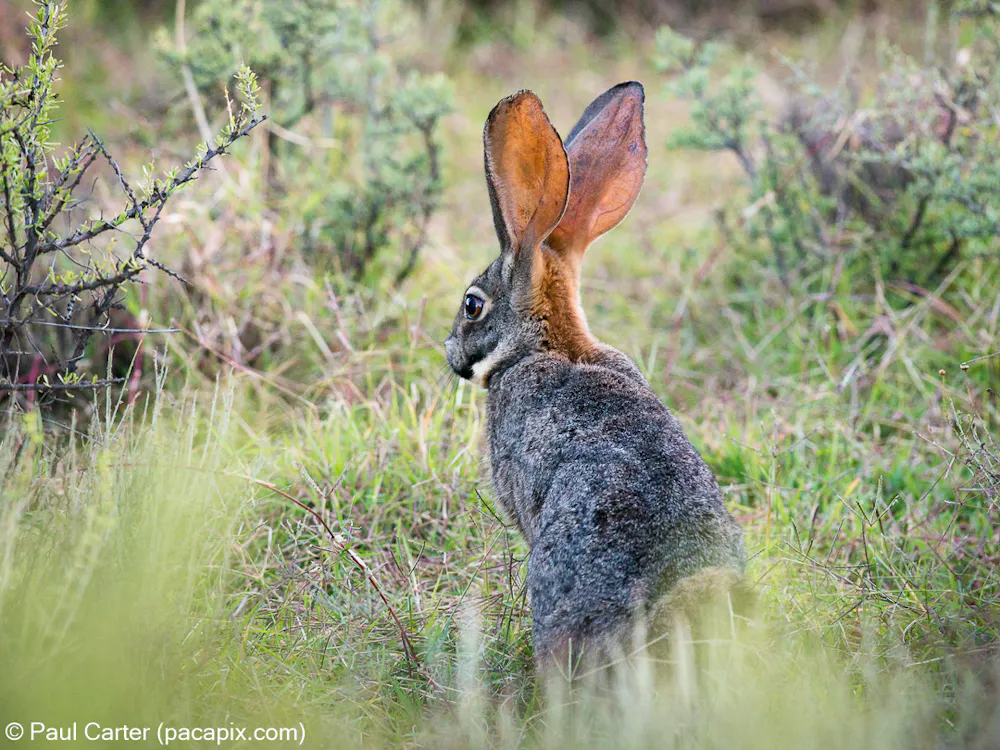 The riverine rabbit is critically endangered as its native habitat continues to shrink.
Paul Carter/iNaturalist, CC BY-NC
The riverine rabbit is critically endangered as its native habitat continues to shrink.
Paul Carter/iNaturalist, CC BY-NC
Not all rabbits make endless babies
The breeding capacity of rabbits is notorious, but not all species have the same voracity for reproduction.
On two subtropical islands in southwestern Japan live Amami rabbits (Pentalagus furnessi), sometimes referred to as a “living fossil” because they have primitive characters like small ears and legs better for scurrying than hopping.
Almost black, Amami rabbits inhabit dense tropical forests, and are sadly endangered. This species is unusual among lagomorphs in having only one – rarely two – offspring in a litter. This breeding habit is fitting to an island species with no carnivorous predators (think New Zealand birds). Until, of course, some are introduced.
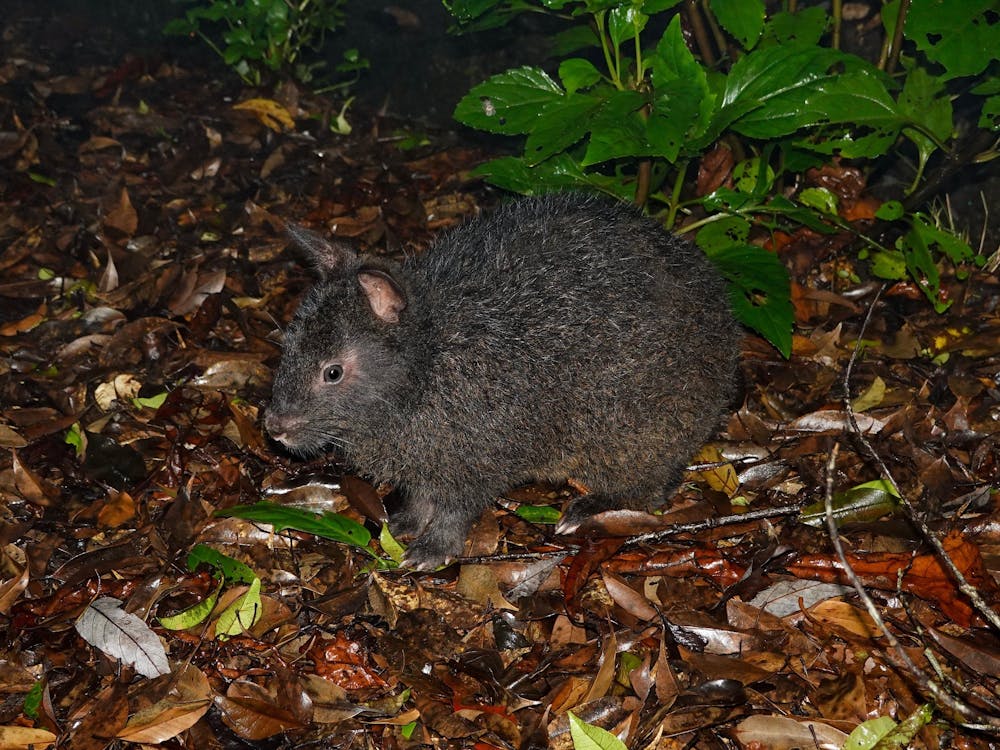 The Amami rabbit is almost black, and unusually slow to reproduce compared to its rabbit brethren elsewhere in the world.
orthoptera-jp/iNaturalist, CC BY-NC
The Amami rabbit is almost black, and unusually slow to reproduce compared to its rabbit brethren elsewhere in the world.
orthoptera-jp/iNaturalist, CC BY-NC
To combat snakes, Indian mongoose were introduced on the islands in 1979, which inevitably found the rabbits to be a tasty treat. Authorities are now working on a mongoose eradication program to save the endemic rabbits and birds from extinction.
Mountains as refuges in a changing world
While the islands in Japan have proven treacherous for the Amami rabbit, elsewhere mountains may become islands for species facing a changing climate.
In the Annamite Range mountains of Vietnam and Laos lives another endemic rabbit (Nesolagus timminsi), striped in black and reddish-brown. This endangered species is among the least understood rabbits, but we do know it’s under threat from intensive poaching.
In the mountains of Mexico resides another endangered bunny – the volcano rabbit (Romerolgaus diazi). It is one of the smallest rabbit species in the world, in trouble due to the effects of cattle grazing and land conversion for agriculture.
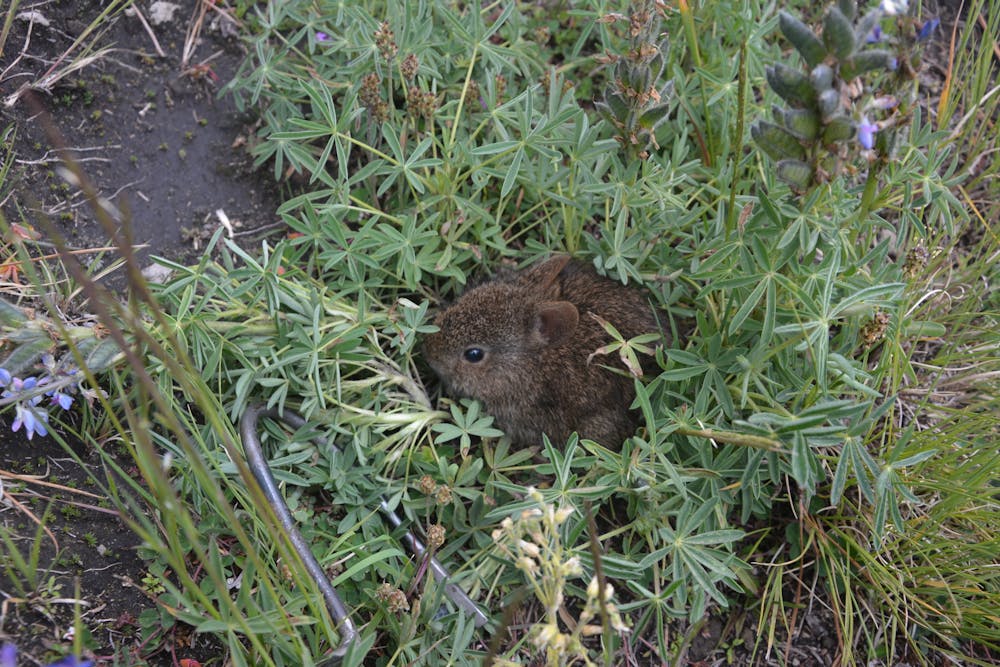 The tiny and adorable volcano rabbit is endemic to a handful of volcanoes in Mexico.
Saúl Saldaña/iNaturalist, CC BY-NC
The tiny and adorable volcano rabbit is endemic to a handful of volcanoes in Mexico.
Saúl Saldaña/iNaturalist, CC BY-NC
Even the European rabbit is in trouble
Rabbits may be at plague proportions in parts of Australia, but in their place of origin they are struggling.
The European rabbit (Oryctolagus cuniculus) is the only species of rabbit-kind to have been domesticated, and their expansive distribution across the world is a result of hungry humans who used them for food.
But in their native range – the Iberian Peninsula – their numbers are dwindling. In fact, we need conservation action because these rabbits are a keystone prey species for the Iberian lynx, which is making its comeback from being the most endangered cat in the world. The recent European LIFE Iberconejo project has been set up for governance, recognising the need for a balance between rabbits in a healthy ecosystem and rabbits as agricultural pests.
 Rabbits on Wardang Island, South Australia during a biological control research trial, 1938.
CSIRO, CC BY
Rabbits on Wardang Island, South Australia during a biological control research trial, 1938.
CSIRO, CC BY
Protecting biodiversity
Many of the endangered lagomorph species have unique traits that are still to be uncovered by scientists. Limited geographical distributions and habitat preferences make them vulnerable to a changing environment and difficult to study.
That is why citizen science is valuable for these species, because local eyes keenly spotting animals is one of the best methods for data collection. So make your Lunar New Year’s resolution to be a bunny advocate.
For example, you can go to the iNaturalist network to familiarise yourself with the diversity of species. And next time you’re on holiday and you see a rabbit, be sure to snap a picture and upload your sighting.
Campaigns like “Begging for Bunnies” by the Endangered Wildlife Trust are also valuable in the effort to preserve our planet’s biodiversity.
Authors: Emma Sherratt, Senior Research Fellow in Ecology & Evolutionary Biology, University of Adelaide


















