

Why do animals living with humans evolve such similar features? A new theory could explain 'domestication syndrome'
- Written by: Ben Thomas Gleeson, Doctoral Candidate, Australian National University
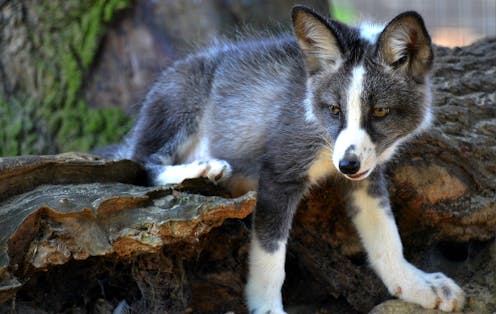
In the 19th century, Charles Darwin was one of the first to notice something interesting about domesticated animals: different species often developed similar changes when compared to their ancient wild ancestors.
But why would a host of seemingly unrelated features repeatedly occur together in different domesticated animals?
Scientists call this collection of shared changes “domestication syndrome”, and the reason it occurs is still hotly debated.
In a new paper in Proceedings of the Royal Society B, we argue that currently popular explanations aren’t quite right – and propose a new explanation focused on big changes in the way domesticated animals live. Along the way, our theory also offers insights into the unexpected story of how we humans domesticated ourselves.
Shared changes under domestication
The most commonly shared change is tamer behaviour. All domesticated animals are calmer than their wild ancestors naturally were.
That’s probably not very surprising. Ancient humans would’ve preferred docile animals, and likely selected breeding stock for tameness.
Read more: Why so many domesticated mammals have floppy ears
But other common changes don’t seem at all useful to humans – or to the animals themselves. Like shorter faces, smaller teeth, more fragile skeletons, smaller brains, and different colours in skin, fur, and feathers.
Not all domesticated animals share all these features. For example, dogs have many, and camels only a few.
But each change occurs in more than one domesticated species.
Wild self-domestication
Surprisingly, very similar changes sometimes also appear in wild animals, leading some scientists to think they “self-domesticated” in some way.
The bonobo (a great ape closely related to the chimpanzee) is one famous example of an animal that has undergone these changes without human intervention. Urban foxes are another.

Wild self-domestication is most common in isolated sub-populations, like on islands, and may overlap with a similar phenomenon known as the “island effect”.
Perhaps more surprisingly, modern humans also show features of domestication syndrome, when compared to our ancient ancestors. This suggests we also self-domesticated.
Some scientists argue these changes made us more sociable, helping us to develop complex languages and culture.
So a clearer understanding of domestication syndrome in animals might improve our knowledge of human evolution too.
What causes domestication syndrome?
In recent years, two main possible explanations for domestication syndrome have dominated scientific discussion.
The first suggests it was caused when ancient humans selected animals for tamer behaviour, which somehow triggered all of the other traits too.
This idea is supported by a famous long-running Russian fox-breeding experiment which began in 1959, in which caged foxes were selected only for tameness but developed the other “unselected” features as well.
The second hypothesis complements this first one. It suggests selection for tameness causes the other features because they’re all linked by genes controlling “neural crest cells”. These cells, found in embryos, form many animal features – so changing them could cause several differences at once.
More than selection for tameness
However, our new research suggests these two ideas oversimplify and obscure the complex evolutionary effects at play.
For one thing, there are problems with the famous Russian fox experiment. As other authors have noted, the experiment didn’t begin by taming wild foxes, but used foxes from a farm in Canada. And these pre-farmed foxes already had features of domestication syndrome.
What’s more, the experimenters didn’t only select for tameness. They bred other foxes for aggression, but the aggressive foxes also developed domestication syndrome features.
And in a similar experiment conducted in the 1930s, caged rats developed the same common changes, including tamer behaviour, despite no deliberate selection for tameness, or aggression.
So, it seems domestication syndrome might not be caused by humans selecting animals for tameness. Instead, it might be caused by unintended shared effects from the new domestic environment.
A new hypothesis for domestication syndrome
Crucially, it’s not just new forces of selection, such as a human preference for tameness, that matters. The removal of pre-existing selection is just as important, because that’s what naturally shaped the wild ancestors in the first place.
For example, domesticated animals are often protected from predators, so wild traits for avoiding them might be lost. Competition for mating partners is also often reduced, so wild reproductive features and behaviours could decline, or disappear.
Domesticated animals are also usually reliably fed. This might alter certain features, but would certainly change natural metabolism and growth.
In effect, we argue there are multiple selective changes at work on domesticated animals, not just “selection for tameness”, and that shared shifts in evolutionary selection would often cause shared changes in features. Even across different species.
Our new hypothesis highlights four ways that selection shaping wild animals is often disrupted by domestication. These are:
- less fighting between males
- fewer males for females to choose between
- more reliable food and fewer predators, and
- elevated maternal stress, which initially reduces the health and survival of offspring.
Several of these might resemble “selection for tameness”, but using this one term to describe them all is misleadingly vague, and obscures other changes in selection.
So how did we domesticate ourselves?
Well, one current theory is that sociable “beta males” began cooperating to kill alpha bullies. This changed how competition worked among males, leading to fewer big and aggressive males.
But our hypothesis suggests other effects also played a role. For example, our early ancestors evolved the capacity for shared infant care. In our chimpanzee relatives today, sharing care of an infant would likely trigger extreme stress for the mother – but our ancestors adapted to this increased stress and gained an effective survival strategy.
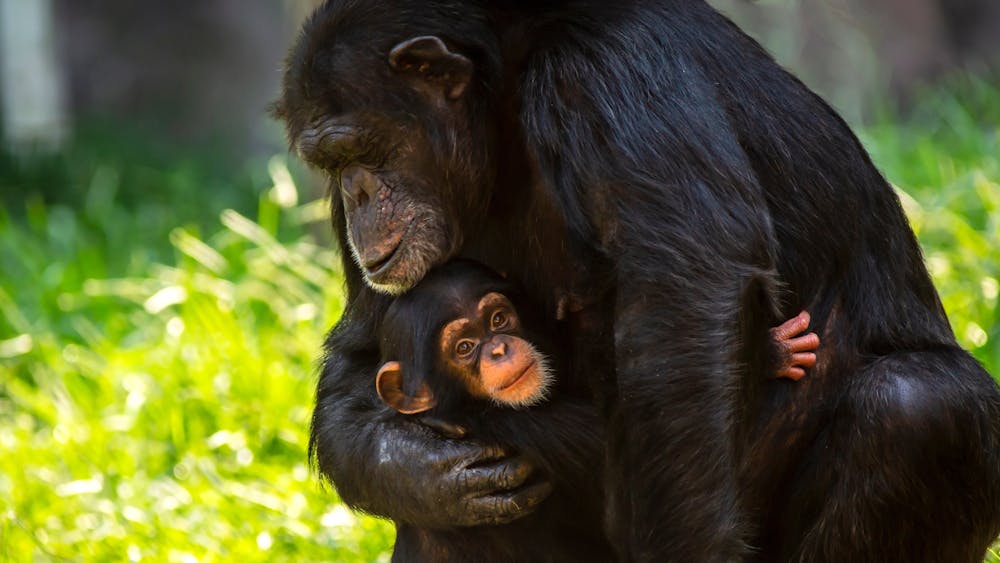 Adapting to the increased maternal stress that accompanies separation from infants (either for shared care or domestication) may be one of the drivers of ‘domestication syndrome’.
Shutterstock
Adapting to the increased maternal stress that accompanies separation from infants (either for shared care or domestication) may be one of the drivers of ‘domestication syndrome’.
Shutterstock
More reliable food access due to group foraging and sharing, plus collective defence against predators, might also have made us more sociable, more cooperative, and more complex, while promoting other changes commonly seen in non-human domesticated animals.
Whatever the specific drivers in each species, recognising multiple selective pathways better explains the domestication syndrome, and reaffirms the complexity of evolutionary effects shaping all life on Earth.
Authors: Ben Thomas Gleeson, Doctoral Candidate, Australian National University


















