

Pip Williams shows how World War I transformed women's lives, in a new novel that captures the 'poetic materiality' of books
- Written by: Jen Webb, Dean, Graduate Research, University of Canberra
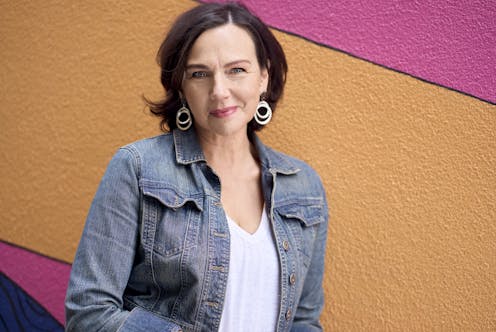
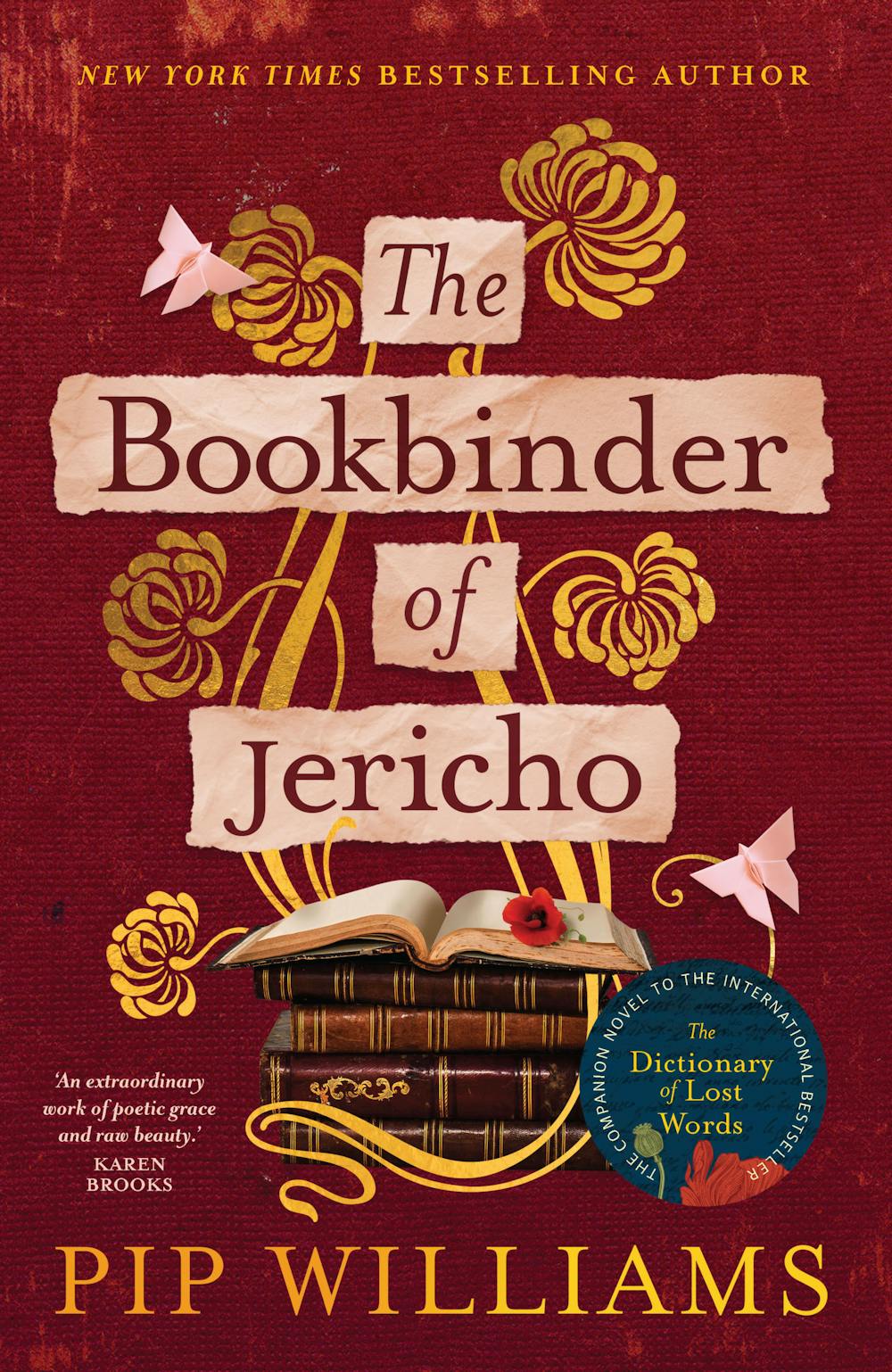
Pip Williams describes her new novel, The Bookbinder of Jericho, as both follow-up and companion to her 2020 debut, The Dictionary of Lost Words.
There is an overlap of place and profession, and some shared characters, between the novels. The Dictionary of Lost Words began in the late 19th century and covered several decades. The Bookbinder of Jericho illuminates a key period of history experienced by the characters in the previous book: it spans 1914 and the start of the World War I, finishing in the new world that had begun emerging by 1920.
Review: The Bookbinder of Jericho – Pip Williams (Affirm Press)
 Orphaned sisters Peggy and Maude work as bindery girls, like their mother before them. (The women pictured are working at Kingsport Press in the US. Photo by Pauline Minga.)
Peggy is also bound by the limitations of her class and gender. Though she’s possessed of a fine intellect, her education was very limited, and she can’t imagine even being approved to enter the nearby women’s college, let alone become a student. She is definitively Town; they are Gown. And as a mere bindery girl, she is considered good enough only to fold printed sheets into what will become a book.
This she finds immensely frustrating, as we see on the first page of the preface. “Scraps”, she says. “That’s all I got. Fragments that made no sense without the words before or the words after.” And that is indeed all she gets because, as the forewoman scolds, “Your job is to bind the books, not read them”.
But as a bindery girl, Peggy is skilled at reading “upside down and sideways”, a skill that is both truth and metaphor, since it signals her ability to see from a different point of view. Which she does: her perspective is different from her peers in the Press, from her managers, and from the refugees and wounded soldiers she will support.
Women and World War I
A rich cast of characters inhabit the novel. One is Lotte, a Belgian refugee from Louvain, where she was university librarian; she has seen what no one should see. Another is Gwen, an Oxford student who wears her privilege lightly and, with Peggy, works as a volunteer to support the wounded.
Among those is Peggy’s love interest Bastiaan, introduced as “the Invisible Man”, who gradually returns, broken and scarred, to himself. And actor and activist suffragette Tilda, who first appeared in the Dictionary of Lost Words, emerges now as the twins’ “aunt”, probably their mother’s lover. Here she serves as a nurse on the front.
Orphaned sisters Peggy and Maude work as bindery girls, like their mother before them. (The women pictured are working at Kingsport Press in the US. Photo by Pauline Minga.)
Peggy is also bound by the limitations of her class and gender. Though she’s possessed of a fine intellect, her education was very limited, and she can’t imagine even being approved to enter the nearby women’s college, let alone become a student. She is definitively Town; they are Gown. And as a mere bindery girl, she is considered good enough only to fold printed sheets into what will become a book.
This she finds immensely frustrating, as we see on the first page of the preface. “Scraps”, she says. “That’s all I got. Fragments that made no sense without the words before or the words after.” And that is indeed all she gets because, as the forewoman scolds, “Your job is to bind the books, not read them”.
But as a bindery girl, Peggy is skilled at reading “upside down and sideways”, a skill that is both truth and metaphor, since it signals her ability to see from a different point of view. Which she does: her perspective is different from her peers in the Press, from her managers, and from the refugees and wounded soldiers she will support.
Women and World War I
A rich cast of characters inhabit the novel. One is Lotte, a Belgian refugee from Louvain, where she was university librarian; she has seen what no one should see. Another is Gwen, an Oxford student who wears her privilege lightly and, with Peggy, works as a volunteer to support the wounded.
Among those is Peggy’s love interest Bastiaan, introduced as “the Invisible Man”, who gradually returns, broken and scarred, to himself. And actor and activist suffragette Tilda, who first appeared in the Dictionary of Lost Words, emerges now as the twins’ “aunt”, probably their mother’s lover. Here she serves as a nurse on the front.
 Wikimedia Commons
Through the eyes and accounts of each character, a different perspective is offered on the seemingly endless narrative of that war; a perspective that is upside down and sideways, perhaps; a perspective Williams brings to the role of women in this war.
Her women don’t remain in the traditional roles of nurse or grieving mother, but are full participants. They have faced the guns, they are on the frontlines trying to keep soldiers alive. On the home front, they are running the factories, rehabilitating the wounded and the traumatised.
But her account can’t avoid what we know so well about that catastrophic war: all its pointlessness, all the loss. Toward the end, when Spanish flu had added to the misery, and deaths were multiplying at home as well as on the war front, and Peggy’s aspirations to enter university seem to have been quashed, she reflects on the limits of language in the face of such experiences:
Loss. The Concise Dictionary simply defined it as: Detriment, disadvantage. See lose, the entry said. I turned back a few pages. Lose: Be deprived of, cease by negligence, misadventure, separation, death. It didn’t quite explain the feeling I had.
That “feeling” runs like a thread from the very first line of the novel to (almost) its end, because her sharp intelligence combined with her illegitimate birth and her poverty add up to a life of thwarted expectations.
Still, she says, “I want more”, but then adds, “Who doesn’t?” And sometimes we do get a little more. Peggy’s empathy and reflexivity, her capacity to observe closely and to make sense of literature and argument, highlights the “more” that is rapidly approaching for her and other women. The right to vote. Changing social mores and hierarchies. A gradual decolonising of the world and of individuals’ minds.
Read more:
'It makes one feel and realise what a dreadful thing war is' – a nurse's story
The poetic materiality of books
This is a hopeful story. But for me, despite the excellent crafting of this narrative of social history, what makes it stand out is its unwavering attention to books, and the making of books. Williams beautifully describes the practices and traditions and rituals associated with what was a trade, then a craft, and is now an increasingly arcane art.
Her focus is on the women’s side of the business, but it recognises the work of writers, readers, editors, compositors, foundry men, mechanics, press specialists: all the army of experts required in the process of moving from idea to material object.
The materiality of books and of the tools used in their construction is also beautifully depicted. She notes the density of rag paper; the swirl of a typeface; the heft and texture of a bone folder; the feel and aroma of leather binding; the luscious sheen of gold lettering. She notes the sensuality of the work. The gathering of books and sections is done as a kind of dance; and as her posh friend Gwen says, “You smell like a new book, it’s positively intoxicating.”
In the author’s note at the end of the book, Williams writes of the books that appear in the novel:
They were not sought or chosen with any great care. Rather, they presented themselves in the course of my work.
And, therefore, “The books play themselves”: they are real-life characters, who work alongside the fictional characters, to craft this story.
If I had to say what I think the novel is about, I could say the first world war, or the struggle for women’s rights, or sisterhood. But for me this novel is mostly a paean to the poetic materiality of books. It makes visible the long, slow, skilful labour involved in building a book; it traces the life that book might lead through decades or more of use: of instructing and distracting, entertaining and creating empathy.
Books might be the canvas on which their readers draft their own dreams, their own thoughts, and their own decisions. But, viewed through the eyes of a bookbinder, they become material beings, with their own life cycles, their own physicality – and their own relationships with us, their readers.
Authors: Jen Webb, Dean, Graduate Research, University of Canberra
Wikimedia Commons
Through the eyes and accounts of each character, a different perspective is offered on the seemingly endless narrative of that war; a perspective that is upside down and sideways, perhaps; a perspective Williams brings to the role of women in this war.
Her women don’t remain in the traditional roles of nurse or grieving mother, but are full participants. They have faced the guns, they are on the frontlines trying to keep soldiers alive. On the home front, they are running the factories, rehabilitating the wounded and the traumatised.
But her account can’t avoid what we know so well about that catastrophic war: all its pointlessness, all the loss. Toward the end, when Spanish flu had added to the misery, and deaths were multiplying at home as well as on the war front, and Peggy’s aspirations to enter university seem to have been quashed, she reflects on the limits of language in the face of such experiences:
Loss. The Concise Dictionary simply defined it as: Detriment, disadvantage. See lose, the entry said. I turned back a few pages. Lose: Be deprived of, cease by negligence, misadventure, separation, death. It didn’t quite explain the feeling I had.
That “feeling” runs like a thread from the very first line of the novel to (almost) its end, because her sharp intelligence combined with her illegitimate birth and her poverty add up to a life of thwarted expectations.
Still, she says, “I want more”, but then adds, “Who doesn’t?” And sometimes we do get a little more. Peggy’s empathy and reflexivity, her capacity to observe closely and to make sense of literature and argument, highlights the “more” that is rapidly approaching for her and other women. The right to vote. Changing social mores and hierarchies. A gradual decolonising of the world and of individuals’ minds.
Read more:
'It makes one feel and realise what a dreadful thing war is' – a nurse's story
The poetic materiality of books
This is a hopeful story. But for me, despite the excellent crafting of this narrative of social history, what makes it stand out is its unwavering attention to books, and the making of books. Williams beautifully describes the practices and traditions and rituals associated with what was a trade, then a craft, and is now an increasingly arcane art.
Her focus is on the women’s side of the business, but it recognises the work of writers, readers, editors, compositors, foundry men, mechanics, press specialists: all the army of experts required in the process of moving from idea to material object.
The materiality of books and of the tools used in their construction is also beautifully depicted. She notes the density of rag paper; the swirl of a typeface; the heft and texture of a bone folder; the feel and aroma of leather binding; the luscious sheen of gold lettering. She notes the sensuality of the work. The gathering of books and sections is done as a kind of dance; and as her posh friend Gwen says, “You smell like a new book, it’s positively intoxicating.”
In the author’s note at the end of the book, Williams writes of the books that appear in the novel:
They were not sought or chosen with any great care. Rather, they presented themselves in the course of my work.
And, therefore, “The books play themselves”: they are real-life characters, who work alongside the fictional characters, to craft this story.
If I had to say what I think the novel is about, I could say the first world war, or the struggle for women’s rights, or sisterhood. But for me this novel is mostly a paean to the poetic materiality of books. It makes visible the long, slow, skilful labour involved in building a book; it traces the life that book might lead through decades or more of use: of instructing and distracting, entertaining and creating empathy.
Books might be the canvas on which their readers draft their own dreams, their own thoughts, and their own decisions. But, viewed through the eyes of a bookbinder, they become material beings, with their own life cycles, their own physicality – and their own relationships with us, their readers.
Authors: Jen Webb, Dean, Graduate Research, University of Canberra 

















