

get ready to fall in love with Australia's albino rats and mice
- Written by: Darcy Watchorn, PhD Candidate, Deakin University
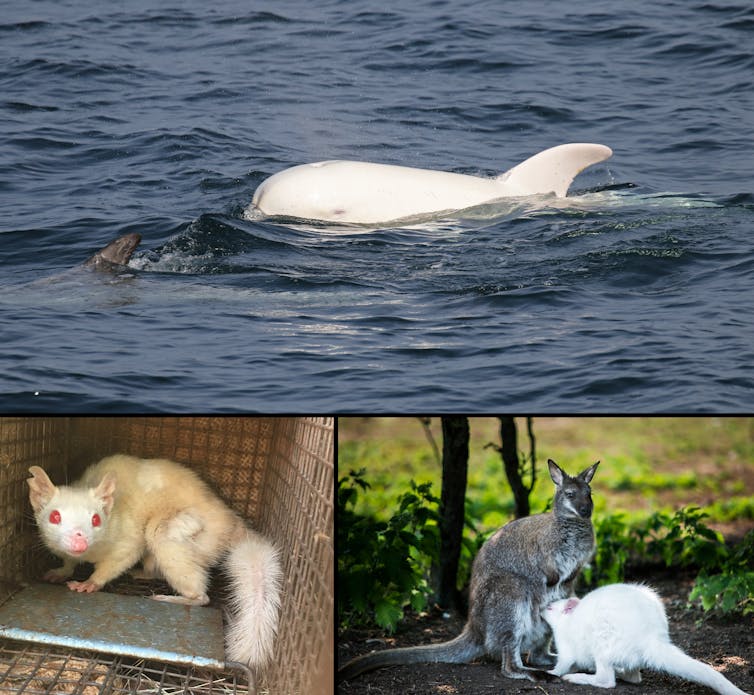
Discoveries of albino animals have a unique ability to capture the public imagination, often leading to flurries of social media and news coverage. (Think Migaloo, the famous white humpback whale.)
It’s easy to see why albino animals are so fascinating. Their stark white appearance typically sets them apart from the world around them, providing a striking contrast against the green forest, red desert or blue ocean.
But while people are captivated by the likes of white whales, kangaroos and koalas, it’s a different story for poor old rats and mice.
Our new research is the first study of Australia’s native albino rodents. By raising the profile of these adorable little creatures, we hope more people will come to appreciate Australia’s rodents as remarkable animals worth protecting.
Read more: Meet the territorial females and matriarchs in Australia's backyard
The unfair stigma of the repulsive rodent
Rodents, especially rats, have long been viewed with disdain - often seen as filthy, disease-ridden pests. The terms “dirty rat” and “vermin” are used as insults in many cultures, and even Hollywood films.
A scene from the 1992 Disney film Aladdin, where the term “rat” is an insult.Unfortunately, this negative perception of rodents often extends to our native species, dampening public enthusiasm for conservation.
Public perception plays a crucial role in wildlife conservation, and rodents are one of Australia’s most diverse and ecologically important groups of mammals, with a disproportionately high rate of extinction. So if people don’t care about them, or if they actively dislike them, there’ll be little effort to help them.
What is albinism, and how does it impact wildlife?
Albinism is a rare genetic condition that typically occurs once in every few thousand births. It affects an animal’s ability to produce melanin, the pigment that gives colour to the skin, hair and eyes. There are several types of albinism, which vary in their genetic cause and the degree of pigment loss. But animals with the condition typically have white or light-coloured skin, scales or fur, and pink or blue eyes.
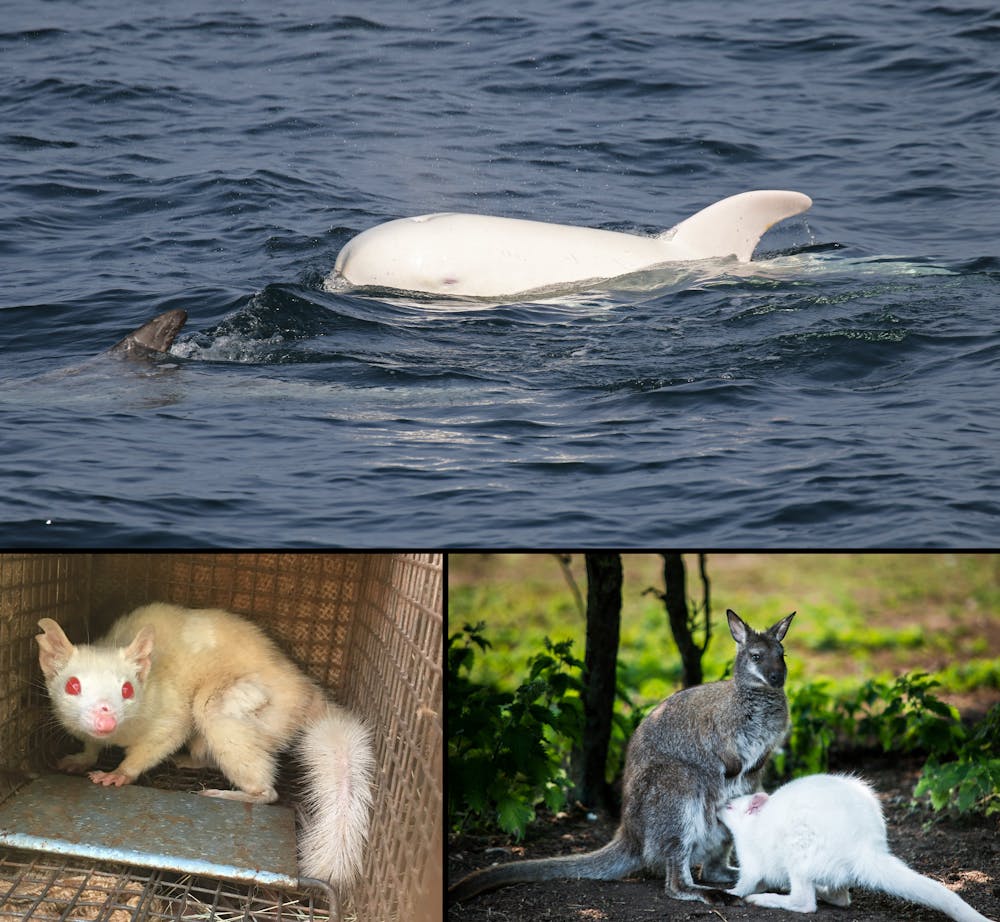
While albinism is common in laboratory rats, these animals have been selectively bred for this trait. In wild rodent populations it has been very rarely observed.
The condition was previously reported in less than 2% of the world’s 2,683 rodent species (including the 48 extinct species). (It’s now 2.8%).
In the wild, albino animals struggle to survive. Albinism can result in poor eyesight, a heightened sensitivity to ultraviolet radiation, and an increased risk of being spotted by predators. Plus, albino animals may be targeted by trophy hunters and poachers.
Australia’s remarkable rodents
When most Australians think of rodents, they think of invasive species such as black rats or house mice (stinky pests sneaking around their homes). Many would be surprised to learn that more than 50 species of rodents are native to Australia. They’re wonderful, diverse, and rarely smelly.
Sadly, since Europeans arrived, at least 13 species have become extinct and 25 species are listed as threatened at state or federal levels.
Read more: Another Australian animal slips away to extinction
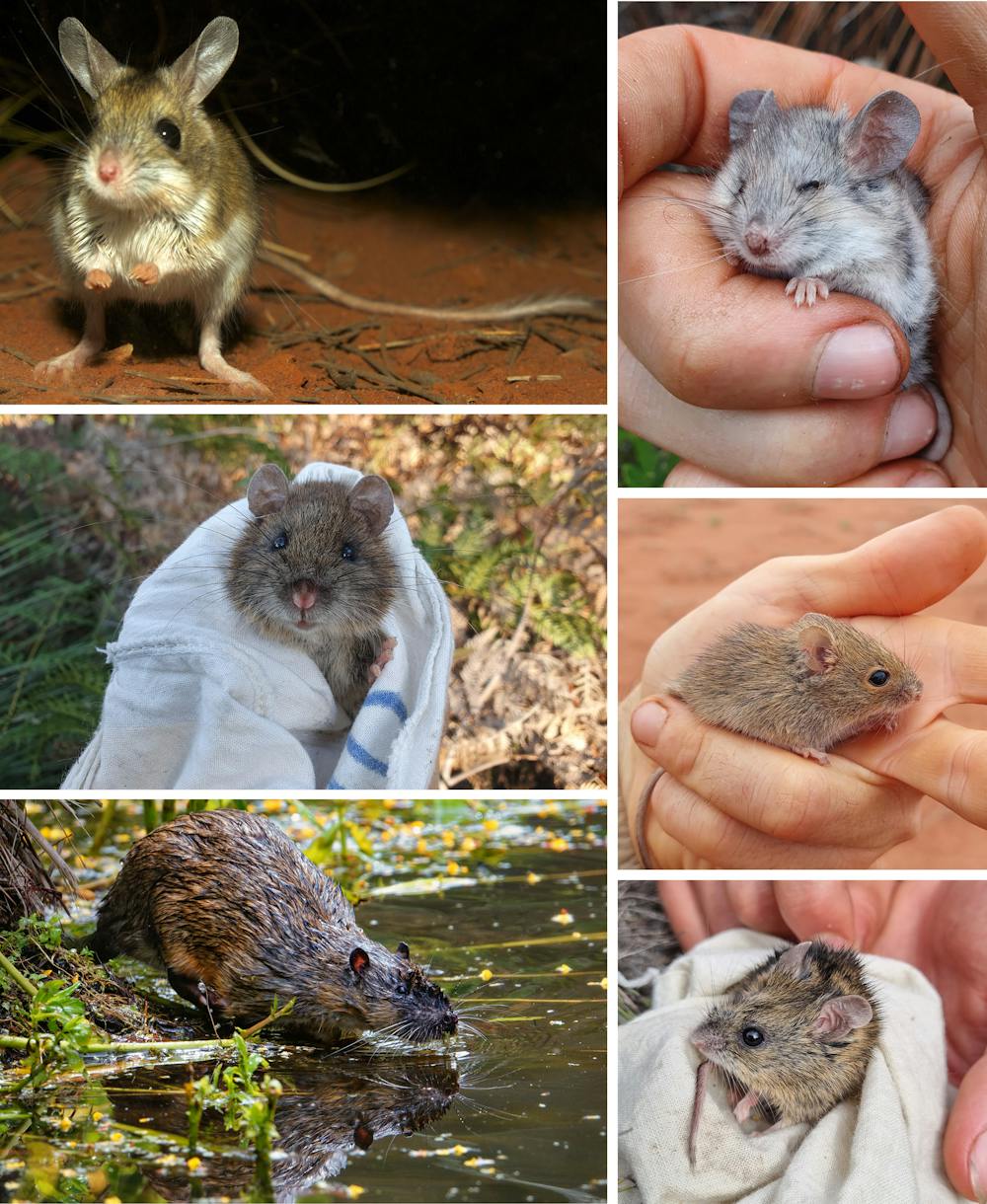 Introducing some of Australia’s native rodents. Top left, spinifex hopping mouse. Top right, silky mouse. Middle left, bush rat. Middle right, desert mouse. Bottom left, rakali/water rat. Bottom left, pookila.
Photographers: Judy Dunlop, Darcy Watchorn, Darcy Watchorn, Tim Doherty, Ⓒ audiodam flic.kr/p/2mLNXFM, Phoebe Burns, CC BY-NC
Introducing some of Australia’s native rodents. Top left, spinifex hopping mouse. Top right, silky mouse. Middle left, bush rat. Middle right, desert mouse. Bottom left, rakali/water rat. Bottom left, pookila.
Photographers: Judy Dunlop, Darcy Watchorn, Darcy Watchorn, Tim Doherty, Ⓒ audiodam flic.kr/p/2mLNXFM, Phoebe Burns, CC BY-NC
Our native rodents help maintain healthy ecosystems. They contribute to soil turnover and disperse seeds and fungi. We have species adapted to every environment, from the alps to the deserts, forests, rivers and coastlines. Some dig complex burrow systems. Others nest in trees, or make houses out of sticks or pebbles. And some, like the rakali, meticulously dissect the invasive and toxic cane toads to eat their hearts and livers. We have a native rodent for every occasion.
Read more: Eat your heart out: native water rats have worked out how to safely eat cane toads
Our study of Australia’s albino rodents
In 2021, I was lucky to discover an albino bush rat in Victoria’s Otway Ranges. Gazing at this remarkable ginger fuzzball with soul-piercing red eyes, I realised I’d never heard or read about albino Australian rodents.
After that first encounter, I searched the academic literature, and found nothing. There were no published accounts of Australian rodents with albinism. However, given how many rodents there are in Australia, I knew I couldn’t be the first ecologist to see one.
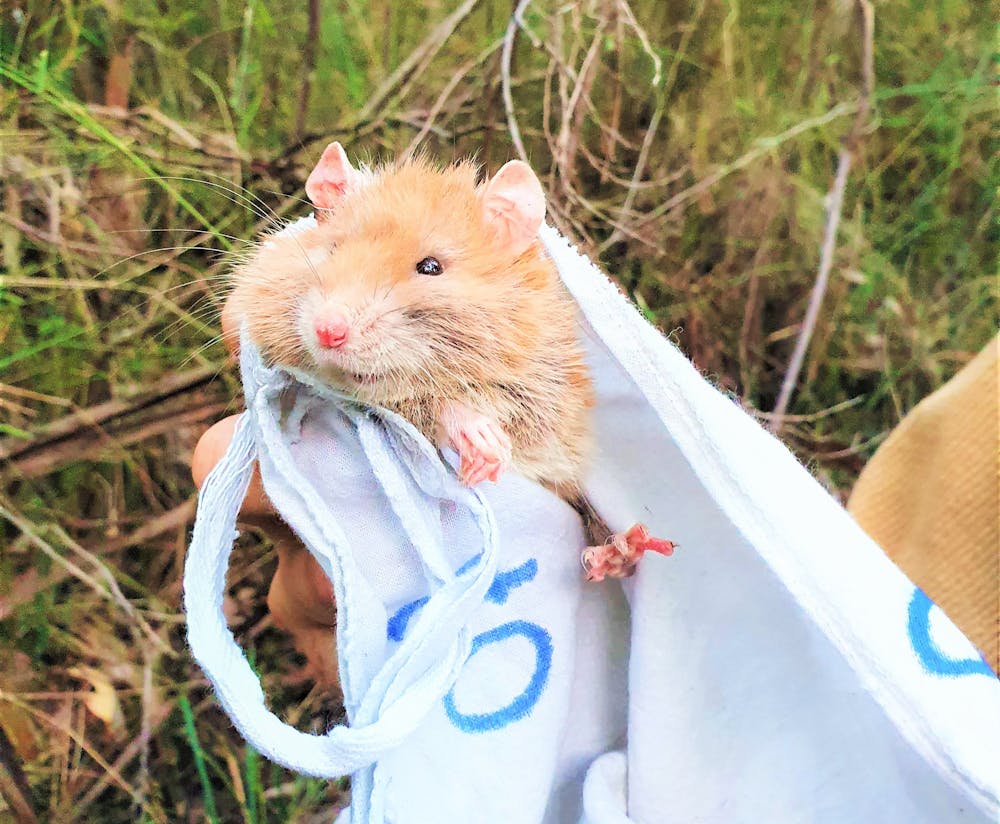 The albino bush rat (Rattus fuscipes) I captured in the Otways. Photo: Darcy Watchorn.
So my colleagues and I conducted a survey of Australian ecologists, museums and historic newspaper articles to find albino rodent records. We found 23 records of albinos (representing eight species) from a sample of more than 50,000 individual rats and mice. While this is but a handful of species, it represents a 12% increase in the recorded number of rodent species with albinism worldwide.
The frequency of albinism can also increase under certain conditions, such as among small, isolated populations or between closely related individuals. We found a population of rakali on Barrow Island (60km off the coast of Western Australia) had a much higher rate of albinism than mainland populations. About 2% of this population were albino at the time of our survey, potentially due to the population’s long isolation and low genetic diversity.
Rare and precious
Australia has lost more than its fair share of native rodents since Europeans arrived. Now more than ever, it’s important to appreciate and protect all of Australia’s unique and fascinating wildlife.
So, regardless of whether they’re albino or not, let’s all make some room in our hearts for Australia’s fuzzy little rodents. Unless you’re a cane toad, of course, because our rakali are on their way to gobble your heart.
Darcy is grateful to Phoebe Burns, Native Rodent Biologist at Zoos Victoria, for her contribution to this article.
Authors: Darcy Watchorn, PhD Candidate, Deakin University


















