

2022 was a good year for nature in Australia – but three nasty problems remain
- Written by: Albert Van Dijk, Professor, Water and Landscape Dynamics, Fenner School of Environment & Society, Australian National University
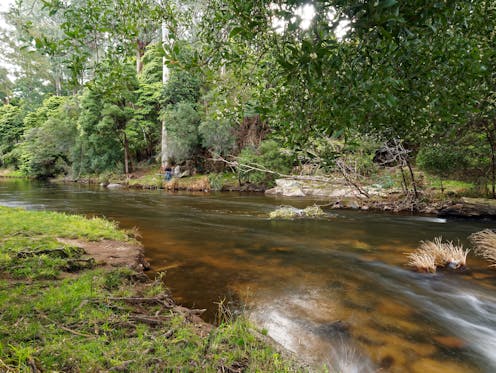
A new report card on Australia’s environment reveals 2022 was a bumper year for our rivers and vegetation – but it wasn’t enough to reverse the long-term decline in plant and animal species.
The analysis was drawn from many millions of measurements of weather, biodiversity, water availability, river flows and the condition of soil and vegetation. The data is gathered from satellites and field stations and processed by a supercomputer.
From the data, we calculate a score between 0 and 10 to determine the overall condition of Australia’s environment.
In 2022, a third and very wet La Niña year brought a strong improvement in several key indicators, leading to a national score of 8.7 out of 10. This is the best score since 2011. But unfortunately, three wicked problems remain.
First, the good news
By some measures, 2022 was the best year for water availability and plant growth since our national score system began 23 years ago.
New South Wales, Victoria and the ACT enjoyed the highest environmental scores since before 2000. South Australia and Queensland also improved.
Scores for rainfall, river flows and the extent of floodplain inundation were the highest since before 2000 in many parts of eastern Australia. The water supplies of all eastern capital cities all rose and several reached capacity.
Wetland area and waterbird breeding were well above the long-term average. Vegetation density, growth rates and tree cover in NSW and Queensland were the best since before 2000.
It was a bumper year for dryland farmers. Average national growth rates in dryland cropping were a massive 49% better than average conditions. The many full or filling reservoirs are also good news for irrigators.
What about the losers?
Some regions missed out on the rainfall bonanza, and many environmental indicators declined. They include the Top End in the Northern Territory, southern inland Western Australia and western Tasmania.
Across the NT, low rainfall and high temperatures meant environmental scores once more declined to the low values seen before 2021.
And in areas where rainfall was high, not everyone benefited. Many homes and businesses flooded, and some farmers lost crops or stock.
At the end of 2022, reports emerged that floodwaters were causing so-called “blackwater events” and fish kills in the Murray River. Murky floodwaters also ran into the ocean and smothered seagrass meadows, leading dugongs and sea turtles to starve.
The ocean around Australia was the warmest on record in 2022. The Great Barrier Reef suffered the fourth mass bleaching event in seven years – and alarmingly, the first to occur during a La Niña year, which is usually cooler.
Fortunately, conditions for the remainder of the year favoured coral recovery.
Read more: New report shows alarming changes in the entire global water cycle
Chronic ailments
Despite many positive indicators, three severe, chronic and untreated problems continue to weaken our environment: habitat destruction, invasive species and climate change.
The rate of habitat destruction shows little sign of improvement. Much vegetation continues to be removed for new housing, mining and agriculture. Fire activity in 2022 was low, but climate change means bushfires will be back soon, and become more frequent and severe over time.
La Niña is already on the way out, although it will probably take more than one hot and dry year before we experience megafires such as those in the Black Summer of 2019-20.
The scorecard also shows Australia is still struggling to combat pest species. They include fungi, invasive weeds, carp, cane toads, rats, rabbits, goats, pigs, foxes and cats. Every year, about eight million feral cats and foxes kill 1.5 billion native reptiles, birds and mammals.
Climate change remains a huge problem. La Niña normally brings cool conditions and the average temperature last year in Australia was the coolest since 2012. But it was still relatively warm, at 0.5℃ above the long-term average.
Read more: Fear and Wonder podcast: how scientists know the climate is changing
The combination of habitat destruction, invasive species and climate change has already decimated many Australian species. In 2022, 30 plants and animals were added to the official list of threatened species.
That’s a 43% increase since 2000, bringing the total number to 1,973. Most species added last year were affected by the Black Summer fires.
Our analysis drew on the Threatened Species Index, which reports with a three-year time lag. In 2019 the index showed a steady decline of about 3% in the abundance of threatened species each year. This is an overall decline of 62% since 2000.
Threatened plants showed the worst decline (72%), followed by birds (62%) and mammals (33%).
We can avoid the worst
Amid the gloom, there are glimmers of hope. Many species feared impacted by the fires proved resilient. Some large new national park areas have been added. Active management is recovering – or at least slowing – the decline of some threatened species, albeit sometimes within the narrow confines of reserves.
Also in 2022, humpback whales were one of the few species in Australian history to be taken off the threatened species list due to a population increase. The species has staged a remarkable recovery since the global moratorium on whaling.
Sadly, there is no fast solution to climate change. Greenhouse gases will linger in the atmosphere for decades to come and further warming is unavoidable. But we can still prevent worse outcomes, by dramatically curbing global emissions.
Australia’s emissions are not falling anywhere near fast enough. They were almost the same in 2022 as in the previous year. And our national emissions remain among the highest in the world per person.
Decisive action is needed. Slowing down habitat destruction, invasive species and climate change is key to preserving our natural resources and species for future generations.
Read more: We found 29 threatened species are back from the brink in Australia. Here's how
Authors: Albert Van Dijk, Professor, Water and Landscape Dynamics, Fenner School of Environment & Society, Australian National University


















