

Holiday help! An art expert suggests screen-free things to do in every room of the house
- Written by: Naomi Zouwer, Visual Artist and Lecturer in Teacher Education, University of Canberra
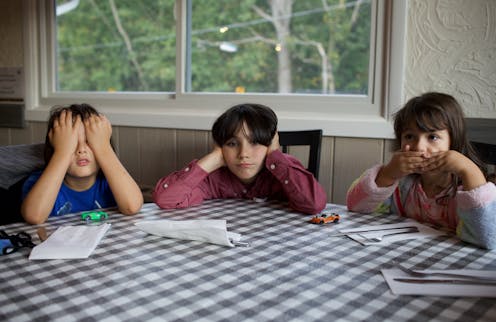
School holidays can feel like a marathon if all the kids want to do is watch TV, play Minecraft or repeatedly ask you for the iPad.
There are lots of things you can do inside the house that do not involve a screen. And will help ward off any whines along the lines of: “I’m booooooored”.
In a previous piece I talked about how to set up an art studio at home. This time, here are five creative ideas to try in every room of the house.
Read more: How to set up a kids' art studio at home (and learn to love the mess)
In the kitchen: make your own paint
Kids enjoy making potions in the garden by adding dirt and flowers and you can have similar fun in the kitchen making paint from ingredients in the cupboard.
Paint is made with pigment and a binder. The first paint on cave walls was made with charcoal, ochre, minerals mixed with water, saliva, blood, animal fat and even wee. The history of paint is fascinating and kids are intrigued by the stories, like how a certain purple (tyrian) comes from the glands of sea snails and how a type of yellow was cruelly made from cow wee, after forcing them to eat mango leaves.
You can make your own paint with spices like turmeric, curry powder and cinnamon or hunt through the house for chalk and eye shadow for a variety of colours.
Grind the pigments up with a mortar and pestle (some will need this more than others but it’s a fun part of the process). Then in a glass or jar, mix your ground pigments with a bit of egg yolk, a teaspoon of vinegar and a small amount of water as a binder and you have made egg tempera – a type of paint the Egyptians discovered and some artists still use today.
Experiment with other spices, berries, grass or charcoal. If it’s colourful, you can grind it and its not too lumpy, give it a go. See how many colours you can make, then make a painting.
Read more: 'Screen time' for kids is an outdated concept, so let's ditch it and focus on quality instead
In the living room: create a box masterpiece
Kids who may not like to draw or paint often love construction. So, collect different types of boxes and see what your child can create.
Apart from the boxes, you will also need masking tape. Kids can tear it themselves, or use a dispenser. Staplers and hole punchers are good connectors too. Also give them some thick markers, fabric scraps and glue to add details to their creations.
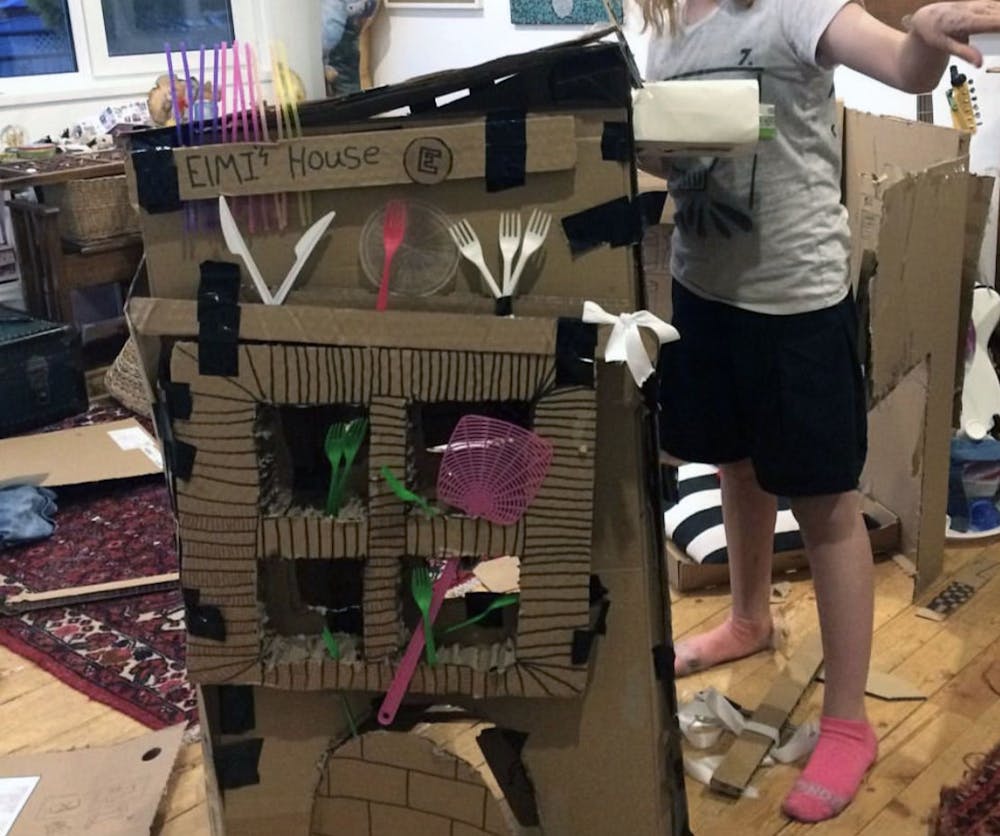
One holiday, we lived around my daughter’s construction zone as she worked with cardboard, other items from the recycling bin and things from around the house to make her own house.
In your child’s bedroom: paint a mural
This won’t be possible for everyone, but think about letting your child paint a mural in their bedroom. My mum let us create fantastic scenes in our bedrooms growing up.
Start by mapping out a basic design on paper. This slows the process down, allowing the child to think about what they would like on their walls. But be prepared for the plan to go out the window. Sometimes as artists we respond to the materials when we get them in our hands.
The trick to creating a successful mural with kids is selecting a good colour palette and you really can’t go wrong.
Get some sample-sized pots of water-based interior paint and bristle brushes from the hardware shop. Then tape a drop sheet to the floor and cover anything else you don’t want covered in paint and go for it!
If this is too freestyle for you, have a look at the wonderful “field of flowers” activity in Hervé Tullet’s book, Art Workshops for Children. This is a more structured approach to a collaborative painting and yields beautiful results (it starts with dots, then dots within dots and you end up with a field of flowers).
If this is not possible where you live, consider liquid chalk pens to create murals on the windows. This is so much fun and you can play with tracing things outside the window.
Pick an array of colours and overlap line drawings to build up patterns on the glass. This is so easy to clean too – just wipe it off with a wet cloth.
In the dining room: make a comic
The dining table is the perfect spot for projects and drawing. I find kids love creating comics. The book Making Comics by Lynda Barry has excellent exercises to get you started on comic strips, storyboards and zines.
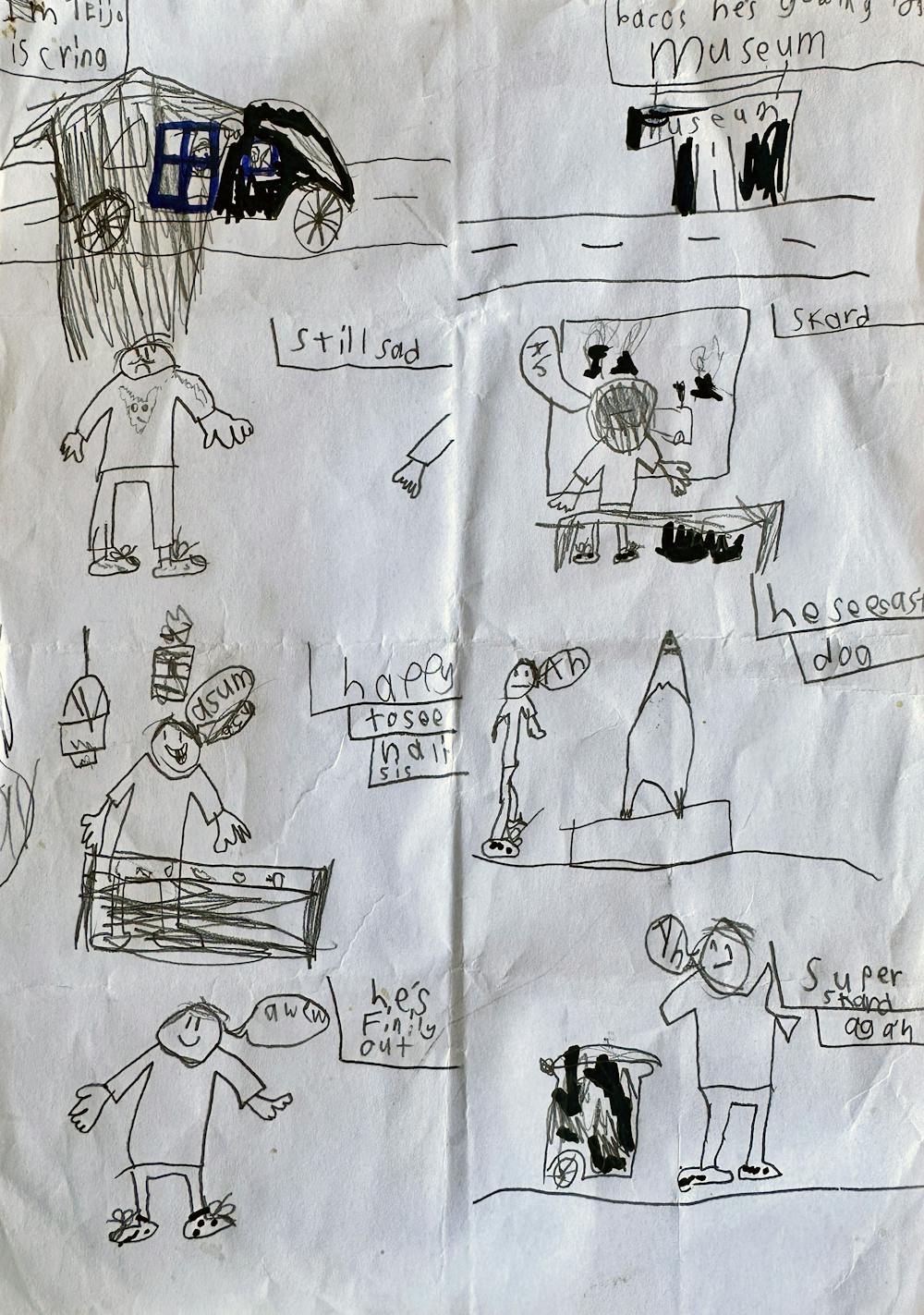 ‘A day at the museum’ by T Slater, aged 5.
Naomi Zouwer
‘A day at the museum’ by T Slater, aged 5.
Naomi Zouwer
Zines are mini DIY booklets. You can fill them with ideas using drawing, collage and words. Check out my how to make a zine video done for the National Museum of Australia’s Ancient Greeks exhibition last year.
You could do something similar: take your young person to see an exhibition, collect some flyers or postcards, and then at home cut them up and stick them into a zine. This can extend your child’s museum experience, and provides a chance to discuss and make sense of what you saw together.
Children use drawing to make sense of the world around them. When my son was five, he made a comic about a gallery experience: how he didn’t want to go, how he felt about some of the artworks, and how he was relieved to get out because he was scared by some of the work.
This gave me the opportunity to see how strongly he was affected by the exhibition and we were able to talk about those feelings.
In the bathroom: crack open the shaving cream
Shaving cream is a great medium with endless possibilities for sensory play, which helps brain development, motor skills and more.
You can make slime by adding a cup of glue to two cups of shaving cream and sprinkling a teaspoon of baking powder in the mix, plus two teaspoons of saline solution. Add food dye for a marble effect, make prints and paint with it onto a mirror or bathtub.
You can also use it to make sculptures. Start with a shampoo bottle as your armature (inner structure) and build your form around it. Take photos of the sculptures as a way of recording the ephemeral creations.
Try adding cornstarch to the shaving cream and play with the proportions until you have developed a malleable substance. The transformation of the substance is quite remarkable and kids love the tactile quality of this mixture.
In the end, kids have the best ideas, so just take some time to ask them what kinds of creative activities they might like to explore over the holidays and let them take the lead. The important thing here is to let go, enjoy the process and play – worry about cleaning up later!
Read more: How to get the most out of sand play: 4 tips from a sculptor
Authors: Naomi Zouwer, Visual Artist and Lecturer in Teacher Education, University of Canberra


















