

how do we live with the weight of our history?
- Written by: Heidi Norman, Professor, Faculty of Arts and Social Sciences, University of Technology Sydney
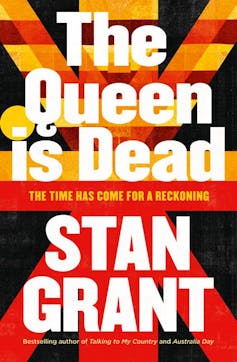
This month, journalist and public intellectual Stan Grant published his fifth book, The Queen is Dead. And last week, he abruptly stepped away from his career in the public realm, citing toxic racism enabled by social media, and betrayal on the part of his employer, the ABC.
“I was invited to contribute to the ABC’s coverage as part of a discussion about the legacy of the monarchy. I pointed out that the crown represents the invasion and theft of our land,” he wrote last Friday. “I repeatedly said that these truths are spoken with love for the Australia we have never been.” And yet, “I have seen people in the media lie and distort my words. They have tried to depict me as hate filled”.
Grant has worked as a journalist in Australia for more than three decades: first on commercial current affairs – and until this week, as a main anchor at the ABC, where he was an international affairs analyst and the host of the panel discussion show Q+A. The former role reflects his global work, reporting from conflict zones with esteemed international broadcasters such as CNN. His second book, Talking to my Country, won the Walkley Book Award in 2016.
Review: The Queen is Dead – Stan Grant (HarperCollins)
In this new book, Grant yearns for a way to comprehend the forces, ideas and history that led to this cultural moment we inhabit. The book, which opens with him grappling with the monarchy and its legacy, is revealing in terms of his decision to step back from public life.
Released to coincide with the coronation of the new English monarch, Charles III, The Queen is Dead seethes with rage and loathing – hatred even – at the ideas that have informed the logic and structure of modernity.
Grant’s work examines the ideas that explain the West and modernity – and his own place as an Indigenous person of this land, from Wiradjuri, Kamilaroi and Dharawal country. That is: his work explores both who he is in the world and the ideas that tell the story of the modern world. He finds the latter unable to account for him.
“This week, I have been reminded what it is to come from the other side of history,” he writes in the book’s opening pages. “History itself that is written as a hymn to whiteness […] written by the victors and often written in blood.”
He asks “how do we live with the weight of this history?” And he explains the questions that have dominated his thinking: what is whiteness, and what is it to live with catastrophe?
The death of the white queen
In his account, his rage is informed by the observation that the weight of this history was largely unexplored on the occasion of Queen Elizabeth II’s death last September. The death of the white queen is the touchpoint always returned to in this work – and the release of the book coincides with the apparently seamless transition to her heir, now King Charles III.
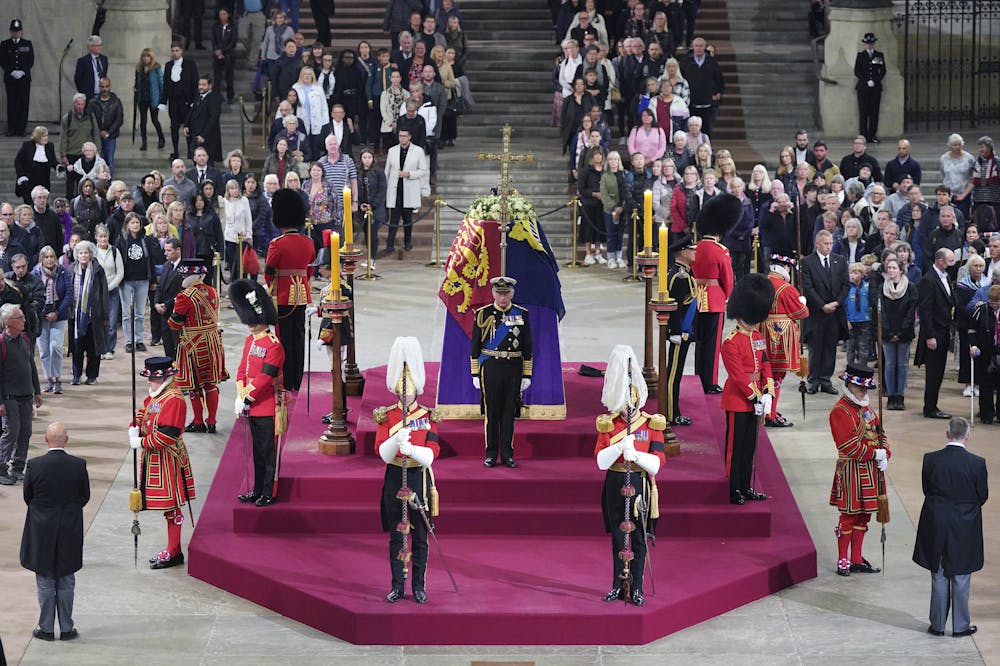 Grant argues the end of the queen’s 70-year rule should mark ‘a global reckoning with the race-based order that undergirds empire and colonialism’.
Yui Mok/AP
Read more:
Racism is real, race is not: a philosopher's perspective
Liberalism and democracy = tyranny and terror
In several essays now, Grant has engaged with the ideas of mostly Western philosophers and several conservative thinkers to explain the crisis of liberalism and democracy. Grant argues that, like other -isms, liberalism and democracy have descended into tyranny and terror.
The new world order, dominated by China and people of colour, is in dramatic contrast to the continued rule of the white queen and her descendants.
In this, perhaps more than his other books and essays, Grant moves between big ideas in history – the Enlightenment, modernity and democracy – to consider himself, his identity, and his own lived experience of injustice, where race is an undeniable organising feature.
In this story he explains himself, as an Indigenous person, “an outsider, in the middle”; “an exile, living in exile, struggling with belonging”; living with the “very real threat of erasure”.
Read more:
The power of yindyamarra: how we can bring respect to Australian democracy
Love, friendships, family, Country
In the final section of the book, Grant’s focus switches to the theme of “love”, and to friendships, family and Country. He speculates that his focus on these things is perhaps a mark of age.
Now, he accounts for the things in life that are truly valuable – and this includes deep affection for the joy that emanates from Aboriginal families. Being home on his Country, paddling the river, he finds quiet and peace.
Grant argues the end of the queen’s 70-year rule should mark ‘a global reckoning with the race-based order that undergirds empire and colonialism’.
Yui Mok/AP
Read more:
Racism is real, race is not: a philosopher's perspective
Liberalism and democracy = tyranny and terror
In several essays now, Grant has engaged with the ideas of mostly Western philosophers and several conservative thinkers to explain the crisis of liberalism and democracy. Grant argues that, like other -isms, liberalism and democracy have descended into tyranny and terror.
The new world order, dominated by China and people of colour, is in dramatic contrast to the continued rule of the white queen and her descendants.
In this, perhaps more than his other books and essays, Grant moves between big ideas in history – the Enlightenment, modernity and democracy – to consider himself, his identity, and his own lived experience of injustice, where race is an undeniable organising feature.
In this story he explains himself, as an Indigenous person, “an outsider, in the middle”; “an exile, living in exile, struggling with belonging”; living with the “very real threat of erasure”.
Read more:
The power of yindyamarra: how we can bring respect to Australian democracy
Love, friendships, family, Country
In the final section of the book, Grant’s focus switches to the theme of “love”, and to friendships, family and Country. He speculates that his focus on these things is perhaps a mark of age.
Now, he accounts for the things in life that are truly valuable – and this includes deep affection for the joy that emanates from Aboriginal families. Being home on his Country, paddling the river, he finds quiet and peace.
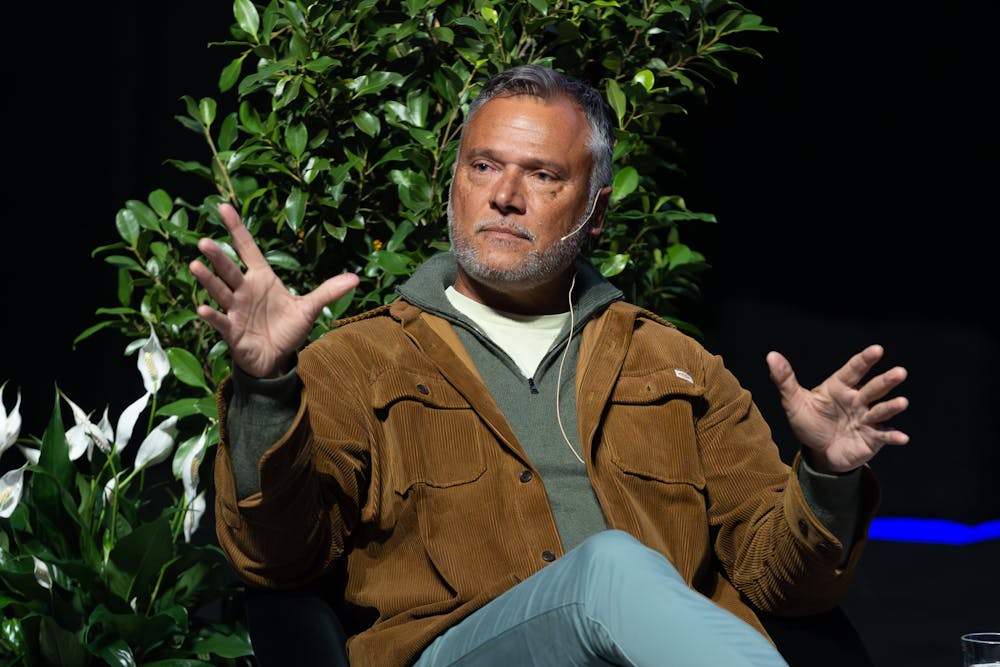 Now, Stan Grant accounts for the things in life that are truly valuable – including deep affection for the joy that emanates from Aboriginal families.
Andrew Guo/Atticus Media
The death of the monarch of the British Empire, who ruled for 70 years, should speak to the history of empire and colonial legacy and all its curses – especially in settler colonial Australia. Yet her passing – which coincides with seismic change in the global economic order with China’s ascendance and the decline of the United States and the UK, the global cultural order and the racial order – has been largely unexamined in public discourse in Australia.
The history of colonisation and of ideas that have debated ways to comprehend the past have been a feature of Grant’s intellectual exploration, including on the death of the queen. As he details in his new book, the reaction from some quarters to this conversation has exposed him to unrelenting and racist attack.
In this work and in others, exploration of the world of ideas to understand the past and future sits alongside accounts of the everyday; of the always place-based realities of Aboriginal accounts of self.
The material deprivations and indignities, the closely held humility that comes with poverty and powerlessness - shared socks, a house carelessly demolished, burials tragically abandoned – are countered by another reality: the intimacy of most Aboriginal lives, characterised by deep love, affection, laughter and belonging. These place-based, “small” stories Grant shares sit alongside the bigger themes of modern history, such as democracy and freedom.
In this latest work, Grant details his sense of “betrayal” at the discussion he sought about the monarch’s passing and the discussion that was actually had, the history of ideas and his own place in this.
And now, of course, he has announced his intention to exit the public stage. Racism, we are reminded, is an enduring feature of the modern world – a world yet to allow space for an unbowing, Wiradjuri-Kamilaroi-Dharawal public intellectual.
Authors: Heidi Norman, Professor, Faculty of Arts and Social Sciences, University of Technology Sydney
Now, Stan Grant accounts for the things in life that are truly valuable – including deep affection for the joy that emanates from Aboriginal families.
Andrew Guo/Atticus Media
The death of the monarch of the British Empire, who ruled for 70 years, should speak to the history of empire and colonial legacy and all its curses – especially in settler colonial Australia. Yet her passing – which coincides with seismic change in the global economic order with China’s ascendance and the decline of the United States and the UK, the global cultural order and the racial order – has been largely unexamined in public discourse in Australia.
The history of colonisation and of ideas that have debated ways to comprehend the past have been a feature of Grant’s intellectual exploration, including on the death of the queen. As he details in his new book, the reaction from some quarters to this conversation has exposed him to unrelenting and racist attack.
In this work and in others, exploration of the world of ideas to understand the past and future sits alongside accounts of the everyday; of the always place-based realities of Aboriginal accounts of self.
The material deprivations and indignities, the closely held humility that comes with poverty and powerlessness - shared socks, a house carelessly demolished, burials tragically abandoned – are countered by another reality: the intimacy of most Aboriginal lives, characterised by deep love, affection, laughter and belonging. These place-based, “small” stories Grant shares sit alongside the bigger themes of modern history, such as democracy and freedom.
In this latest work, Grant details his sense of “betrayal” at the discussion he sought about the monarch’s passing and the discussion that was actually had, the history of ideas and his own place in this.
And now, of course, he has announced his intention to exit the public stage. Racism, we are reminded, is an enduring feature of the modern world – a world yet to allow space for an unbowing, Wiradjuri-Kamilaroi-Dharawal public intellectual.
Authors: Heidi Norman, Professor, Faculty of Arts and Social Sciences, University of Technology Sydney 

















