

How drag as an art form sashayed from the underground and strutted into the mainstream
- Written by: Jonathan W. Marshall, Associate Professor & Postgraduate Research Coordinator, Western Australian Academy of Performing Arts, Edith Cowan University
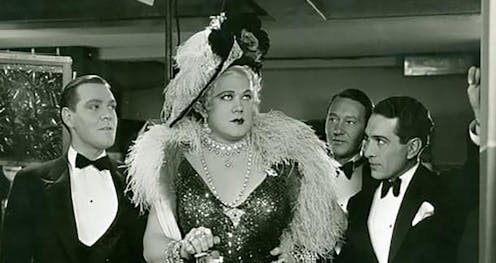
Recent protests against drag queen story hours are the latest in a series of actions targeting the increased prominence of displays of LGBTIQ+ culture in the public arena.
But drag artists have been strutting their stuff in speakeasies, cabarets and films for a long time now.
The long history of cross-dressing
There is a long global history of cross-gendered performance. In the West, this included “travesty” roles, “breeches parts”, pantomime dames and their cousins in blackface – “wench” – parts, variety halls and Shakespearean performances.
There’s also Japanese kabuki (onnagata), Beijing opera, Samoan fale aitu and fa’afafine performances and more. All share something with drag – cross-dressing and various forms of gender play and/or reversal – but none is quite the same as what we know today.
Legal restrictions on gendered clothing have existed in places like Europe, China and Japan through to modern times – though the focus was more on class than gender. The wearing of men’s pants by women was technically illegal in France until 2013. Centuries earlier, it contributed to the prosecution of Joan of Arc by church courts.
The emergence of drag
Something like contemporary drag appeared in the West from the late 18th century, blending early burlesque (disrespectful comedy, not necessarily bawdy) with nascent queer culture (clubs, speakeasies and other semi-underground meeting places where same-sex-attracted individuals socialised).
By the time the 20th century rolled around, drag artists, particularly in the US, offered beauty tips, attempted to engage in sponsorships or sold stylishly posed postcards and souvenirs, closely recalling advertisements aimed at female consumers. Since much early drag made fun of women in general, and women of colour in particular, the form has hardly been a consistent force for good.
Drawing on blackface minstrelsy, British panto and college revues, drag from the 1950s increasingly featured female impersonators offering hyperbolic, over-the-top and often disrespectful portraits of feminine characteristics.
So called “glamour drag” was designed, in the words of artist Jimmy James, “to take people totally away from the ugly realities … and transport them to the realm of the magical” through fabulous dresses, hair and sequins. This became the dominant form of drag in the West, particularly in Australia – although there was also a vibrant counter-culture.
Danny La Rue camped it up on the stages of Britain and the US, touring Australia in the late 1970s, while Charles Ludlam made the difficult transition from outrageous drag to main stage theatre and back, losing none of his style.
From the queer underground to the straight mainstream
Key to the crossover of drag from an underground principally LGBTIQ+ phenomena to the cis mainstream was the increasingly flamboyant manifestation of popular music – such as glam, hair metal, disco and new wave.
The exultant 1978 video for disco star Sylvester’s You Make Me Feel (Mighty Real), for example, introduced audiences to the concept of “realness” as she inhabited different costumed personas. Sylvester was a former member of the avant-drag troupe the Cockettes and her clip was shot at London’s gay disco The Embassy.
“Rock camp” performance found its perfect expression in The Rocky Horror Picture Show stage show in 1973, directed by Australian queer theatre legend Jim Sharman. Its comedic celebration of gender fluid performance and sexuality helped make drag and related forms mainstream.
Also crucial was Jennie Livingston’s 1990 film Paris is Burning, documenting the competitive balls (drag races) mounted by working class LGBTIQ+ African-Americans and Latinos in New York, some of whom (but not all) identified as trans. Performers at the balls competed to exhibit “realness” – not only in gender terms, but employment and social position: “executive realness”, “butch queer”, “banjee girl” and “military”.
Madonna famously recruited performers from Paris is Burning (Jose Gutierez and Luis Camacho from House Xtravaganza) to assist in the choreography for her video Vogue and then her Blond Ambition tour, skyrocketing the international renown of these practices.
Drag landmarks
Prior to The Rocky Horror Picture Show gracing the stages of London and Sydney, Kings Cross had seen the foundation of legendary drag revue Les Girls, running from 1963-93. This show was led by Carlotta, who took her girls on tour, and became the inspiration for Priscilla Queen of the Desert.
“Alternative cabaret” also thrived. Notables included Australia’s truly outrageous Reg Livermore, the bizarre fantasies of Lindsay Kemp or the incredible Moira Finucane. Finucane’s brilliant early “gender fuck” performance as Romeo involved an arrogant, moustachioed and convincingly male performer who undressed to reveal Finucane, who then pleasured herself with a feather boa.
Australians might also remember the wonderful Pauline Pantsdown’s drag satire I Don’t Like It in 1998.
Topping it off was the huge success of RuPaul’s Drag Race reality TV show in 2009. Producers were onto a winner: fabulous clothes, the highs and lows of competition and a scintillating array of would-be stars, presided over RuPaul, looking never less than fabulous.
Lessons from the history of drag
The glamorous, hyper-feminine artist remains the most popular model of drag. Perhaps unsurprisingly it was these paragons of camp femininity who were chosen to read to children in libraries, first in San Francisco in 2015 and then internationally. These glitter, glam and rainbow unicorns seemingly conquered the globe.
But more outré drag queens, drag kings and “genderfuck” performers never ceased toiling away in the underground. Drag is changing.
If we are to look to history for lessons, I’d like to see story time presented by the successors to Divine (one of John Waters’ collaborators, whose 1984 appearance on Countdown marks one of the strangest moments in Australian television) or transgender superstar Candy Darling. Now that would be a story time education to remember.
Authors: Jonathan W. Marshall, Associate Professor & Postgraduate Research Coordinator, Western Australian Academy of Performing Arts, Edith Cowan University


















