

Our cemeteries face a housing crisis too. 4 changes can make burial sustainable
- Written by: Kate Falconer, Lecturer, T.C. Beirne School of Law, The University of Queensland
Australia’s housing crisis is no secret. What many people don’t realise is that there’s another, less visible housing crisis. Australia’s urban cemeteries are running out of space to house the dead.
In Sydney, for example, a 2020 report found all of the city’s existing public cemeteries would be full by 2032. This will leave the communities they serve without a place to bury their dead.
We know how to solve this crisis. A few key changes can make Australia’s cemeteries more sustainable and viable for generations to come.
But these changes require political will to act. That’s because the solutions involve changes to the state-based laws that govern cemeteries. We can start with Victoria’s Cemeteries and Crematoria Regulations 2015, which must be updated by 2025.
Read more: Housing the dead: what happens when a city runs out of space?
Make renewable grave tenure the default option
Most Australians assume graves last forever. This system of perpetual tenure is mandatory in Victoria and the ACT. It’s the (near-universal) default in New South Wales, Queensland and Tasmania.
But this system makes our burial space a “single use” resource. Overseas, perpetual tenure is the exception rather than the rule. Almost all European and East Asian countries have limited tenure for burial, or actively encourage cremation.
Where grave renewal occurs in Australia, it happens a long time after burial, typically between 25 and 99 years. By this time, the physical remains of the grave’s previous occupant have significantly degraded. Any remnants are preserved in an ossuary or dug deeper into the soil.
Cemeteries in South Australia and Western Australia already have renewable grave tenure. Families have an option to extend tenure, should they wish to do so.
By making renewable tenure the default option across Australia, cemeteries will greatly increase future capacity. If all of Sydney’s public cemeteries adopted a 35-year renewable tenure system, for example, it has been estimated the city’s burial needs over the next 99 years would require 38% less land.
One of Perth’s major cemeteries is redeveloping existing burial grounds in response to running out of space.Read more: Losing the plot: death is permanent, but your grave isn't
Create dedicated natural burial grounds
One simple, more environmentally friendly option is “natural burial”. Natural burial eschews embalming, caskets made from hardwood or metal, and monumental headstones. Instead, the body is buried in biodegradable materials, such as wicker or cardboard.
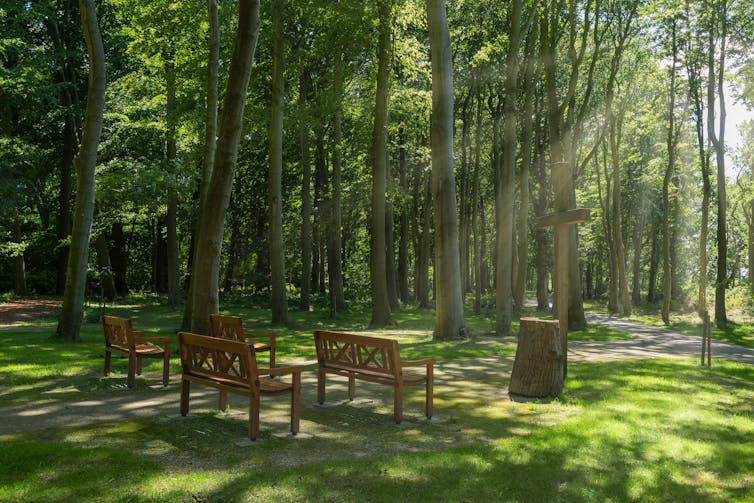
Green burial grounds are popular in the United Kingdom and Europe. They require less irrigation and maintenance. They also offer a way to conserve natural woodlands and so help foster biodiversity.
Some Australian cemeteries offer natural burial as an option next to traditional grave plots. There are, however, few dedicated natural burial grounds. Legislating natural burial grounds as distinct entities will allow specific regulations that give priority to regular grave renewal and positive environmental impact.
Natural burial grounds may also make “better neighbours” than traditional cemeteries if communities are going to be asked to live alongside new cemeteries. Overcoming resistance to new cemetery developments is essential to secure future burial capacity.
Read more: Buried beneath the trees: a plan to solve our shortage of cemetery space
Legalise alternative disposal methods
We are all familiar with burial and cremation. But what about dissolving bodies in an alkaline solution – known as “water cremation” or “alkaline hydrolysis” – or transforming them into compost (“natural organic reduction”)?
These options have robust environmental credentials. They require less space than burial, as they produce portable remains in the form of ashes or soil. Several US states now permit these options.
In most of Australia, these options exist in a legal grey area. In Victoria, authorisation must be sought from the Department of Health to dispose of a body other than by burial or cremation. Queensland has no comprehensive cemeteries legislation, and thus no guidance on the legality of these alternatives.
New South Wales legalised water cremation (but not natural organic reduction) in 2011. The state now has two such facilities.
Other states and territories should follow NSW in explicitly legalising viable alternative disposal methods. This will ease pressure on cemeteries and provide greater choice to families.
Read more: Ashes to ashes, dust to ... compost? An eco-friendly burial in just 4 weeks
Invest in cemeteries as multi-use green spaces
Current regulatory frameworks emphasise the cemetery as a space of sombre reflection and remembrance. Victoria, for example, prohibits a wide range of activities, including dancing, fishing and sport.
However, as green space becomes scarce in Australia’s major cities, public opinion and current practices are falling out of alignment with such regulations. In a recent national survey, two-thirds of respondents disagreed with the sentiment that cemeteries were solely spaces for memorialisation. They supported the use of cemeteries as public green space.
Read more: Visions of future cemeteries: 5 models and how Australians feel about them
Historic cemeteries, where new burials and visits are rare, offer even greater potential as multi-use public space. In cities overseas, jogging, walking the dog and picnics are common in these cemeteries.
Australia is yet to feel the full effects of the impending crisis of cemetery space. While big changes are needed to avert this crisis, at least the path forward is clear.
Authors: Kate Falconer, Lecturer, T.C. Beirne School of Law, The University of Queensland


















