

Climate-related disasters leave behind trauma and worse mental health. Housing uncertainty is a major reason why
- Written by: Ang Li, Research Fellow, NHMRC Centre of Research Excellence in Healthy Housing, Centre for Health Policy, Melbourne School of Population and Global Health, The University of Melbourne
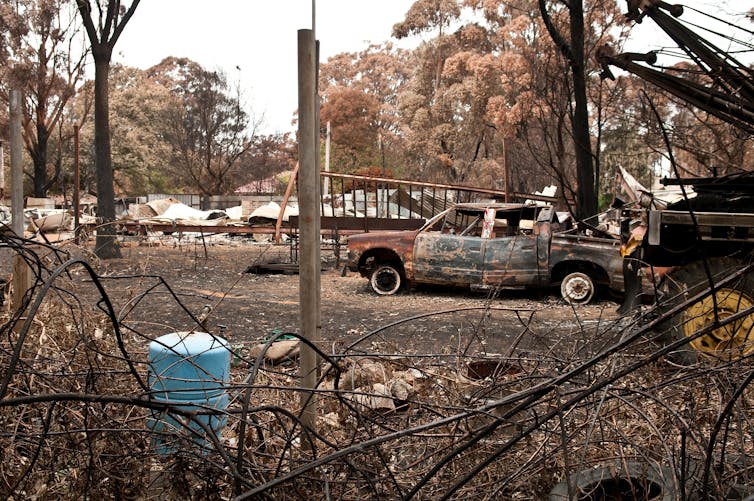
Australia, the world’s driest inhabited continent, is particularly vulnerable to climate-related disasters such as droughts, bushfires, storms and floods. In 2020, we were one of the top ten nations in the world for economic damage caused by disasters.
Recent catastrophic climate-linked disasters are etched into our communal psyche. The 2009 Black Saturday bushfires, where 173 people died and over 2,000 homes destroyed. The Black Summer bushfires in 2019–20, with 26 deaths and almost 2,500 homes destroyed. The triple La Nina from 2020–2022 caused flooding across the east coast, with last year’s claiming 23 lives and an estimated A$4.8 billion in property damage.
These climate-fueled disasters have immediate health impacts, from injury to distress and trauma. Less is known about the long-term effects on people who survived them.
Our new research in Lancet Planetary Health is the first to have explored this over a longer time frame. We found disasters have a long tail – particularly around housing. As you might expect, people hit by disasters have worse mental and physical health in the year afterwards. But this effect lasts longer, with affected people reporting worse mental health, worse emotional health and worse social functioning for two more years. Difficulty finding a place to stay is a large part of this.
As we plan for a future with intensifying natural disasters, governments must find ways to offer flexible housing support.
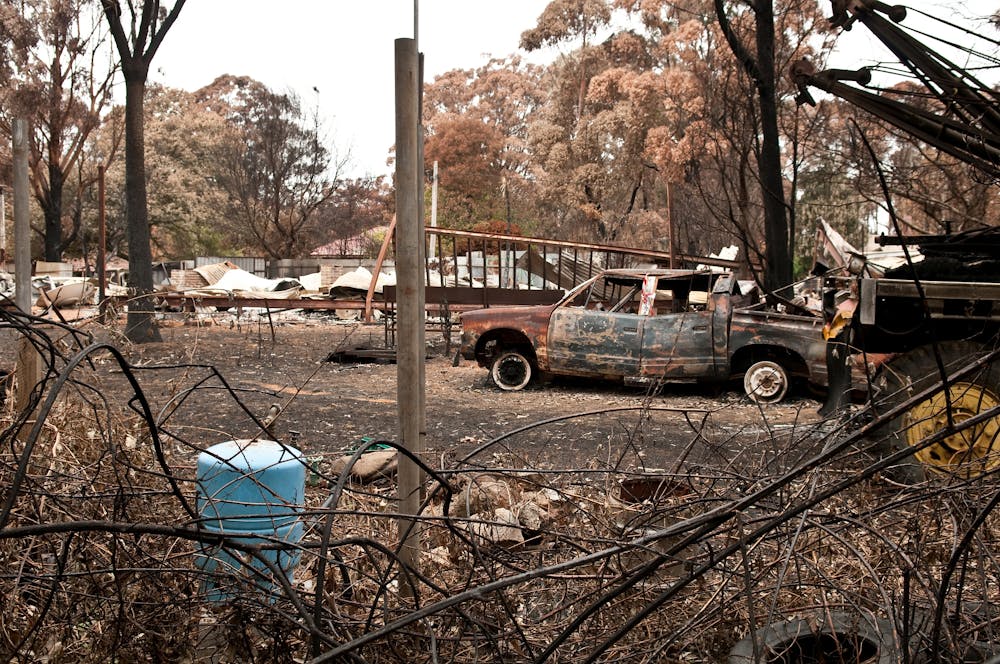
Housing matters a lot after disasters
Our research involved around 2,000 people – half affected by disasters and half unaffected. All had responded to the long-running HILDA survey. We compared data from the two groups over the decade to 2019. People were tracked up to eight years.
In this data were clear signs of the long tail of disaster. If your home had been damaged by climate-related disasters, you were more likely to have worse health and wellbeing compared to a person from a similar background who had not been affected by disaster. We could see this negative mental health effect two years after the disaster. The effect was meaningfully large compared to other environmental factors weighing on health such as residential noise.
The way you lived also made a difference. People already affected by housing affordability stress – where rent or mortgage takes more than 30% of income – had bigger health losses after the disaster. This was similar for those in poor quality housing. Another major risk factor was a preexisting mental or physical health issue.
We’ve long known unaffordable and insecure housing is strongly linked to worse mental and physical health. If you don’t know where you’re going to live in a month’s time, it causes intense stress.
There was another divide, too – renters and owners. After a climate-related disaster, owners with a mortgage were more likely to suffer housing affordability stress for the next two years. This longer tail is likely due to short-term relief measures running out.
By contrast, renters were more likely to face uncertain housing or forced relocation soon after the disaster. That’s likely due to Australia’s insecure tenure rights, which offer less protection against forced moves than comparable countries in Europe. Other factors include the ongoing shortage of rental properties, and the fact rentals tend to suffer more damage in disasters and have less access to recovery resources.
This divide suggests we’ll need different approaches for different populations. In particular, this means offering medium-term help as well as short-term help for those who are highly vulnerable or in precarious housing conditions, like those left homeless after the devastating Lismore flood.
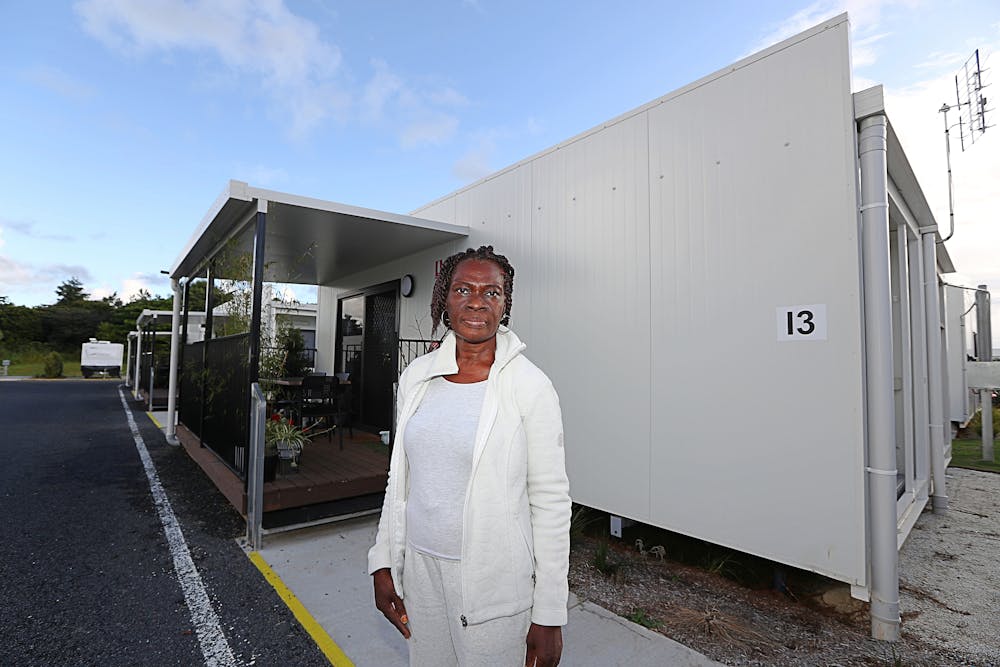 State governments are building temporary accomodation villages, like this one in Wollongbar, NSW, where Lismore woman Sarah King is pictured.
Jason O'Brien/AAP
State governments are building temporary accomodation villages, like this one in Wollongbar, NSW, where Lismore woman Sarah King is pictured.
Jason O'Brien/AAP
What must we do?
As authorities plan for a future with more intense disasters, they must not forget housing.
Many communities will become more vulnerable, from towns next to a river to cities surrounded by forest. Governments have a responsibility to develop disaster preparedness and resilience – particularly around housing.
What we’re seeing now with post-disaster housing vulnerability is an unintended consequence of leaving housing to the market system.
That means finding flexible forms of housing support so we can respond to disasters as they happen. This will reduce longer-term damage to health.
What does this look like? It might include:
certainty for tenants that their tenure is secure immediately after a disaster
support for homeowners to prepare for and recover from disasters
safe, secure and high quality accommodation over short and long term for people who have lost their homes
avoiding building in disaster prone areas and relocation of people living in high risk or uninsurable areas
increasing the stock of climate resilient housing. Valuable work in this area has been carried out by local councils.
One thing is certain – doing what we’ve always done isn’t enough now. It certainly won’t be enough in a hotter world.
Authors: Ang Li, Research Fellow, NHMRC Centre of Research Excellence in Healthy Housing, Centre for Health Policy, Melbourne School of Population and Global Health, The University of Melbourne

















