

Bad art friends – Jen Craig may be the best Australian writer you've never heard of
- Written by: Emmett Stinson, Lecturer in Literary Cultures, University of Tasmania

How do you review a novel when its author has already written a book-length work of criticism on it before it was published? The rise of the Creative Writing PhD in Australia has created this perhaps unexpected dilemma for critics, who will now find that many contemporary novels come predigested, with the exegetical section of the PhD offering more extensive analysis than any in-depth review ever could.
I could gloss Jen Craig’s brilliant third novel Wall – which was originally submitted as part of her PhD thesis at Western Sydney University in 2017 – but I will probably never be able to describe it as well as she already has: Wall “follows the thoughts and preoccupations of a visual artist, who has made a career out of exploiting” her “experience of anorexia” and is then “forced to confront what refuses to be contained by her representations”.
Review: Wall – Jen Craig (Puncher & Wattmann)
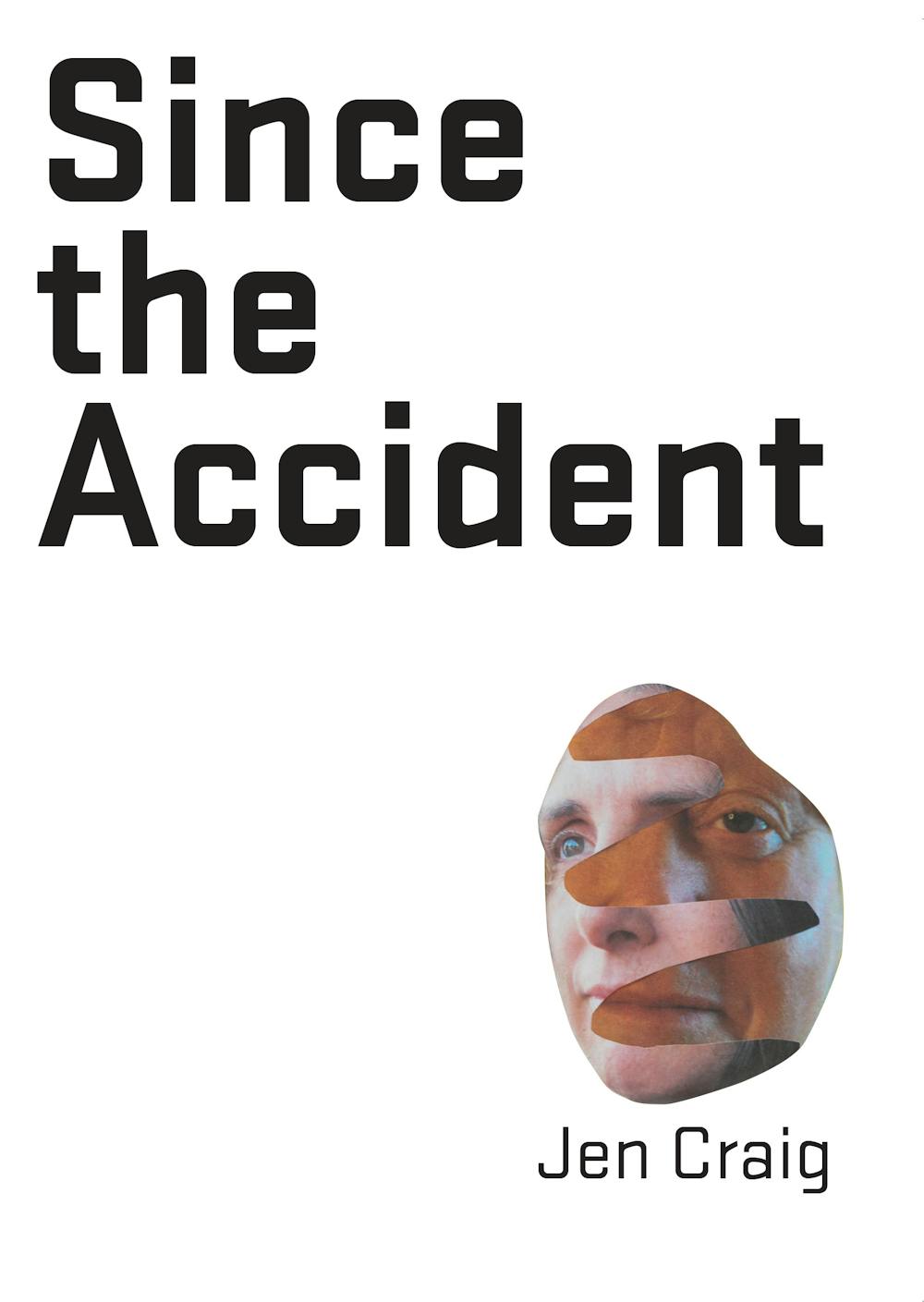
Wall is the third short novel Craig has published over the past 13 years. Her first, Since the Accident (2010), was originally published by the small press Ginninderra. Aside from a review in The Sydney Morning Herald in which Kerryn Goldsworthy described Craig as a “writer of great skill”, it largely passed unnoticed – although it arguably anticipates Rachel Cusk’s widely praised Outline trilogy, formally and stylistically.

 After the death of her mother many years before, the narrator’s father – a hoarder of strange objects and crackpot conspiracy theories – had lived alone in the increasingly chaotic and abject environment of the former family home in Chatswood – a suburb on the lower North Shore with a median house price (according to realestate.com.au) of $2.7 million. The narrator hears of his death a few days before an upcoming exhibition, in which she will display a few panels of her ambitious art project: a ten-metre-high “wall” that represents her experience of surviving anorexia. As a result, she misses her father’s funeral.
The exhibition is, if not an outright disaster, then deeply underwhelming: at the last second, her artwork is moved to the back of the gallery near the toilets. Although the unfinished anorexia wall is only one of her many ambitious art projects, walls are symbolically important throughout the novel, and often notably accompany disturbing memories of the narrator’s family; she describes her father’s outbursts of physical violence, for example, as “a startled sense of the walls in a room”.
However, in what is – at the level of plot – either the most convenient or contrived moment in the novel, the protagonist bumps into her old art teacher, Nathaniel Lord, who now owns an Australian gallery. She spontaneously pitches him the idea of doing an exhibition in the style of Song Dong’s Waste Not, in which she would catalogue her father’s hoarded possessions and display them as an installation. She thus returns to Sydney not simply to mourn her father or settle his estate, but to undertake yet another ambitious art project.
Like the narrator’s incomplete wall, however, we learn from the opening sentence that this project is also a failure, since she has “given up on the idea of turning the contents of my father’s house into a vast and meticulous installation”. Instead, she finds herself increasingly drawn into another series of fraught personal entanglements with her two closest friends from art school. All three were drawn together by their “shared history of anorexia” – a recurring theme in Craig’s work.
After the death of her mother many years before, the narrator’s father – a hoarder of strange objects and crackpot conspiracy theories – had lived alone in the increasingly chaotic and abject environment of the former family home in Chatswood – a suburb on the lower North Shore with a median house price (according to realestate.com.au) of $2.7 million. The narrator hears of his death a few days before an upcoming exhibition, in which she will display a few panels of her ambitious art project: a ten-metre-high “wall” that represents her experience of surviving anorexia. As a result, she misses her father’s funeral.
The exhibition is, if not an outright disaster, then deeply underwhelming: at the last second, her artwork is moved to the back of the gallery near the toilets. Although the unfinished anorexia wall is only one of her many ambitious art projects, walls are symbolically important throughout the novel, and often notably accompany disturbing memories of the narrator’s family; she describes her father’s outbursts of physical violence, for example, as “a startled sense of the walls in a room”.
However, in what is – at the level of plot – either the most convenient or contrived moment in the novel, the protagonist bumps into her old art teacher, Nathaniel Lord, who now owns an Australian gallery. She spontaneously pitches him the idea of doing an exhibition in the style of Song Dong’s Waste Not, in which she would catalogue her father’s hoarded possessions and display them as an installation. She thus returns to Sydney not simply to mourn her father or settle his estate, but to undertake yet another ambitious art project.
Like the narrator’s incomplete wall, however, we learn from the opening sentence that this project is also a failure, since she has “given up on the idea of turning the contents of my father’s house into a vast and meticulous installation”. Instead, she finds herself increasingly drawn into another series of fraught personal entanglements with her two closest friends from art school. All three were drawn together by their “shared history of anorexia” – a recurring theme in Craig’s work.
 Craig has noted in interviews the brutal irony of the fact she shares a name with perhaps the most famous international dieting brand, Jenny Craig, which has recently entered receivership. She even briefly changed her first name to Frances, to “evade being contaminated” by the “painful and embarrassing associations” with the dieting company.
If shared trauma is the basis of the narrator’s connection with her friends Eileen and Sonja (often referred to as “Son”, yet another pun), their relationship has been perilous since the time their art-school sharehouse was flooded and much of their work destroyed – only the narrator’s survived mostly unscathed.
In order to graduate, the narrator instead conceives of a “happening” that is meant to criticise the “sullying patriarchal gaze of the viewer”. While the exact nature of the happening is never made explicit, Sonja – who becomes the narrator’s absent antagonist – describes it as being about “the ‘titillating
value’ of our skin, our ‘folds’.” She suggests that Nathaniel Lord’s interest in their happening is prurient, rather than aesthetic or educative.
Sonja, like the narrator, continues to dwell in the past: she is convinced (perhaps rightly, though the narrator seems more sceptical) that Lord has been systematically undermining her art career. She ultimately protests a public lecture by Lord, staging a “splattered body intervention”, which seems to be a decades-delayed response to the undergraduate happening.
Craig has noted in interviews the brutal irony of the fact she shares a name with perhaps the most famous international dieting brand, Jenny Craig, which has recently entered receivership. She even briefly changed her first name to Frances, to “evade being contaminated” by the “painful and embarrassing associations” with the dieting company.
If shared trauma is the basis of the narrator’s connection with her friends Eileen and Sonja (often referred to as “Son”, yet another pun), their relationship has been perilous since the time their art-school sharehouse was flooded and much of their work destroyed – only the narrator’s survived mostly unscathed.
In order to graduate, the narrator instead conceives of a “happening” that is meant to criticise the “sullying patriarchal gaze of the viewer”. While the exact nature of the happening is never made explicit, Sonja – who becomes the narrator’s absent antagonist – describes it as being about “the ‘titillating
value’ of our skin, our ‘folds’.” She suggests that Nathaniel Lord’s interest in their happening is prurient, rather than aesthetic or educative.
Sonja, like the narrator, continues to dwell in the past: she is convinced (perhaps rightly, though the narrator seems more sceptical) that Lord has been systematically undermining her art career. She ultimately protests a public lecture by Lord, staging a “splattered body intervention”, which seems to be a decades-delayed response to the undergraduate happening.
 Waste Not – Song Dong. Installation at Carriageworks, Sydney, 2013. Exhibition presented with 4A Centre for Contemporary Asian Art in association with Sydney Festival.
Zan Wimberley/Wikimedia Commons, CC BY-NC
Read more:
Enraged, tragic and hopeful: Alexis Wright's new novel Praiseworthy explores Aboriginal sovereignty in the shadow of the anthropocene
Trans-generational effects
Craig’s exegetical writing on her own work is about anorexia, trauma, and trauma’s durational and trans-generational effects. For these characters, past trauma lives in the present and can only be repeated and responded to. It remains ever-present, inescapable.
This becomes clear when Eileen (yet another punning name) disappears and the narrator visits her family to track her down. This leads to more unexpected revelations about both Eileen’s and the narrator’s families. It also invokes material that recalls, but does not quite replicate, the key scenario of Since the Accident.
The result is an extraordinarily complex dialogical narrative, in which virtually nothing is completely certain, in part because the narrator is driven by a series of compulsions and her attempts to understand or overcome these compulsions often end up ironically reinforcing them.
Craig’s exegesis is similarly breathtaking in revealing the complexity of thought behind her creative work: it is an essential document for anyone who wants to understand this novel better. It also emphasises that Craig is incredibly, incredibly smart. She is an ambitious writer in the best sense: she wants to convey and represent deeply conflicted and even contradictory states of being in the world – not an easy task, and one that even many very good novelists would never attempt.
Unlike many novels that shy away from their status as contemporary works, one never doubts that Wall is set in a world shaped by the internet. One thing the novel does extremely well is depict the way that long-absent friends can continue to cast a shadow over the lives of those who knew them, through Facebook comments, text messages and snippets of conversations, reported second-hand, that enter the narrative in oblique ways.
Waste Not – Song Dong. Installation at Carriageworks, Sydney, 2013. Exhibition presented with 4A Centre for Contemporary Asian Art in association with Sydney Festival.
Zan Wimberley/Wikimedia Commons, CC BY-NC
Read more:
Enraged, tragic and hopeful: Alexis Wright's new novel Praiseworthy explores Aboriginal sovereignty in the shadow of the anthropocene
Trans-generational effects
Craig’s exegetical writing on her own work is about anorexia, trauma, and trauma’s durational and trans-generational effects. For these characters, past trauma lives in the present and can only be repeated and responded to. It remains ever-present, inescapable.
This becomes clear when Eileen (yet another punning name) disappears and the narrator visits her family to track her down. This leads to more unexpected revelations about both Eileen’s and the narrator’s families. It also invokes material that recalls, but does not quite replicate, the key scenario of Since the Accident.
The result is an extraordinarily complex dialogical narrative, in which virtually nothing is completely certain, in part because the narrator is driven by a series of compulsions and her attempts to understand or overcome these compulsions often end up ironically reinforcing them.
Craig’s exegesis is similarly breathtaking in revealing the complexity of thought behind her creative work: it is an essential document for anyone who wants to understand this novel better. It also emphasises that Craig is incredibly, incredibly smart. She is an ambitious writer in the best sense: she wants to convey and represent deeply conflicted and even contradictory states of being in the world – not an easy task, and one that even many very good novelists would never attempt.
Unlike many novels that shy away from their status as contemporary works, one never doubts that Wall is set in a world shaped by the internet. One thing the novel does extremely well is depict the way that long-absent friends can continue to cast a shadow over the lives of those who knew them, through Facebook comments, text messages and snippets of conversations, reported second-hand, that enter the narrative in oblique ways.
 Jen Craig.
Goodreads
Craig interpolates these quotations into the main narrative almost in the way an academic would quote their sources in an argument; her exegesis makes this connection clearer through its own use of quotations. The narrator admits her “channelling of Sonja” is an implicit means of self-critique – one she has employed over the years, but which has slowly been incorporated back into her own defensive filters.
Craig’s earlier novels have often seemed to be examples of the genre known as autofiction, which Christian Lorentzen has usefully described as differing from autobiographical fiction because “there tends to be emphasis on the narrator’s or protagonist’s or authorial alter ego’s status as a writer or artist and that the book’s creation is inscribed in the book itself”. This certainly seemed to be the case in Panthers and the Museum of Fire, where the protagonist was also named Jen Craig, although her life differed in major ways from that of her author.
Wall might also seem to be autofiction, but the closest thing to a self-portrait in it is not the narrator, but the absent Eileen. Just as the narrator is constantly hiding herself from herself, so too is the author hidden at the edges of the narrative.
Wall is a magnificent novel precisely because it refuses to make explicit its complex content, which both resonates with and deeply criticises contemporary fictions about the self. In Wall, self-discovery and seeming catharsis become ways of extending, rather than resisting, our most cherished illusions.
Authors: Emmett Stinson, Lecturer in Literary Cultures, University of Tasmania
Jen Craig.
Goodreads
Craig interpolates these quotations into the main narrative almost in the way an academic would quote their sources in an argument; her exegesis makes this connection clearer through its own use of quotations. The narrator admits her “channelling of Sonja” is an implicit means of self-critique – one she has employed over the years, but which has slowly been incorporated back into her own defensive filters.
Craig’s earlier novels have often seemed to be examples of the genre known as autofiction, which Christian Lorentzen has usefully described as differing from autobiographical fiction because “there tends to be emphasis on the narrator’s or protagonist’s or authorial alter ego’s status as a writer or artist and that the book’s creation is inscribed in the book itself”. This certainly seemed to be the case in Panthers and the Museum of Fire, where the protagonist was also named Jen Craig, although her life differed in major ways from that of her author.
Wall might also seem to be autofiction, but the closest thing to a self-portrait in it is not the narrator, but the absent Eileen. Just as the narrator is constantly hiding herself from herself, so too is the author hidden at the edges of the narrative.
Wall is a magnificent novel precisely because it refuses to make explicit its complex content, which both resonates with and deeply criticises contemporary fictions about the self. In Wall, self-discovery and seeming catharsis become ways of extending, rather than resisting, our most cherished illusions.
Authors: Emmett Stinson, Lecturer in Literary Cultures, University of Tasmania 

















