

Transcranial magnetic stimulation can treat depression. Developing research suggests it could also help autism, ADHD and OCD
- Written by: Paul B. Fitzgerald, Professor of Psychiatry, Australian National University
Since the start of the COVID pandemic, there has been more attention given to problems of mental ill-health including depression than ever before. A new therapeutic option, especially for depression, transcranial magnetic stimulation, is slowly helping to address some of these considerable unmet needs in our community.
Research is also exploring the use of transcranial magnetic stimulation in many other conditions, including obsessive compulsive disorder, autism, attention deficit hyperactivity disorder, chronic pain and perhaps to slow the progression of dementia symptoms.
What do we know so far about this emerging form of treatment? And is it living up to its promise for people with depression?
How does it work and who’s getting it now?
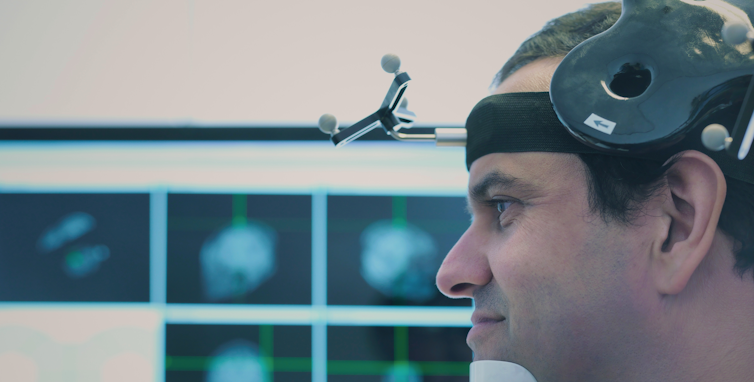
Transcranial magnetic stimulation involves the application of a series of magnetic pulses through a coil placed on the scalp. While the patient sits in a chair awake and relaxed, the magnetic field activates nerve cells in the brain, gradually changing the activity of brain circuits disrupted in depression. This is thought to help restore the normal interaction between brain regions.
Side effects are usually mild and temporary. They may include scalp discomfort, headache, tingling or facial twitching, and feeling lightheaded for a short time after a treatment session.
There is consistent evidence for the effectiveness of transcranial magnetic stimulation treatment for acute episodes of depression. Its use is supported by many clinical trials as well as real-world studies showing benefits in more than 50% of patients receiving treatment. It attracted Medicare funding several years ago and is now being progressively rolled out around Australia.
But there are several remaining problems with the use of transcranial magnetic stimulation treatment. First, it involves a patient coming into the clinic daily, Monday to Friday, for four to six weeks. This is inefficient and costly.
Both these problems may ultimately be solved through the development of what are referred to as “accelerated” protocols – treatments that give higher doses on fewer days. A patient may have four or five days of high-dose treatment in one week rather than having all of the treatment dose spread out over a month or more.
Studies both locally and overseas have started to show more efficient delivery and very rapid clinical benefits with these new treatment regimes.
What about for other conditions?
Alongside the clinical rollout of transcranial magnetic stimulation for depression, research is increasingly demonstrating its potential value in other conditions.
A series of studies have demonstrated that a somewhat different type of transcranial magnetic stimulation, which is able to stimulate deeper regions of the brain but which still comes from a scalp based coil, can be effective in the treatment of symptoms in some patients with obsessive compulsive disorder (OCD). This is a critical development as many patients with OCD fail to improve with medication and psychological treatments and there are few new therapies in development for the condition.
Transcranial magnetic stimulation for OCD has been approved for clinical use in the United States and is available in a limited number of clinical services in Australia.
The treatment is showing promise for addiction disorders, including the development of an approach using transcranial magnetic stimulation to help patients stop smoking. The initial trial of this approach showed at least a doubling of the percentage of patients who did not smoke over the first six weeks.
Transcranial magnetic stimulation may also help people manage chronic pain. Multiple approaches that use the technology show promise and guidelines are emerging, but a consistent clinical pathway has not yet been well defined.
A group of researchers across the country, led by Professor Peter Enticott in Melbourne, are conducting world-leading research trying to develop ways of using transcranial magnetic stimulation to help adolescent and adult patients with autism, especially to improve capacity for social understanding and interaction.
As clinical need escalates, early research is also exploring whether transcranial magnetic stimulation might alleviate symptoms of attention deficit hyperactivity disorder (ADHD).
Research has already demonstrated transcranial magnetic stimulation may improve, at least temporarily, thinking abilities in a range of disorders including Alzheimer’s disease. This is now being applied to see if it can improve attention for patients with ADHD. For now, this research remains in its infancy.
Do the effects last?
So far, the quality of the evidence on the persistence of effects and the need for maintenance treatment with the use of transcranial magnetic stimulation in depression is patchy. Research is looking at whether ongoing transcranial magnetic stimulation less often (for example one treatment every two weeks) may prevent the recurrence of depression in patients who have responded well. Preliminary studies suggest maintenance treatment is effective, but there there have been insufficient high-quality studies to convince Medicare to provide a subsidy for it.
Medicare funding also does not fund the provision of transcranial magnetic stimulation for patients who experience the return of their depression on more than one occasion.
This is highly unusual. Patients with depression can have multiple courses of antidepressant medication, psychotherapy or electroconvulsive therapy based on similar levels of evidence. This is also true of most other medical therapies.
In clinical practice, and from the limited evidence available, it seems clear that if a patient has responded on one occasion to transcranial magnetic stimulation, they are likely to again. Until this is resolved, patients are in an unenviable situation. They know there is an effective treatment that has worked for them already, but they can only access it at considerable expense or via lengthy private hospital admission.
Authors: Paul B. Fitzgerald, Professor of Psychiatry, Australian National University


















