

The smarter the magpie, the better they can handle our noisy cities
- Written by Grace Blackburn, PhD Candidate, The University of Western Australia

Cities are hard for wildlife. Many animal species avoid the cars, buildings, smog and fragmented habitats of urban environments. Then there’s the noise pollution, a serious issue for humans and animals alike, according to the World Health Organization.
Human-made (anthropogenic) noise can be very bad for animals. Busy cities can make it harder for animals to reproduce, communicate and behave naturally.
But magpies have generally found our cities to their liking. There is enough food about – and they can usually out-compete other urban bird species.
Even within magpie populations, there are differences in how individuals cope with noise. Our new research has found the magpies that perform better on an associative learning task are better able to maintain their normal anti-predator behaviours in noise. That is, the smarter the magpie, the better they are likely to do in our cities.

What does noise do to a magpie?
While magpies are often thought of as similar to crows, they’re not corvids at all and not related to Eurasian magpies. Their closest relatives are actually butcherbirds.
To date, most research on the damage done by human-made noise has examined what it means for a species or population. There’s been little work done on how individuals respond differently to noise. What we do know suggests factors such as the sex, age, body condition and prior experience with noise can change how animals cope with noise.
But what about cognition? Animals from the same species can have very different cognitive abilities – the ways an animal perceive, store and respond to information from their environment.
So would smarter animals be more able to change their behaviour to survive better in the urban jungle?
To find out, we observed all behaviours shown in timed 20-minute periods by 75 wild magpies in Perth (to a total of 333 observation periods). We also played magpie alarm calls with and without the noise of planes in the background to 24 magpies to see how plane noise affected their anti-predator response.
These wild magpies live in Perth, Western Australia and have been studied consistently since 2013. Most birds have coloured rings or bands on their legs so we can easily identify them.
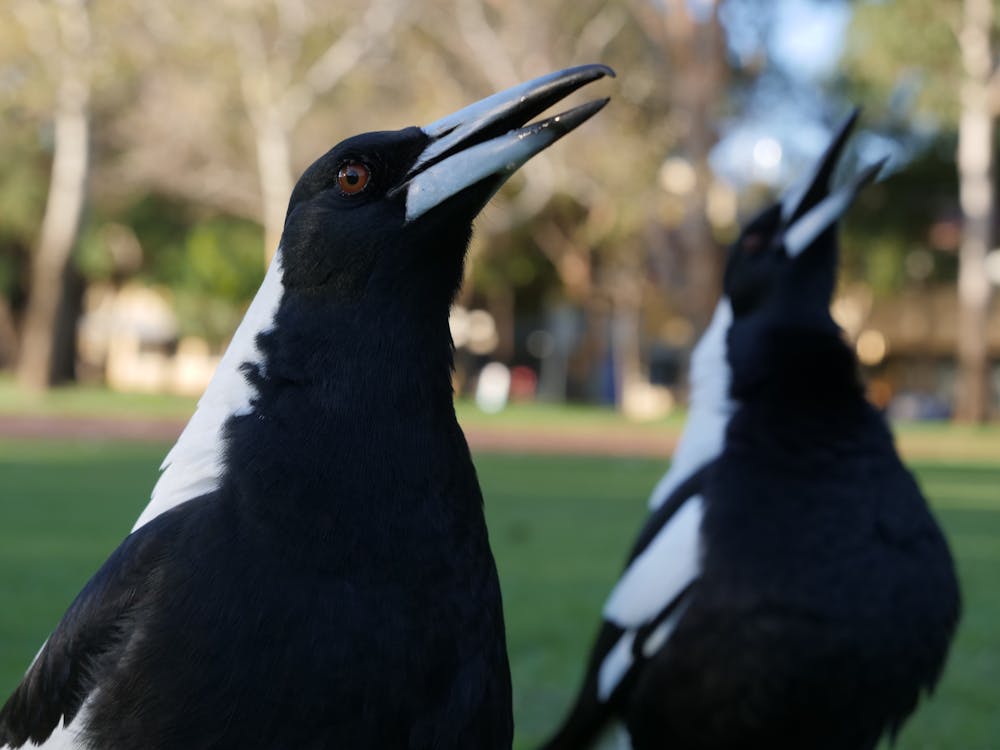 Urban parks offer good foraging for magpies – if they can put up with our noise.
James Blackburn, CC BY-ND
Urban parks offer good foraging for magpies – if they can put up with our noise.
James Blackburn, CC BY-ND
Individual identification meant we could test the intelligence of 52 of these magpies to see whether performing better on associative-learning tests would change how birds respond to and cope with anthropogenic noise.
The first thing we found was, yes, magpies find our noise difficult to handle. Our observations revealed loud man-made noises such as traffic, airplanes, or leafblowers forced magpies to spend more time vigilant and alert to threats, to sing less, and to forage less efficiently.
Read more: How hyper-manicured public spaces hurt urban wildlife
That’s likely because these magpies saw anthropogenic noise as dangerous or threatening stimuli, or as a distraction. That forces them to spend more time alert, with less time for other important behaviours.
But there are other potential causes too. Noise from a bustling restaurant strip may drown out small sounds magpies use as cues, such as the rustle of beetles burrowing under leaf litter.
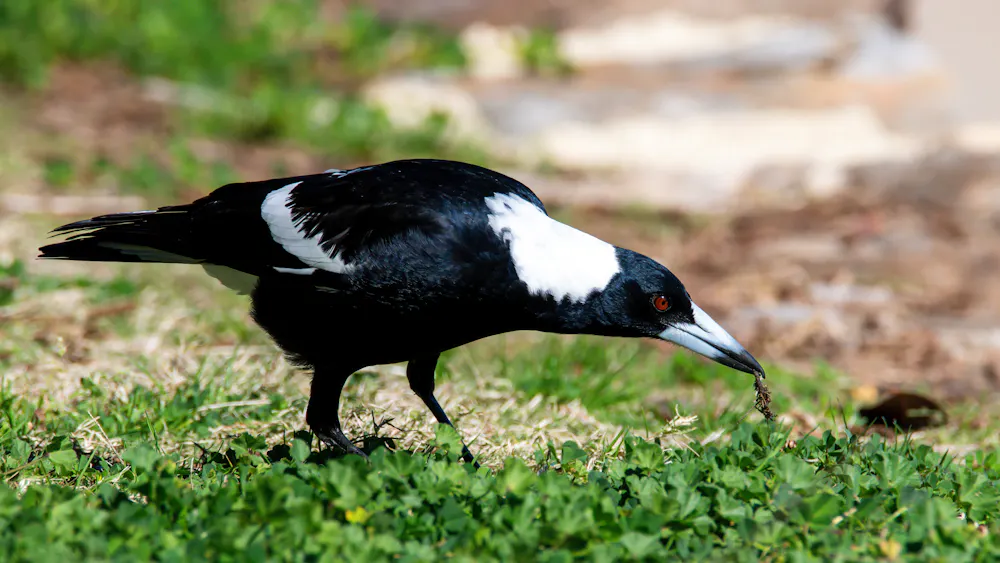 Magpies have broadly adapted well to life in Australia’s cities.
Shutterstock
Magpies have broadly adapted well to life in Australia’s cities.
Shutterstock
We also found human-made noise made it harder for our birds to respond to a magpie alarm call, used to warn others of predators. When we played an alarm call in isolation, about 37% of birds sought cover. When we added the noise of a plane flying overhead to the alarm, only 8% of birds fled. This suggests birds couldn’t properly hear and respond to this cue of danger.
Our magpies also spent much more time on alert after an alarm call played alone compared to an alarm call played with human-made noise. This suggests their normal anti-predator response doesn’t work as well against a backdrop of our noise.
Why would intelligence help magpies deal with noise?
Researchers in the United Kingdom working on animal cognition suggest better cognition on a species level may help animals cope with new environments or environmental stress. Other researchers argue cognition is what makes it possible to adapt to and succeed in urban environments.
To test this, we gave magpies a learning task to measure their intelligence and cognition. Could they associate a colour cue with a food reward? How long did it take them to learn that, say, dark blue meant a snack?
This test is a measurement of how quickly they learn. It’s thought to be involved in how successful an animal is in foraging, social interactions and responding to predators.
We found smarter birds reacted more similarly to a standalone alarm call as they did to one with a noisy plane in the background. By contrast, less intelligent birds responded significantly less to alarm calls with plane noise compared to an alarm call alone.
For a magpie, that could be the difference between life or death. If you’re clever enough to shut out the background noise of the plane so you can better hear a warning, you stand a better chance of surviving, say, a dog rushing you at a park.
Birds with better associative learning may also be better in other aspects of intelligence too. In fact, previous research on this species found birds that performed better in one cognitive task also performed better in other cognitive tasks.
As researchers learn more about animal intelligence, we’ll find out more about how associative learning helps animals adapt – and why these abilities are so strongly conserved in evolution.
Our study reveals intelligence matters for individual animals as they grapple with how to adapt to and cope with human-induced stressors.
Read more: Toxic cities: Urban wildlife affected by exposure to pollutants
Authors: Grace Blackburn, PhD Candidate, The University of Western Australia

















