

How could Australia actually get to net zero? Here's how
- Written by: Anna Skarbek, CEO, Climateworks Centre
Every bit of warming matters if we want to avoid the worst impacts for climate change, as the latest report from the Intergovernmental Panel on Climate Change shows.
In 2020, we released modelling showing how Australia could get to net zero faster – and keep the Paris Agreement goal of holding warming to 1.5°C in play. Our new update shows this is still the case.
This week, we released our latest modelling based on cutting emissions in line with the 2015 Paris Agreement, which set an upper limit on warming of well below 2°C, with a commitment to strive for the lower harm limit of 1.5°C.
At present, the government’s 2030 goal is a 43% reduction from 2005 levels, with plans to set a further target for 2035 soon. Our new modelling of 1.5°C and well-below-2°C (1.8°C) pathways shows we must increase the pace of emissions cuts to between 48–66% for 2030 and 61%–85% for 2035.
This means Australia would reach net zero emissions by 2039, around a decade sooner than the current target of net zero by 2050. Our research shows this is possible.
So how do you actually do this?
In July, the government announced the development of net zero plans for six sectors: electricity and energy, industry, built environment, agriculture and land, transport and resources. Treasurer Jim Chalmers recently said the government is preparing an ambitious policy agenda with big spending on green industries to help cut emissions, and to grow the economy as reliance on gas and coal falls.
These plans are now under development. Our modelling of these sectors shows which ones must cut emissions fastest – and how to do it for the least cost.
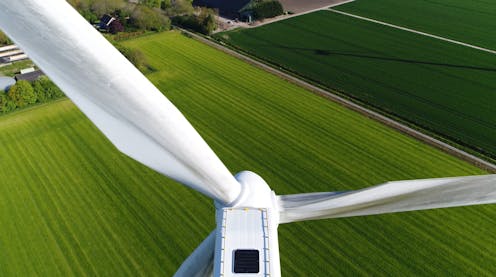
Electricity: In these 1.5°C and well-below-2°C least-cost scenarios, the electricity sector reaches near zero between 2034 and 2038. Renewable energy is already the least-cost way to generate power. In turn, clean electricity can help decarbonise the rest of the economy.
Industry and resources: In our scenarios, industrial emissions fall by 42% (well-below-2°C) or 54% (1.5°C) by 2035. By 2050, they fall by 54% and 67% respectively. Earlier and faster electrification and uptake of hydrogen technologies through the 2020s and 2030s drives more emissions reductions in the 1.5°C scenario.
Buildings: Rapid emissions reductions in the building sector come from electrification and improvements in energy performance in both scenarios. Housing energy efficiency improves by 41% by 2050 compared to today’s levels.
Agriculture and land: Cutting emissions in line with the 1.5°C goal will require much more removal of carbon dioxide from the atmosphere, mainly through sequestration in trees or soil. This can happen without damaging agricultural production.
How much CO₂ we need to pull from the air depends on our ambition. For the well-under-2°C scenario, we need to remove 1.4 billion tonnes (1.4 Gt). For 1.5°C, it’s 4.6 Gt. Farming emissions such as methane from livestock and nitrous oxide from fertilisers will take longer to cut, as emissions per, say, kilogram of beef falls while production increases overall. Adding algae to livestock feed and rolling out slow and controlled-release fertilisers may help lower emissions here.
Transport: Without strong action on transport, emissions will keep growing. Both scenarios show minimal change in total transport sector emissions until 2030. That’s because steady increases in vehicle use as our population and economy grows will prevent overall reductions – even as people go electric.
Under both scenarios, the transport sector changes markedly. Electric vehicles (EVs) become dominant, making up 73% of new car sales under the 1.5°C scenario or 56% in the well-below-2°C scenario. Our modelling doesn’t account for the additional potential benefits of shifting trips from cars to public transport, or from road to rail freight.
Read more: Australia finally has a Net Zero Authority – here's what should top its agenda
For most sectors, net zero relies on clean electricity
Our modelling suggests it’s most cost effective for Australia to rapidly switch fossil fuel electricity to renewable sources and push beyond the current 82% clean energy target by 2030. We should instead aim for between 83 and 90%, and almost 100% by 2050.
Coal-powered electricity generation disappears before 2035 in our 1.5°C scenario, and by late 2030s in our well-below-2°C scenario. Gas-powered electricity falls sharply around the same time period.
By 2050, gas-fired power stations would contribute less than 1% of total generation, only firing up briefly to firm electricity supply to the grid.
Under both the 1.5°C and well-below-2°C scenarios, Australia’s electricity generation increases markedly. Renewable-powered electricity generation in 2030 would be greater than the total amount of electricity generated in 2020. By 2050, it is more than three times as great.
The rise of hydrogen for hard-to-tackle sectors
Support for green hydrogen has soared in recent years, both internationally and locally through government programs such as Hydrogen Headstart.
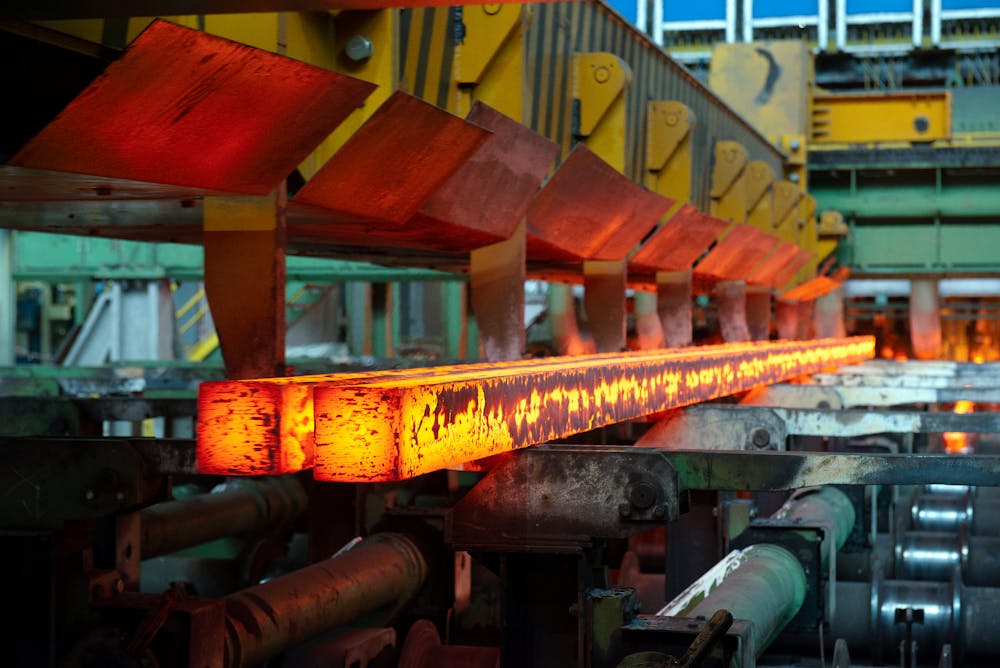
Why the change? Because of its potential uses in hard-to-green sectors. Industrial processes such as steelmaking rely on high temperatures. Traditionally coal has been used, but hydrogen is emerging as an alternative. It may have a role in transport, through fuel-cell vehicles, and to replace gas in those industries that rely on high-temperature heat.
Neither of our modelled scenarios show a role for hydrogen in buildings, passenger transport or short-haul freight. That’s because electrifying homes and using battery-electric vehicles is cheaper and more market-ready.
But our modelling shows hydrogen can play a role in industry, long-haul freight and maritime shipping – if it becomes commercially viable for these sectors.
In our scenarios, domestic hydrogen demand grows to between 383 and 465 petajoules by 2050 – around 12–16% of Australia’s energy demand.
Time is more precious than ever
Our latest analysis shows a 1.5°C least-cost pathway would see Australia reach net zero more than a decade earlier than the current goal of 2050.
If Australia and the rest of the world can cut emissions in line with the Paris Agreement goals, a safer and more prosperous future awaits.
But it’s only possible if Australia acts quickly, builds on the momentum towards net zero and seizes the enormous opportunities offered in fast decarbonisation.
Read more: The road is long and time is short, but Australia's pace towards net zero is quickening
Authors: Anna Skarbek, CEO, Climateworks Centre
Read more https://theconversation.com/how-could-australia-actually-get-to-net-zero-heres-how-217778


















