

Is it time to move beyond the limits of 'built environment' thinking?
- Written by: Christian Tietz, Senior Lecturer in Industrial Design, UNSW
The constructed world around us provides the stage for our daily life. The term “built environment” is in the past tense, describing a scenario after the fact. What does it actually mean beyond the obvious connotation of buildings and parks?
 A house in Füssen, Schrannengasse 11, Bavaria, Germany, first recorded mention in 1398, last renovated in 1996, still lived in today.
Christian Tietz, Author provided
A house in Füssen, Schrannengasse 11, Bavaria, Germany, first recorded mention in 1398, last renovated in 1996, still lived in today.
Christian Tietz, Author provided
If we look closely at these two words they tell a hidden story. We have built, which is made, created and manufactured, and environment, which can be either human-made or natural. The term links the made world with our natural world. It describes the world we made so far. But the two are separated.
The interesting thing is that the made world, the one we created, is mentioned first. The setting it creates or into which the buildings are placed comes second. There is a hierarchy here that relegates the environment to second place.
Read more: Sustainable cities? Australia's building and planning rules stand in the way of getting there
Yet when we pay respect at a formal occasion to the traditional peoples of Australia it is generally referred to as Acknowledgement of Country. Here we acknowledge the environment (country) first and then the custodians of it.
Today we are at pains to integrate environmental concerns into our building efforts. We are discussing how to meet climate targets, reduce heat island effects and limit the impacts of the built environs, which have harmed our planet. The term built environment seem to come from a time when we felt the need to dominate nature; now we are desperately trying to work with it.
Viewed from a different perspective, the built environment is a constructed historical record of how societies developed and applied their technical skills to express the culture of their time. It is all the infrastructure, power grids, water pipelines, dams, refineries, cargo terminals and industrial manufacturing sites that enable our urban existence.
The term also speaks about the expertise of the various trades and the craftsmen involved. But not so much about the professions that negotiate the abstract world of policies, council guidelines, building codes and the laws – not only of physics but also of the legal framework of contracts and workers’ rights. Together it creates visible structures that allow for comfortable living, business activities and transport networks.
 Piraeus Port, Greece.
Milan Gonda/Shutterstock
Piraeus Port, Greece.
Milan Gonda/Shutterstock
The term built environment in an academic setting describes a suite of disciplines engaged in studying and therefore aiming to improve it. The late architect Col James “made housing a verb”. He did so not only to reflect the human agency involved in the processes but to provide a more equitable and just living environment for people who don’t have the means to get their own architect to design a dream home for a cool US$2 billion.
The built environment looks like the material world conceived by planners, designed by architects and constructed by builders and labourers. Yet, if we look closer, we can see that these structures are only one part of the equation. These build things (buildings) on their own can not simply be populated by people. People would have nothing to do in these buildings were it not be for the fixtures, fittings, furnishings and products within them.
These elements enable and activate these environments and make them usable and productive for their intended purposes. If the products within them fail they can make buildings harmful.
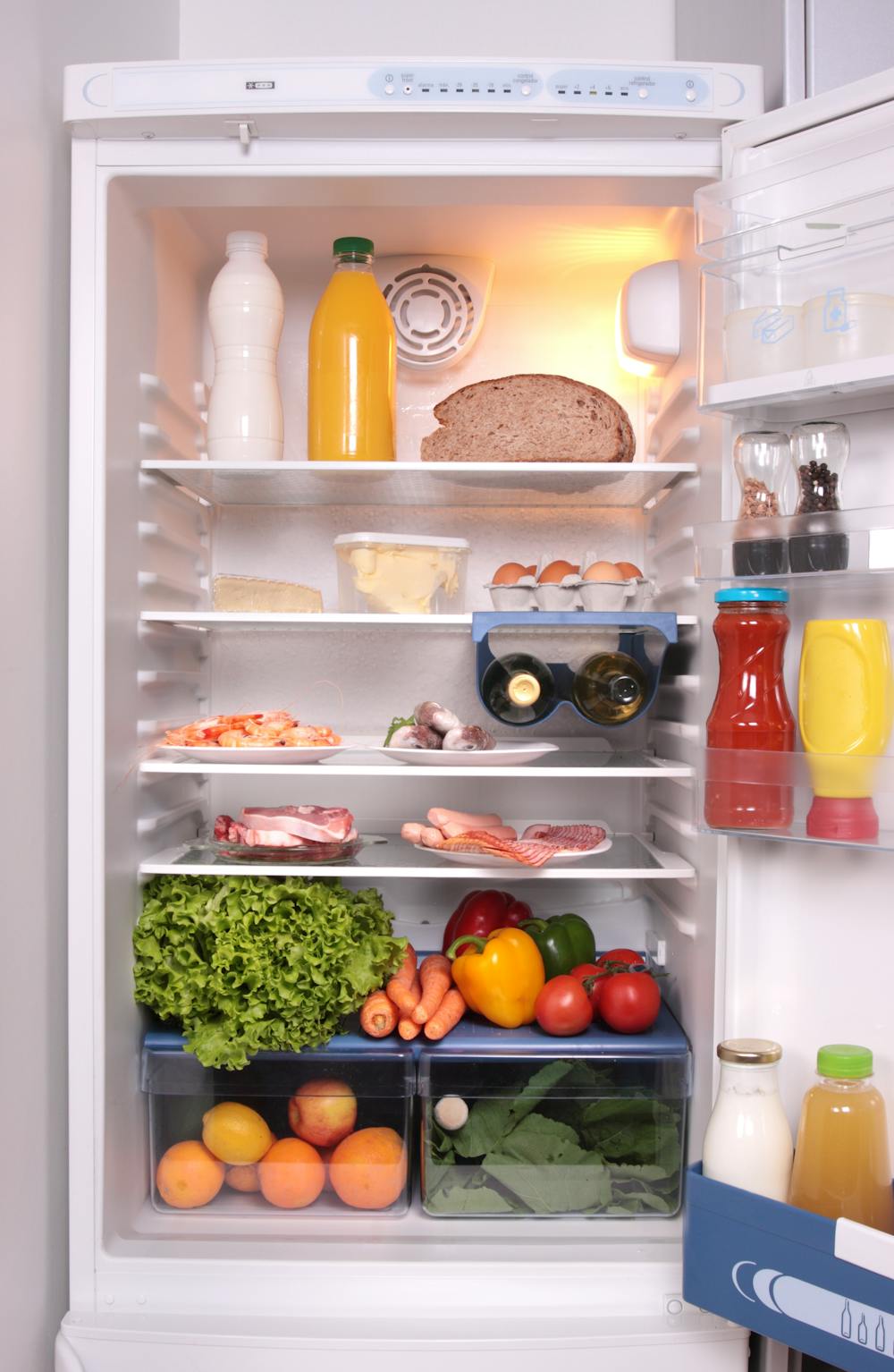 Who’d want to live in a home without a fridge?
Filipe B Varela/Shutterstock
Who’d want to live in a home without a fridge?
Filipe B Varela/Shutterstock
These products are not so much built in the traditional sense, but are mass-produced high-volume items. From window frames to light switches, phones and furniture, these are products conceived, designed and specified by professionals like industrial designers. They form an integral part of the built environment.
Even buildings themselves are not built in the traditional sense anymore, but are more and more the result of complex manufacturing processes. Project managers and builders are orchestrating a vast range of pre-manufactured items, which they assemble skilfully into an environment fit for human use.
 A ready-made kitchen at Ikea.
Tooykrub/Shutterstock
A ready-made kitchen at Ikea.
Tooykrub/Shutterstock
If we are at a hospital, train station or playground, these environments are populated with equipment that speaks explicitly to the use of the space. In hospitals we see kidney analysis machines, hospital beds and infusion stands. The station has signage, trains and turnstiles. And at the playground the equipment lets us play and have fun.
Without these things these places wouldn’t be what they are. They could not perform the function that is their reason for being. Therefore it is the things in these environments that give them their meaning and function, because they enable it.
Our environment is and always has been integrated with products that help us with access to the services and infrastructure available at the time.
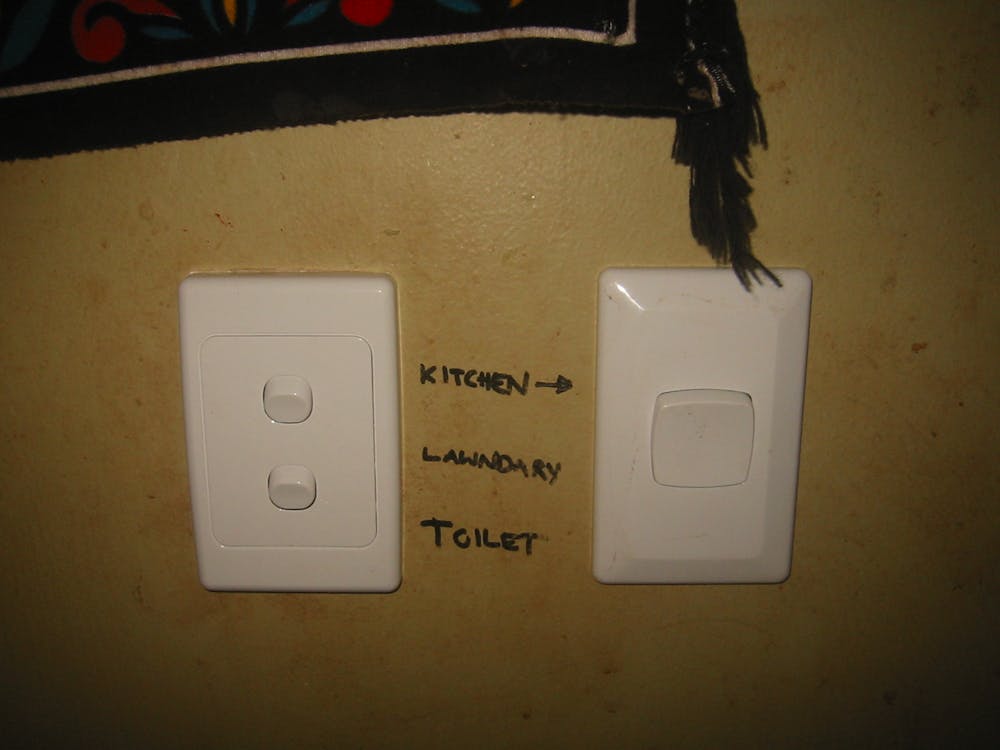 A light switch is a deceptively simple element of making a building liveable.
Author provided
A light switch is a deceptively simple element of making a building liveable.
Author provided
Take for example the prosaic light switch. It activates the enormous resource-intensive electricity-generating industry, which delivers power over vast distances, from its massive powerplants, through its extensive grid via high-voltage cables, in and out of substations and transformers and finally through to the consumer switchboard into the home of the end user. Who, with an unremarkable flick of a switch, can power up a light, laptop, TV, heater or whatever else.
Without this user interface of the switch – or tap, or stove knob – these entire huge networks are useless. It is the integration of these seemingly insignificant humble “actors” and their affordances that enables entire utility networks to be adjusted and controlled to create an enjoyable and healthy living environment for people.
Authors: Christian Tietz, Senior Lecturer in Industrial Design, UNSW
Read more http://theconversation.com/is-it-time-to-move-beyond-the-limits-of-built-environment-thinking-102774


















