Fact-bombing by experts doesn't change hearts and minds. But good science communication can
- Written by Tom Carruthers, Co-president, Australian Science Communicators, and Adjunct Lecturer, Science Communication, The University of Western Australia

A stir went through the Australian science communication community last week, caused by an article with the headline Science communicators need to stop telling everybody the universe is a meaningless void. In meetings and online back channels we cried “not ALL science communicators!”
As experts in science communication, we think the article got a few things right but also a lot wrong. As science communication researchers have recognised for decades, some people who communicate science don’t really take their audiences into account. Instead they rely on the “deficit model”, which wrongly suggests you can change people’s beliefs and behaviours simply by giving them facts to fill perceived gaps in their knowledge.
However, this isn’t the whole story. Science communicators are not evangelists for the science-only worldview of scientism. Many science communicators think very deeply about what values matter to people, and how to reach their audiences.
Good science communicators put a lot of work into understanding audiences. Sometimes we undertake research programs to understand attitudes, values and worldviews so we can communicate empathetically with audiences, not just transmit information. Yet much of this work is invisible to the public – and clearly it isn’t widely recognised.
What is science communication?
Science communication is sometimes characterised as science marketing, but many of us would reject that label. We love to share our passion for science, but we are not uncritical cheerleaders for it.
We see science as part of humanity’s grand project to solve many challenges. We are not ignorant of the broader social context. Most of us do not believe science is everything, and we talk about its limitations. We also recognise the need to provide hope even in the face of catastrophic predictions.
Many of us would agree some science popularisers (we use the term deliberately) should stop telling people their values-based intuitive beliefs are proved pointless by science. For one thing, telling people their beliefs are wrong is a thoroughly ineffective way to communicate science, especially in a crisis.
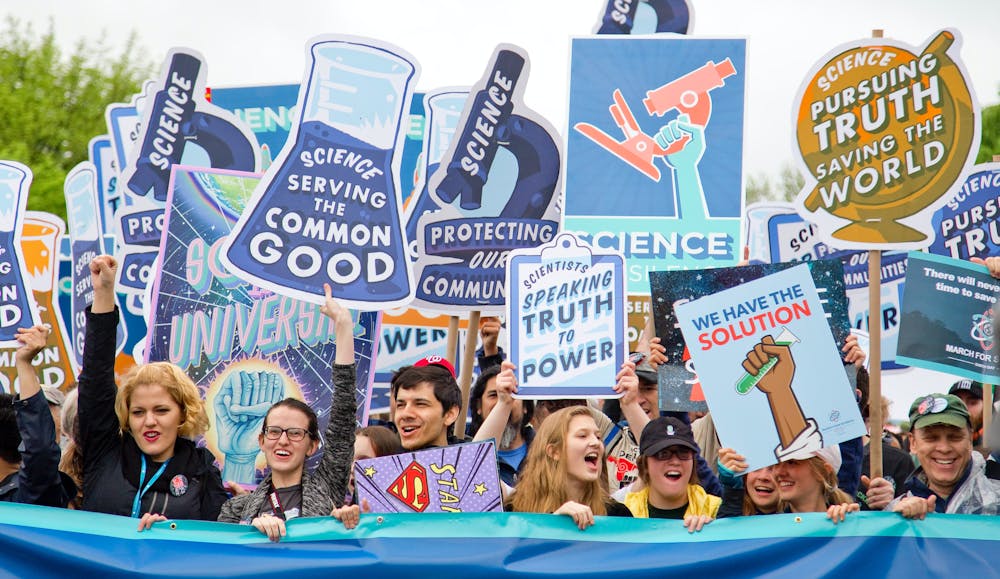
Most science communicators work behind the scenes, supporting scientists to share their work, or running campaigns to counter misinformation. Some of us are translators, making information more accessible to decision-makers. Others are interpreters, helping define meaning and relevance of scientific ideas. Some of us are professional storytellers of science.
Being influential behind the scenes means we sometimes struggle to be recognised as experts in our own right, to have our qualifications and specialist training valued, and to have a seat at the table when governments and other organisations make decisions involving science communication.
There is some debate over whether science communication is a discipline in its own right. Regardless, we know through practice and research that fact-bombing by experts has never been an effective way to engage communities in science.
What makes a science communicator?
For some, the key to what makes one a competent science communicator lies in education and training in “threshold concepts” which include
audience-centred communication (which relies on understanding your audience)
shifting from deficit model-based communication to engagement.
Read more: Three key drivers of good messaging in a time of crisis: expertise, empathy and timing
Scientists themselves may not have been exposed to these concepts. While some universities teach these skills within science degrees, the depth and orientation of these courses vary.
In Australia, there are only two Masters-level programs in science communication (compared with the Netherlands, which has seven). These programs aim to develop professional skills but are also informed by the history, philosophy and sociology of science, so communicators can reflect deeply and critically on the choices they make.
So-called values-based communication is central to these programs.
At the core, it’s about audience
Values-based communication requires communicators to recognise that audiences have a range of knowledge bases, attitudes, perceptions, experiences and values. All of these influence how they relate to different scientific issues.
A science communication professional will take their audiences’ value systems into account when considering the purpose of their communication.
Read more: God and illness: for some South Africans, there's more to healing than medicine
A science communicator might decide to point out to some audiences that a virus doesn’t care who we are, so as to emphasise personal risk and responsibility. A different approach may be needed for an audience who believe illness is due to the will of a god.
It’s the communicator’s responsibility to balance the potential harm their communication may cause with the benefit in supporting various audiences. One size definitely does not fit all.
Good communicators understand human values
Many people working in science communication do not have an education or qualifications in science communication. However, the vast majority do communicate with empathy and transparency about their own values. They acknowledge the limitations of science and its interplay with politics, culture, history and economics.
We reflect deeply on the ethical issues arising from our activities and, for those of us working with particularly controversial or contentious sciences, only time will tell whether we have been effective.
There is no doubt some sections of the science community do communicate without taking people’s values in mind. However, this is counter to current scholarship and best practice.
Most science communication professionals carefully take these things into account. We do it because that is the best way to get better societal outcomes, and to do better science that actually reflects the needs of the communities we live in.
Authors: Tom Carruthers, Co-president, Australian Science Communicators, and Adjunct Lecturer, Science Communication, The University of Western Australia