Dangerous climate tipping points will affect Australia. The risks are real and cannot be ignored
- Written by Michael Grose, Climate Projections Scientist, CSIRO
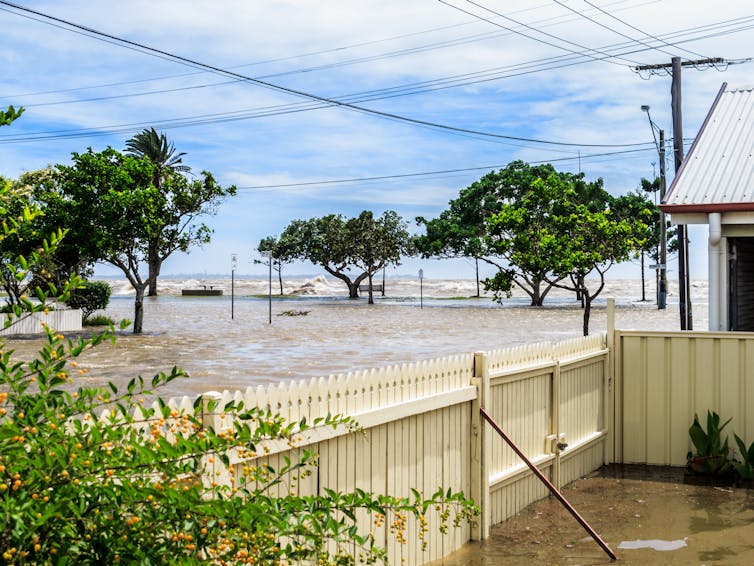
In 2023, we saw a raft of news stories about climate tipping points, including the accelerating loss of Greenland and Antarctic ice sheets, the potential dieback of the Amazon rainforest and the likely weakening of the Atlantic Meridional Ocean Circulation.
The ice sheets, Amazon rainforest and the Atlantic ocean circulation are among nine recognised global climate tipping elements. Once a tipping point is crossed, changes are often irreversible for a very long time. In many cases, additional greenhouse gases will be released into the atmosphere, further warming our planet.
New scientific research and reviews suggest at least one of Earth’s “tipping points” could be closer than we hoped. A milestone review of global tipping points was launched at last year’s COP28.
What will these tipping points mean for Australia? We don’t yet have a good enough understanding to fully answer this question.
Our report, released overnight, includes conclusions in three categories: we need to do more research; tipping points must be part of climate projections, hazard and impact analyses; and adaptation plans must take the potential impacts into account.
Read more: Climate tipping points are nearer than you think – our new report warns of catastrophic risk
What are climate tipping points?
Climate scientists have known for a while, through paleoclimate records and other evidence, that there are “tipping elements” in the climate system. These elements can undergo an abrupt change in state, which becomes self-perpetuating and irreversible for a very long time.
An example is the loss of Greenland ice. Once ice is lost, climate feedbacks lead to further loss, and major ice loss becomes “committed”. It becomes unlikely the ice sheet will reform for tens of thousands of years and only if the climate cools again.
Triggering climate tipping points would lead to changes in addition to those commonly included in climate projections. These changes include a significant rise in sea level at double the rate (or even more) of usual projections, as well as extra warming, altered weather systems, climate variability and extremes.
Triggering one tipping point may trigger other tipping points. If that happens, the cascading impacts would push many systems outside their adaptive capacity.
Cutting fossil greenhouse gas emissions is the most important thing we can do to limit warming and the risk of triggering tipping points. The faster we reduce emissions, the better our chances.
But as the planet continues to warm, we must consider the consequences of triggering some, or several, tipping points for Australia and the resulting risks for society. We need to have the right tools for adaptation planning to consider these risks.
Read more: Antarctic tipping points: the irreversible changes to come if we fail to keep warming below 2℃
Grappling with deep uncertainties
There’s a major gap in the research literature around the implications of tipping points for the southern hemisphere and Australia. Researchers from Australian science agencies and universities came together last year to consider what global climate tipping points could mean for Australia.
We launched our report last night at the national conference of the Australian Meteorological & Oceanographic Society. We identified several priority areas for the research community, risk analysts and policymakers.
We considered the nine global climate tipping points – and one of the most relevant regional tipping points for Australia, coral reef die-offs – as defined in a recent scientific review.
Read more: What will happen to the Greenland ice sheet if we miss our global warming targets
For almost all tipping points, we don’t understand all the relevant processes. There are deep uncertainties about what conditions would trigger tipping points, how they would play out and their likely impacts.
Along with recognising the most urgent point – that deep emission cuts will limit the chances of triggering tipping points – our conclusions cover three areas.
1. We need more research
We need to expand research on paleoclimate records, theory and process understanding, observations, monitoring and modelling. Australia leads world-class research, including on Antarctica, the Southern Ocean, the carbon cycle, weather processes and ecosystems. It is essential we support and expand the work, bringing a southern hemisphere perspective to global efforts.
2. Climate projections, hazard and impact analyses must include tipping points
Triggering some climate tipping points would have direct impacts on our coasts, ecosystems and society. In an interconnected world, other tipping points would have major indirect impacts – through climate migration, conflict, disrupted trade and more.
We need credible projections of what the climate looks like if tipping points are triggered. Our climate impact and risk analyses should illustrate what it really means for us. Given the limited state of knowledge, the “storyline” approach – linking past, current and future unfolding of events in a narrative or pathway framework – is particularly useful, informed by all the available evidence.
3. We need to consider what it means for adaptation
We can consider where, when and how we can act to reduce potential impacts if tipping points are triggered. Appropriate risk management accounts for likelihood, consequence and timeframe.
For example, planning for major coastal infrastructure with a long lifetime and low tolerance for failure could draw on the sea-level projections of “low likelihood, high impact” storylines that include the west Antarctic ice sheet collapsing. This would safeguard critical infrastructure against one worst-case risk. Of course, there is much more to adaptation than this.
We still have much to learn, but we cannot wait for perfect knowledge before we start planning. It’s clear the risks are real and cannot be ignored.
We need to focus on what we can do to avoid triggering tipping points, manage risk and build our climate resilience. There are also positive tipping points in technology, economy and society that are part of the solution. If we get it right, positive change can happen more rapidly than we might think.
Authors: Michael Grose, Climate Projections Scientist, CSIRO