

Google AI


Modern Australian

If the ABS guts Australia’s time use survey, women’s work will count for little

  • Written by: Julie P. Smith, Honorary Associate Professor, Australian National University
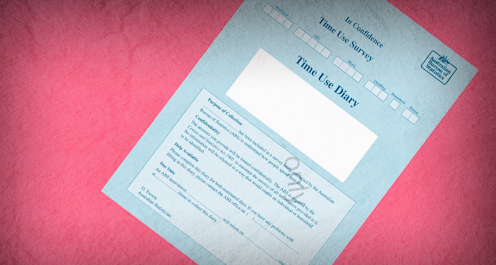
If the ABS guts Australia’s time use survey, women’s work will count for little

Childcare is probably Australia’s largest industry, most of it unpaid.

We know this because of Australian Bureau of Statistics time use surveys. Since 1992 these surveys have recorded what thousands of Australians say they do with their time in diaries kept for 48 hours.

But if the Bureau of Statistics proceeds with its current plans for scaling down the survey we soon won’t be able to tell.

Australia has not only led the world in recording time use, but also in recording simultaneous activities – what Australians do when they multitask.

In 1997 the survey found that whereas the average time spent on childcare as a main activity was about two hours per day, the average when simultaneous activities were taken into account was closer to seven hours per day. Among the simultaneous activities were preparing meals and washing clothes.

In 2013 the scheduled five-yearly update was shelved to make budget savings. It wasn’t revived until 2020-21, but amidst the chaos of COVID, physical diaries were replaced with online diaries without an expectation they be completed in real time.

Online, without context

Now the bureau wants to keep it that way. It has told a meeting of stakeholders it plans to conduct the survey each year instead of once every five years, but online rather than via diaries in order to make it less tiring for respondents. It would be cheaper too.
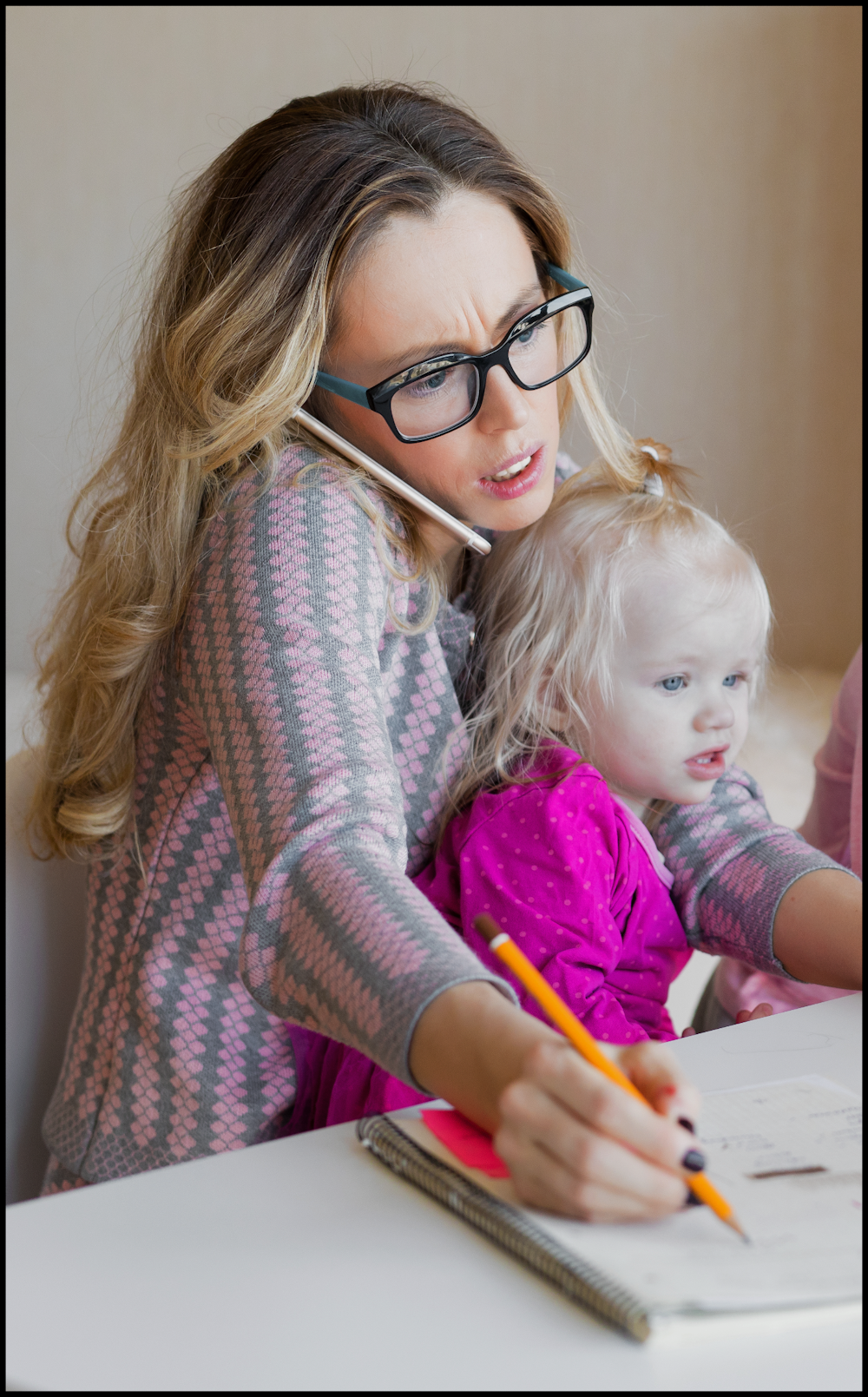
Photo of woman on computer while holding child
The proposed change won’t track multitasking. Shutterstock

It also wants to exclude simultaneous activities.

This means we will no longer get a good read on the total amount of childcare and other domestic activities we are doing. Our surveys will also no longer be directly comparable to those of other countries.

Missing as well would be contextual information such as who else is present, location, mode of transport, and use of mobile phones and other devices.

Time-use expert Lyn Craig of the University of Melbourne says that without the contextual data the bureau proposes to leave out we won’t be able to capture the full dimensions of care work, including whether the breakdown by gender is changing.

Michael Bittman, who was seconded to the ABS for the first national time use survey and has chaired United Nations committees on time-use methodology, says the proposed changes will “take Australia from being a leader to a laggard”.

Lighter than the world’s lightest

The International Labour Organisation has designed a light one-day time use survey that will take just 15 minutes to complete, intended for poor countries.

What Australia’s bureau is proposing looks as if it will take even less time, making it one of the poorest time use surveys on the planet.

The survey needn’t be annual, as year-on-year changes are usually small. A substantial survey conducted once every five years would be much better.

Where the bureau thinks a survey is important, it conducts it face-to-face. That’s what it does with Australia’s six-yearly Household Expenditure Survey, the one used to determine what Australians spend their money on, which forms an input to the consumer price index.

It’s a question of priorities

That expenditure survey requires far more work on the part of the respondent than the time use survey, including access to mortgage documents and piles of bills.

If the bureau remains committed to doing the time use survey online, it should do it in a way consistent with the best practice in the rest of the world.

International researchers are developing an electronic light diary that collects information about secondary activities and contexts. It has been approved for use in nine countries.

Those who specialise in time-use research say the bureau’s current plan is destined to fail. There’s a good deal of women’s unpaid work it won’t capture.

In 1988 New Zealand economist Marilyn Waring wrote a famous book called Counting for Nothing about how women and the environment were invisible in policymaking.

If the bureau proceeds as planned, it will take us back toward those days.

Read more: A decade after the arrival of the smartphone, we're about to find out how we use our time

Authors: Julie P. Smith, Honorary Associate Professor, Australian National University

Read more https://theconversation.com/if-the-abs-guts-australias-time-use-survey-womens-work-will-count-for-little-223453

What to Do When an Older Car Is No Longer Worth Keeping in Melbourne

Ever looked at another repair quote and wondered whether your old car is still worth the trouble? It is a common turning point for Melbourne motoris...

Your Baby's First Year: A Local Guide to Feeding, Sleep, and When to Get Extra Support

Ask ten parents in a Brisbane mothers' group how their baby is feeding or sleeping, and expect ten different answers.  Someone's baby sleeps throug...

Kitchen and Laundry Makeover Ideas That Don't Require a Full Renovation

Full kitchen renos are expensive — and most people don't actually need one.  They need the kitchen to stop looking like it's stuck in 2009, or they...

How Technology Is Reshaping the Modern Australian Commercial Kitchen

The commercial kitchen has always been shaped by technology. Refrigeration changed how ingredients could be stored, modern ventilation transformed k...

The Number on a Roller Blind Fabric That Nobody Explains

Somewhere in the fabric book, next to the colour name, there is a percentage. Three per cent. Five per cent. Ten per cent. Nobody explains it, most c...

What’s Trending in Men’s Jewellery This Father’s Day!

Finding a Father’s Day gift that feels personal, stylish and genuinely wearable is not always easy. While socks and novelty mugs have traditionally ...

Road Signs: Understanding Their Role in Clear and Effective Signage

Effective signage and display hardware can help businesses communicate information, promote products and organise customer or visitor movement. Road...

Bottle Label Printing: Key Factors to Consider Before Your Next Packaging Run

Effective packaging begins with understanding the product, bottle material, artwork and production requirements when planning bottle label printing. H...

Planning a Long-Distance Move With Interstate Movers Melbourne

Moving between states involves more planning than a typical local relocation. Along with packing and transporting household belongings, you need to...

Understanding the Role of an I/O Controller in Industrial Automation

Modern industrial systems depend on accurate communication between sensors, machines and control systems. An I/O controller can help manage this commu...

How the Right Mining Hose Supports Demanding Operations

Mining environments place considerable demands on equipment used for material transfer, water management and processing. Hoses operating in these co...

Simple Ideas for Making Social Gatherings More Memorable

We have all been to those parties where everyone just stands around the kitchen island, staring at their phones, waiting for someone else to make a mo...

Outdoor Wall Lights: Improving Exterior Lighting Around Your Home

Lighting can influence how a room looks, feels and functions, so the right fitting should be selected according to both appearance and practical req...

Commercial Office Cleaning: Combining Routine Office Cleaning With Melbourne Service

Keeping a workplace clean requires a service that can accommodate everyday tasks as well as the particular needs of the business. Professional comme...

Caravan Sales in Queensland: How to Find the Right Caravan for Sale QLD

Caravan ownership is about more than having somewhere to sleep while travelling. For many Queenslanders, it is one of the best ways to explore regio...

What Sir Walter Buffalo Turf Actually Costs in 2026 (And Why Quotes Vary So Much)

Two quotes landed on a Hills District homeowner's kitchen table last spring for the exact same 80-square-metre backyard. One said $12 a metre. The o...

Nearly 1,300 NSW Hospital Beds Are Occupied By People Who Are Ready To Go Home

1,276 people in NSW hospitals have been medically cleared for discharge but remain in hospital because they're still waiting for NDIS or aged care sup...

National Survey Launched to Measure Operational Impacts of Federal NDIS Policy Reforms

The effects of recent NDIS reforms are beginning to move beyond policy papers and into day to day service delivery. A new national survey is asking ...
















